• Tuesday, 17 ottobre 2006

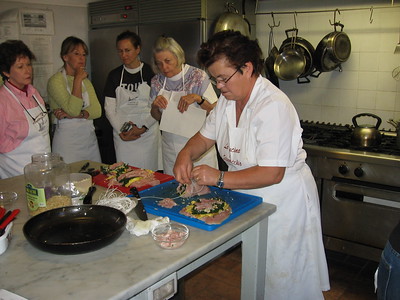
    After our tour of the kitchen gardens with Carmen, we entered la cucina di Spannocchia (the kitchen of Spannocchia) for our cooking lesson with Loredana. We would be preparing lunch for everyone that day.

    Sandino surprised everyone, especially his wife, who barely recognized him. He leapt forward at every opportunity to be a part of every class activity! I guess it was too much to hope that his newfound passion for cooking would follow him home, but that’s okay. I’m happy to have my own kitchen to myself.
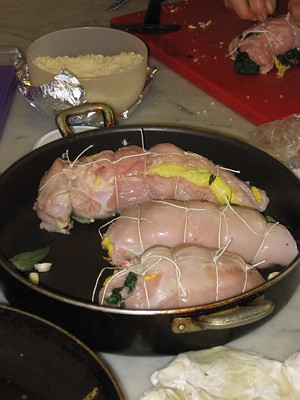
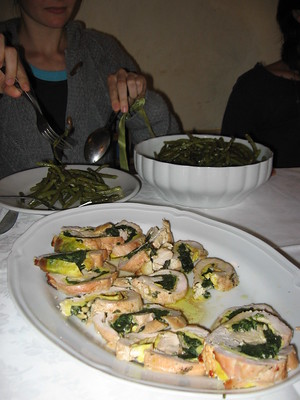
    The main dish was a rolled turkey breast, butterflied and stuffed with an omelet and a spinach mixture. Loredana tied up the turkey breasts and baked them with some sage leaves and garlic in the pan, while green beans simmered with a mixture of parsley and garlic that Sandino chopped up with a mezzaluna. I remember seeing Carmen walk up the orto stairs with a bucket of these the previous afternoon. The finished product at the table is on the right.
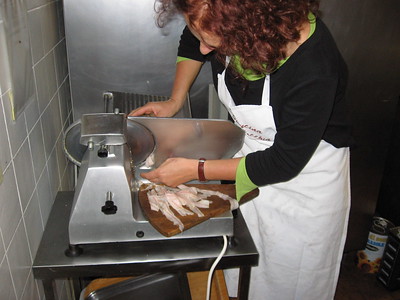
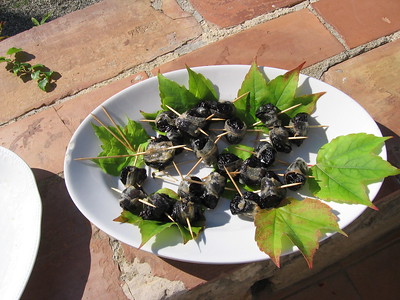
    Appetizers included baked pancetta wrapped prunes and slices of cheese drizzled with Spannocchia honey. Daniela, guest services manager and Loredana’s interpreter, slices pancetta (Italian bacon) from the farm’s own Cinta Senese pigs at the left. These were simple, beautiful, and so very, very tasty!

    These were served out on the terrace where the weather was perfect. The other half of the class had been on work detail and they were hungry! Daniela opened a couple of bottles of Prosecco and we thoroughly enjoyed our break before going back in to work on the primo piatto (first course), ravioli di spinaci e ricotta con burro e salvia (stuffed spinach ravioli with butter and sage sauce). Because that was a big operation and the subject of my class project, I made a separate post about the ravioli with step-by-step photos and a recipe.
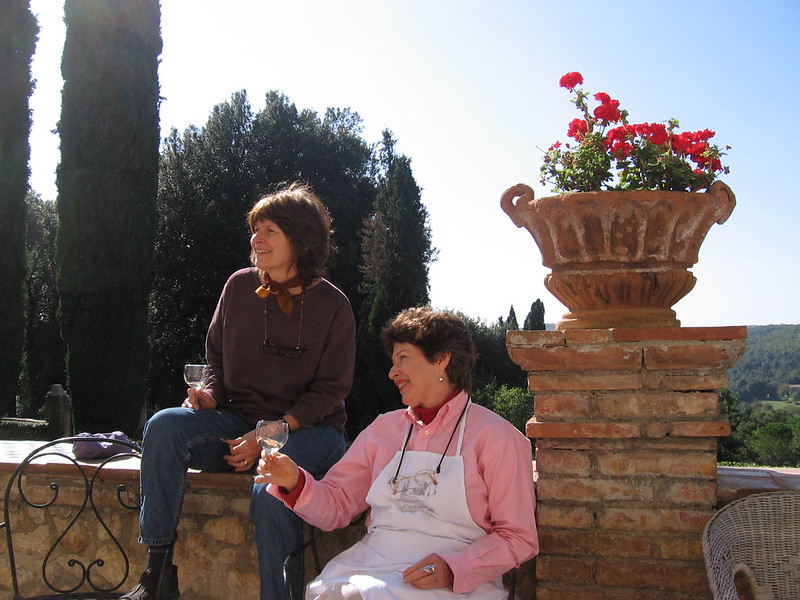
    Debby, one of our instructors and tour guides while we were at Spannocchia, and Judy, one of our lively classmates, enjoy prosecco on the terrace.
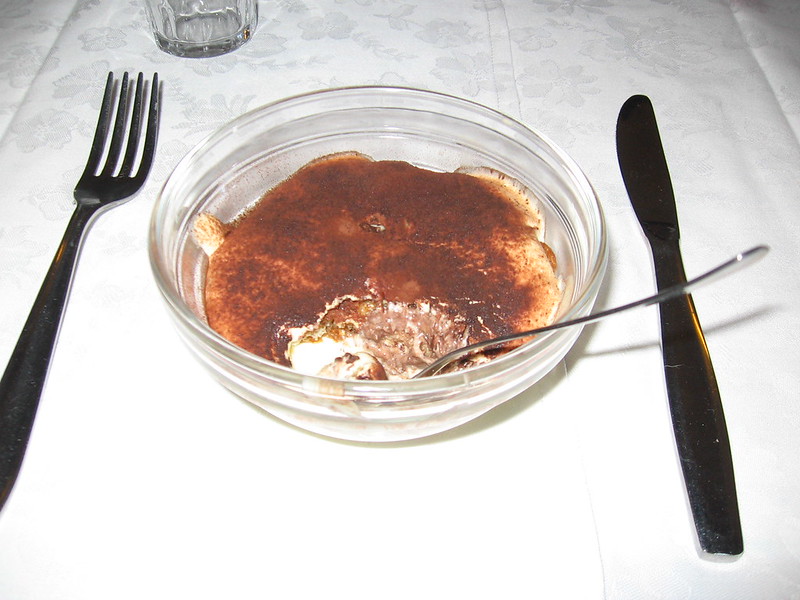
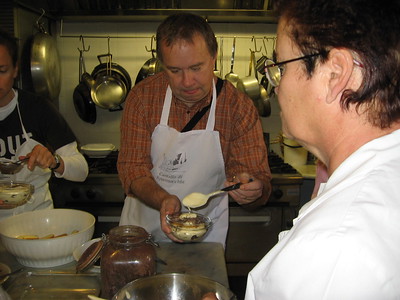
    The making of the tiramisu actually came first that morning, because it needed a few hours to chill. Sandino separated eggs for this dish, and did a better job than I did! Here Sandino uses the Michael Jordan technique for layering the bowls.

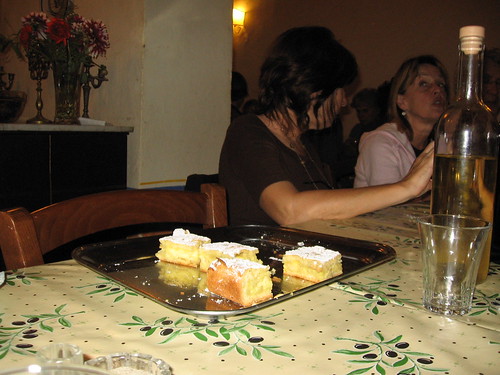
    I never cared much for tiramisu before this day. That could be because I never tasted authentic tiramisu before this day. I’m still looking for a source of Pavesi ladyfingers here in Greensboro. Once I find the right ingredients, you might want to consider asking us to your potluck. Reactions to the tiramisu were pretty good, I’d say.
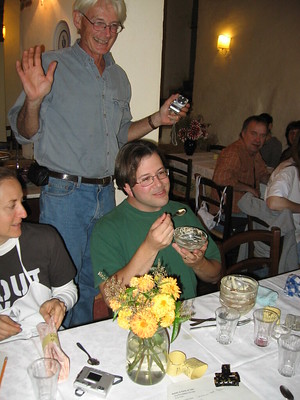
    Karl-Heinz was shooting for the tiramisu record.
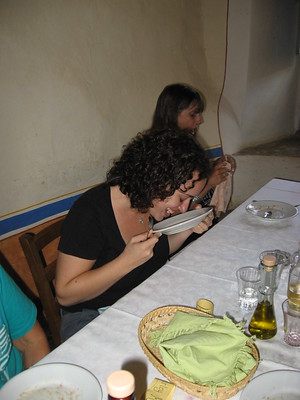

    For your own safety, please do not get between Lizzie and the tiramisu.

    To be continued…

  • Tuesday, 17 ottobre 2006

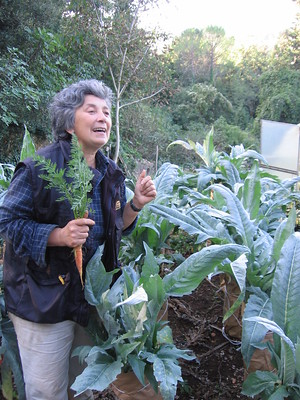
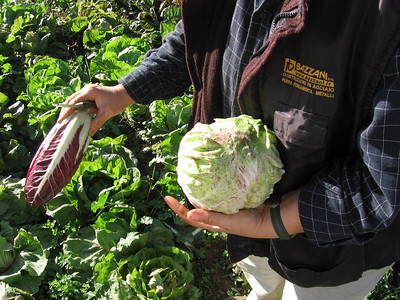
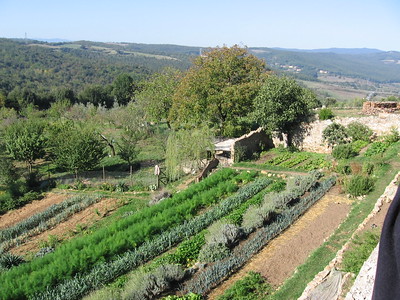
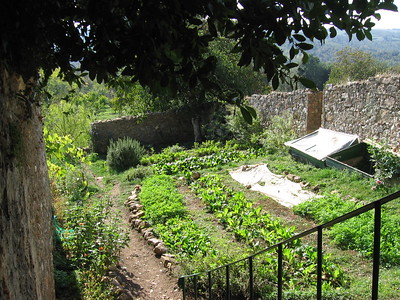
    On Tuesday morning, after a customary breakfast of bread, jam, yogurt, granola, hard-boiled eggs, juice, and some kick-ass coffee, half the class went out to work in various areas on the farm, and our half toured the kitchen gardens with Carmen, the orto (kitchen garden) manager. As you might guess, the orto was my very favorite place at Spannocchia, full of flowers, vegetables, herbs, fruit, cats, and compost. I would love to spend a week just painting, drawing, and taking photos in the orto. Carmen was a fountain of information, and although her English was not perfect (close!), it was lovely listening to her speak it. I enjoyed hearing the Italian words for certain plants, such as dragoncello (tarragon). There were some vegetables that were local to the area, such as a large melon and a long squash that looked like a butternut, and a beautiful variety of kale.

    One of the autumn vegetables growing in the orto that is seldom heard of over here is cardoon. The stems are eaten, and they wrap the stems in brown paper to blanch them at Spannocchia. Cardoon is closely related to the artichoke and is another member of the thistle family. It is a striking plant and well worth growing even if you never plan to eat it.

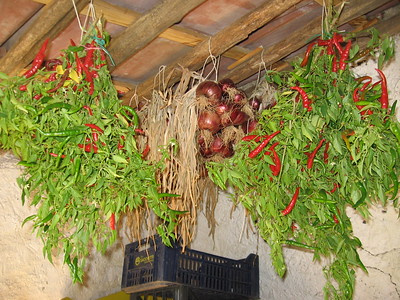
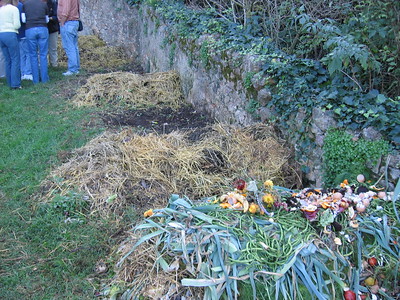
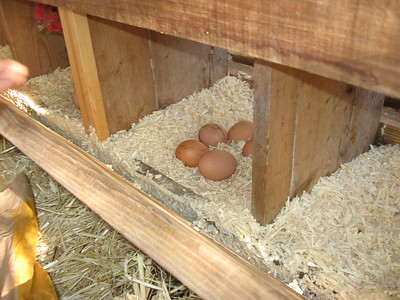
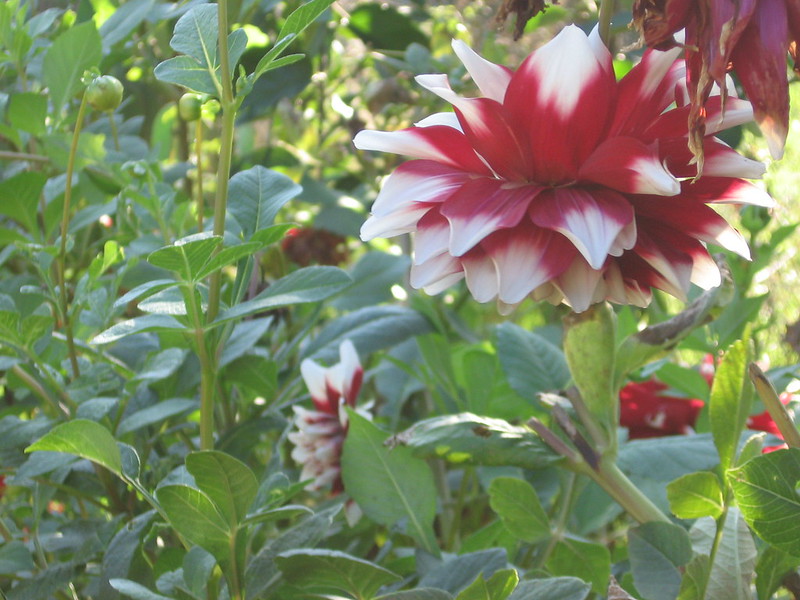
    I loved the flowers, and the little building where she hung onions and peppers to dry, and even the compost piles were layered very attractively. There was a persimmon tree close to yielding its sweet goodness, and we munched on fennel bulbs as we meandered between the rows. A peep into the henhouse caused a chicken to hurry away from her eggs. The chickens have a large fenced enclosure in a fruit tree orchard, where they behave chickeny to their hearts’ content and retreat into the safety of their coop in the evening. The other students on work detail would create a large compost pile from the hog waste up the mountain in that chicken yard a little later, and fence them into a smaller space around it. (Sandy B called this the montagna di merda.) It definitely made the chickens happy, if not the creators of it!

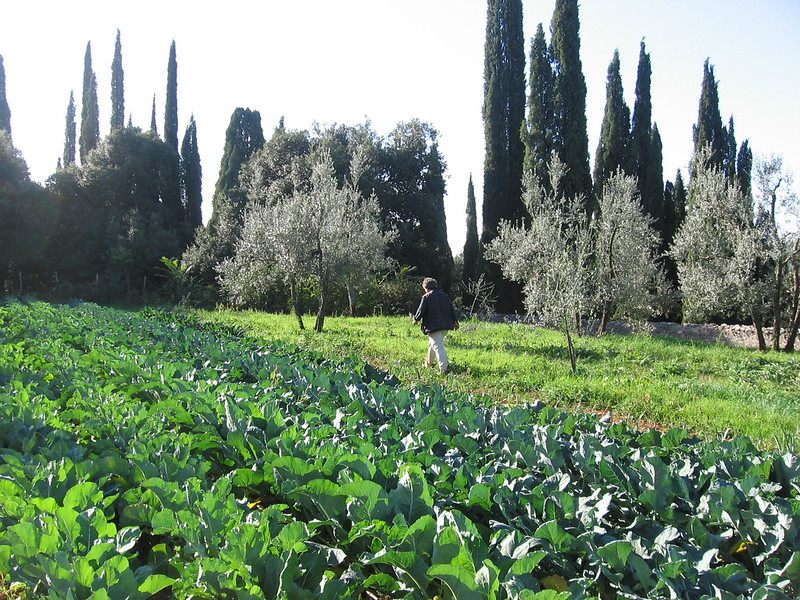
    The upper gardens behind the tower mainly produced cole crops amid silvery olive trees and artichokes. All gardens were fenced or walled to keep out the wild animals, which are in abundance at Spannocchia. We ate radicchio for our insalata (salad) course often throughout the week.

    I wish that I had brought a tape recorder for this walk. Carmen’s voice was musical and she answered a lot of questions that I no longer remember.

  • The history of the estate dates back to the 12th century, when a group of monks settled at Santa Lucia, an hermitage located on the banks of the Rosia river at the base of what is now the Spannocchia property. – from www.spannocchia.org

    Monday, 16 ottobre 2006

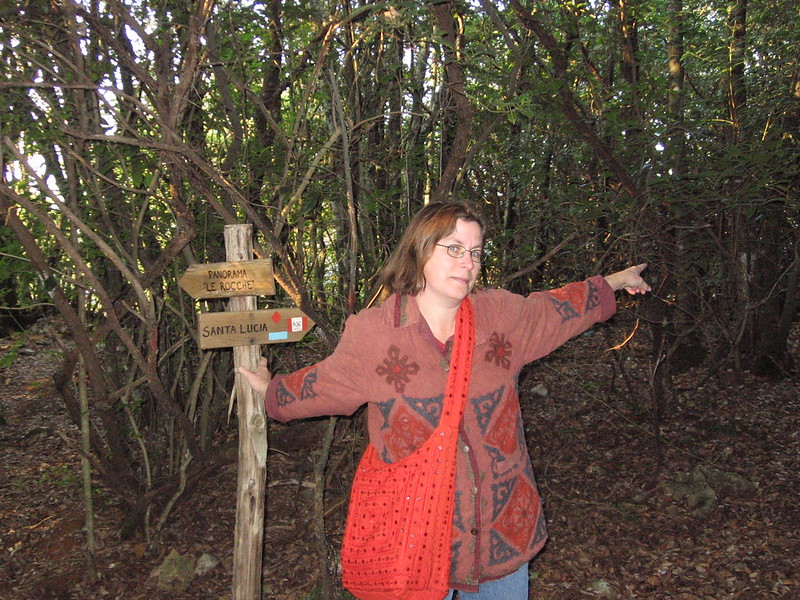
    We set off at 5 p.m. for Santa Lucia. The trail was rocky and beautiful.

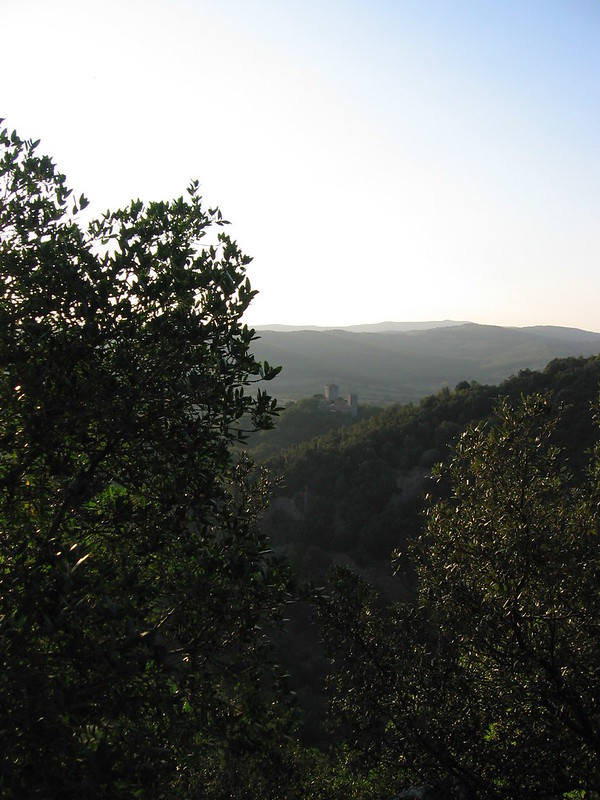
    You can see the next door neighbor’s house from here.

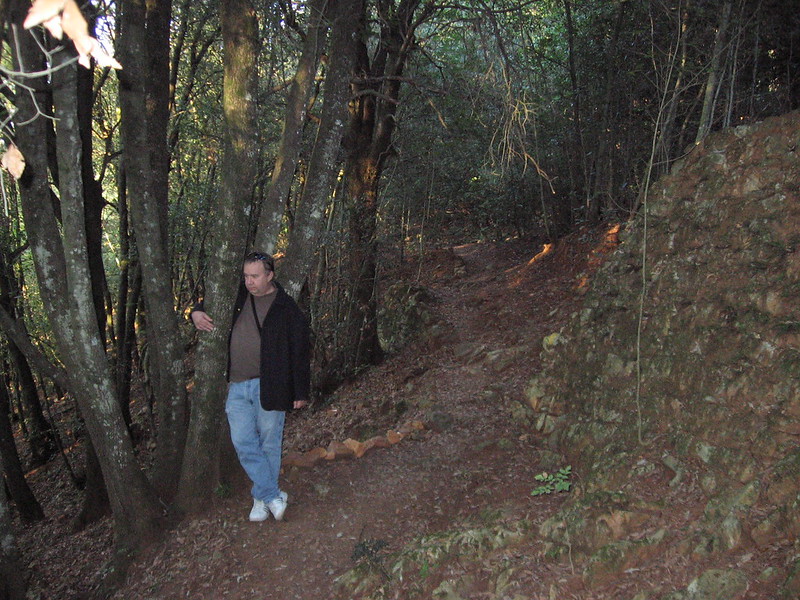
    He’s such a liberal.

    Move it, move it, move it!

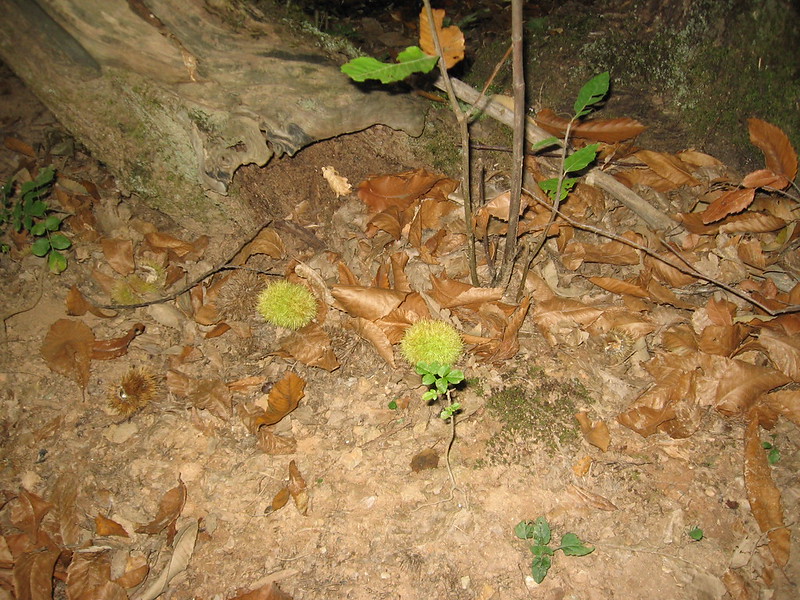
    Stopping briefly for chestnuts along the way.

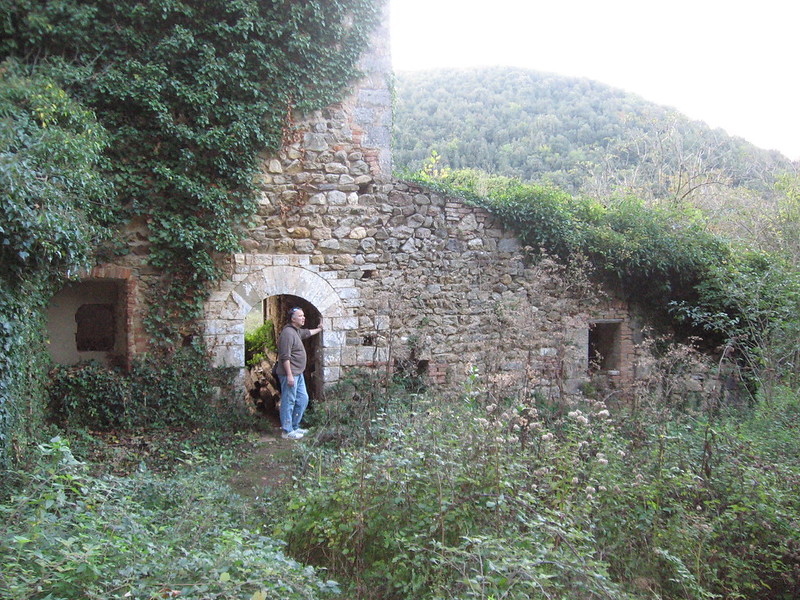
    It was kind of spooky and wet approaching it from the back. The trail became treacherously steep and then muddy from a spring.

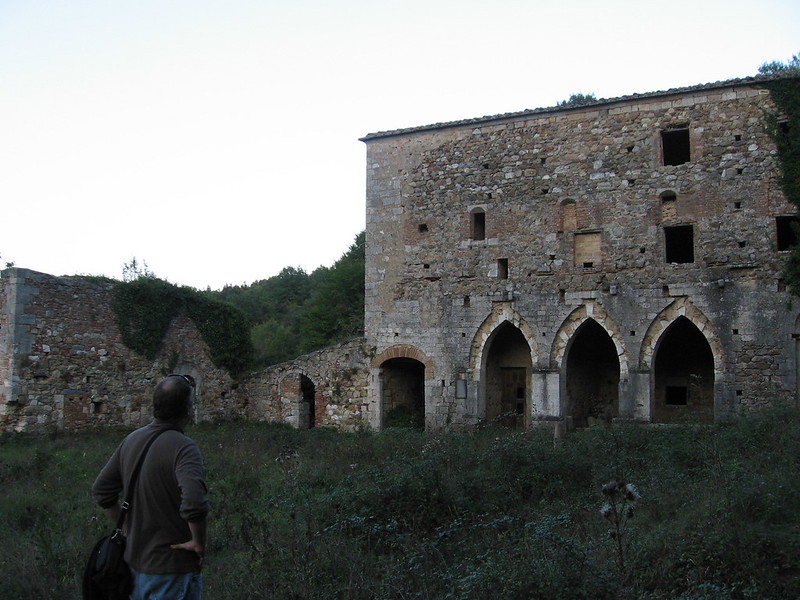
    From the front. You could see where wild boars had been digging around a nearby tree – very, very, very recently!

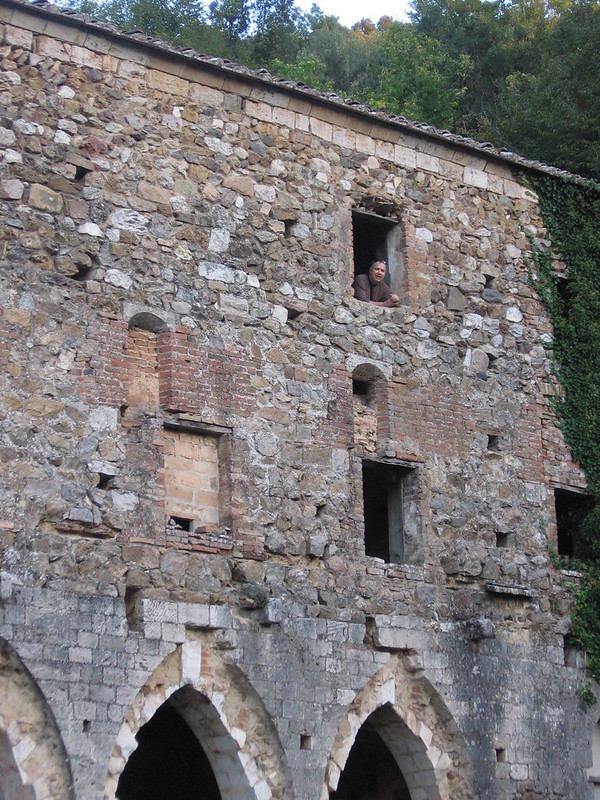
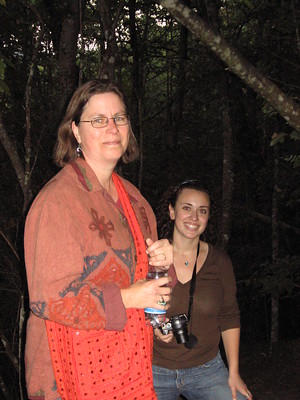
    I couldn’t decide if my husband was brave or foolish when he climbed to the third floor. We can all agree that I am chicken. Lizzie joined us and climbed up there with him, but I took photos of her with her camera.

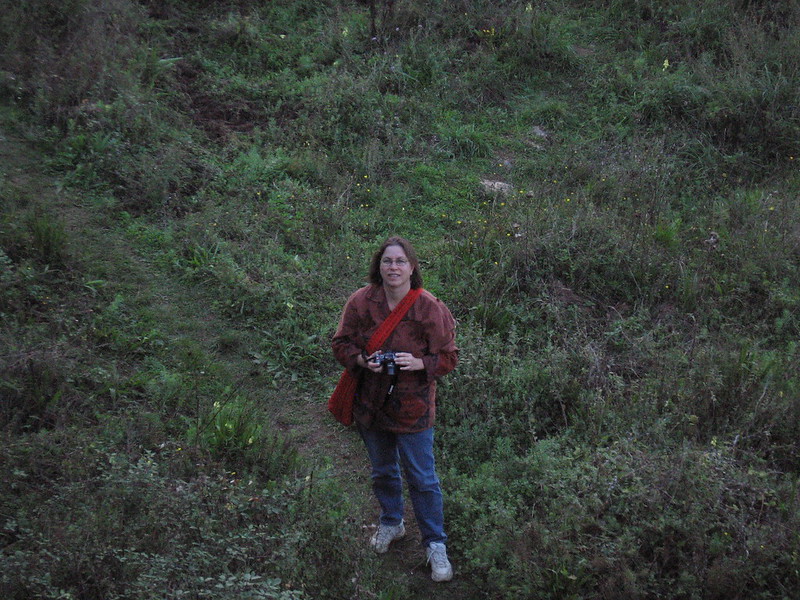
    Sandy took a photo of me below in the midst of the beautiful wildflowers. Alas, my close-up shots of the native flora did not come out well.

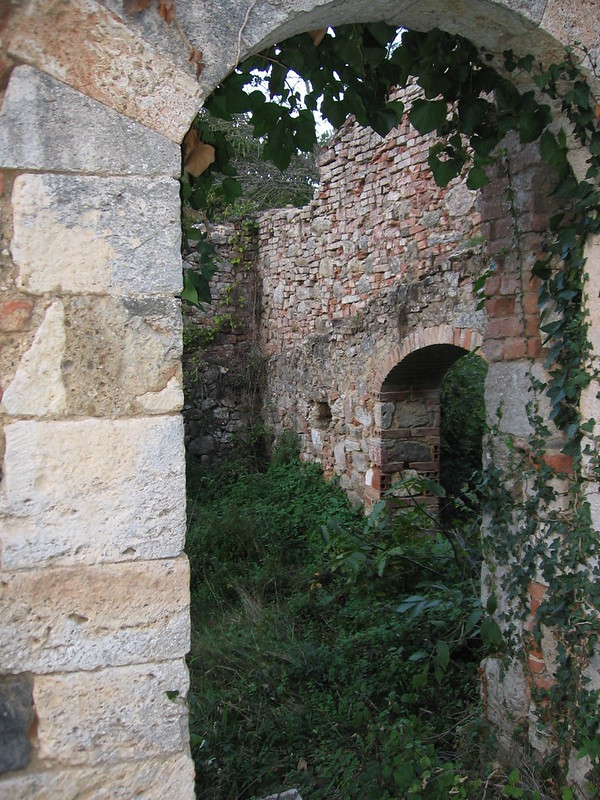
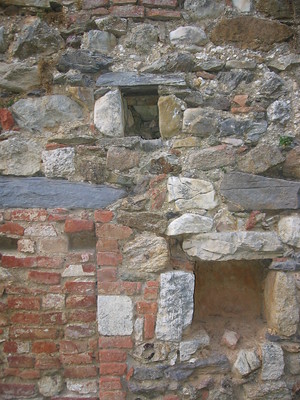
    Detail of wall at Santa Lucia. They don’t make walls like they used to, um, about 900 years ago.

    At this point, I thought that I would surely die before I made it up the extremely steep incline. Lizzie’s in great shape, though.

    Lizzie saw a deer leap over the trail on the way back. I was about to freak out because the sun was going down and I was afraid to navigate the rough rocky trail in the dark. I’ve been caught on a trail in the dark before, and there was the matter of my aching foot and low energy level. But we made it back just before the sun dipped behind the Tuscan hills, to drink and eat heartily with the rest of the Spannocchians!

    To be continued…

  • Monday, 16 ottobre 2006

    After breakfast, the class went on a historical tour with Randall Stratton, one of the owners of Spannocchia. He explained about the mezzadria system that the farm (and many others like it) operated under for hundreds of years. Under that system, sharecroppers lived and worked on the land for one half of the harvest, and the owner received the other half. When the Green Revolution came to Italy in the 1960s, what took decades in the United States to accomplish happened very swiftly in Italy – the dismantlement of the mezzadria system sent small farmers, tenants, and their children to the cities to find jobs, while large farmers shifted their efforts to the valleys where the arable land was easier to cultivate for cash crops. The Cinelli family had to find a way to continue or sell. They sold part of the estate, and designated part of the estate as a bioreserve.

    From the introduction to La Cucina di Spannochia, their self-published cookbook:

    In the midst of the wooded hills to the south of the medieval city of Siena in Tuscany, lies the agricultural estate of Spannocchia. Home to the Cinelli family for the last 80 years and the Spannocchi family for the preceding 800 years or more, the estate now offers, in its role as educational and research center for the Spannocchia Foundation, an unusual combination of cultural activity, traditional farming and culinary activity based on a history of many centuries. Visitors to Spannocchia have an opportunity to learn how different life can be when it is so closely tied to the land and the flow of the changing seasons.

    Spannocchia enjoys the products of large vegetable gardens, olive groves, two vineyards, fruit orchards, chestnut and walnut trees, fields of wheat, barley, and farro, and the raising of heritage breeds of pigs, sheep, and beef cattle. The woods and fields of the estate further provide a wide variety of wild edibles, including fruits, nuts, berries, mushrooms, and even truffles. There is something wonderful about deciding what to have for dinner by what is ready in the garden, or has just been gathered in the woods.

    The joy of living off the land is very much a part of everyday life at Spannocchia.

    (Sigh. When can I go back?)

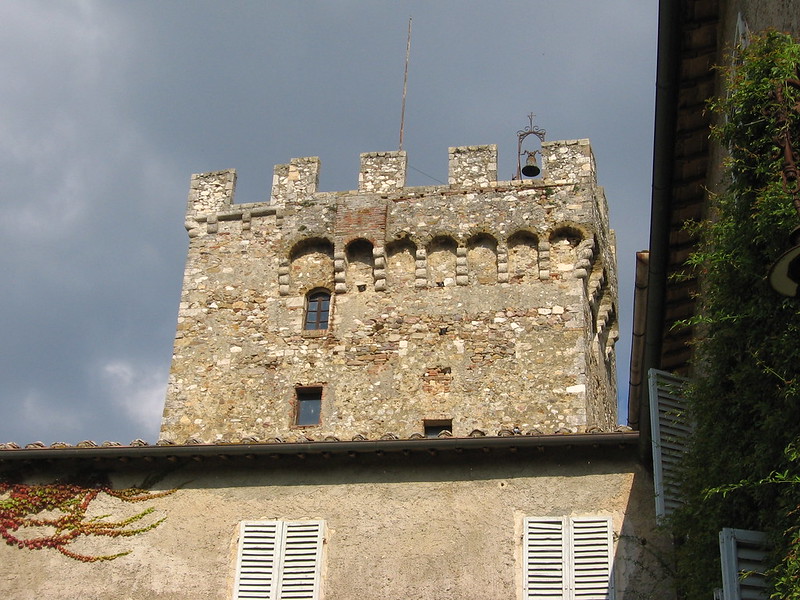
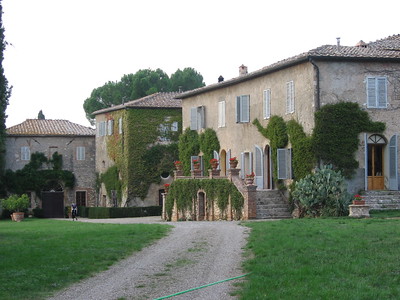
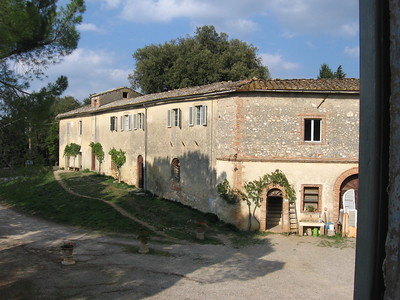
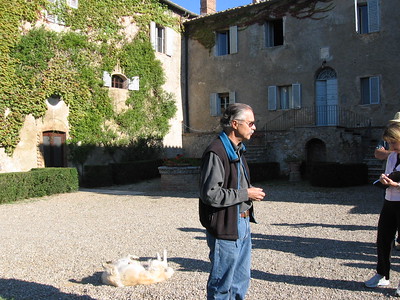
    Anyway, when Randall was not being upstaged by one of the farm dogs, who rolled in the gravel courtyard and grunted loudly every time he spoke, he told us about the architectural history of the estate. The tower was the first building, built in the early 1200s, and it was added on to over and over up until the 1930s, at which point the appearance of the place was frozen in time. They have made lots of infrastructural changes at great expense, such as wiring, plumbing, heating, and ecological and energy efficiency improvements.

    You can read more about the history of Spannocchia at the Spannochia Foundation site.

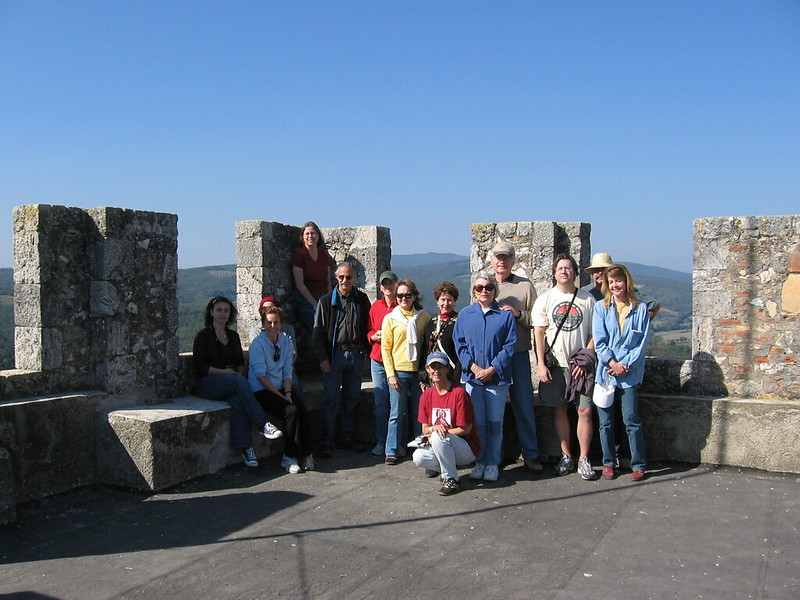
    Randall took us through the building, through the cozy library, and through the largely unused little chapel. He told us family stories and local legends, such as a miracle spring that San Bernardino created, and the little stone angel that flew to the top of the chapel. Then we went up, up, up to the top of the tower, where the views were amazing.

    to be continued…


  • Monday, 16 ottobre 2006

    After taking in the stunning views at the top of the tower, we had a vegetarian lunch that included the traditional Tuscan panzanella, a salad made with leftover bread, and a green salad.

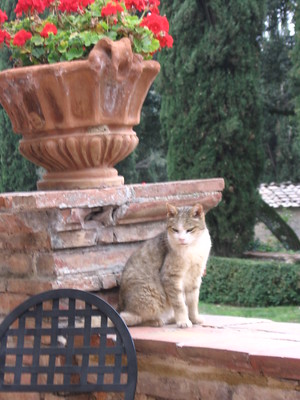
    I was happy to have some time to roam on my own and write a little in my journal, and Sandino took a nap. We were both still adjusting to the new time zone a bit. I explored the orto (kitchen garden) and made friends with a few of the cats, but the kittens were wild and would have none of me. There were four dogs of different breeds but the same color, and one of them had puppies.

    At 3:30 we arrived late for our Italian lesson with Guilio, and he helped a lot with specific phrases needed for ordering food and asking for service. Would have been nice to have had this lesson before our weekend in Firenze! One of the main things he clarified was the use of the word “prego.” Most people interpret it as “You’re welcome,” but it means more than that. It also means “May I help you?” and “I have served you.” So there is a service component to the word.

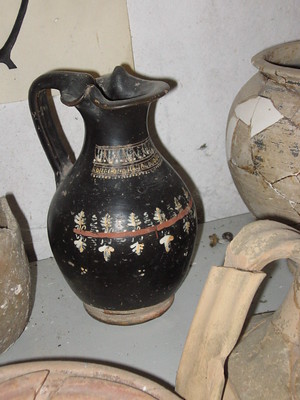
    After the Italian lesson, Randall Stratton came back and showed us the little Etruscan Museum and workshop in the former carriage house, where we looked at some Etruscan and Roman artifacts they had excavated nearby.

    Sandy and I had some energy so we decided to hike down to the 12th century monastery ruins of Santa Lucia. But that’s for the next post.

    Dinner that night:
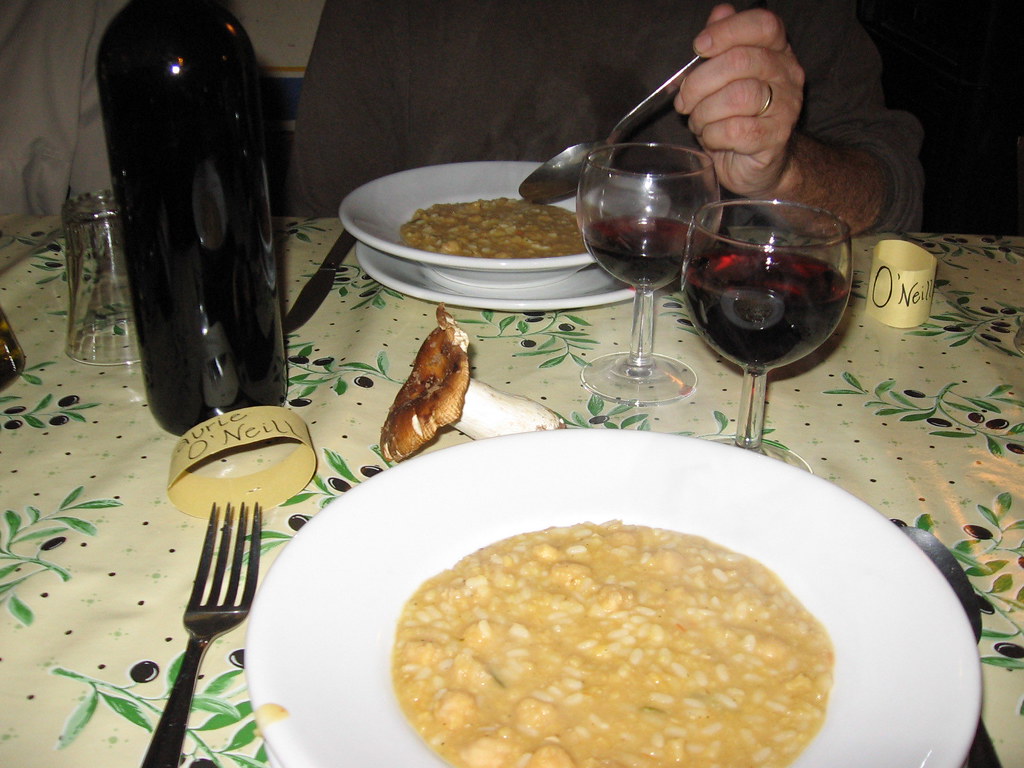
    Zuppa di ceci e riso (soup with chickpeas and rice) – much better than it looks! I had seconds.
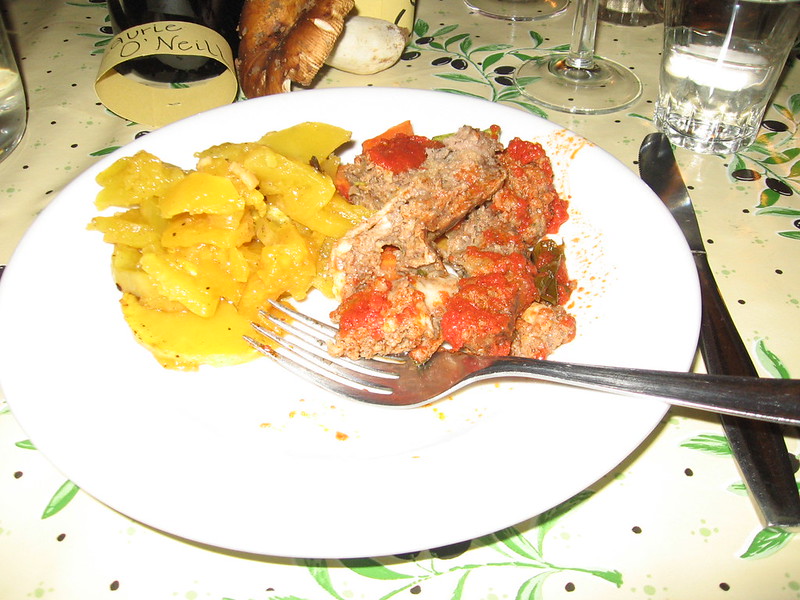
    Polpettone – an Italian meat loaf
    Zucca al Forno – This simple squash dish was amazing. It looked somewhat like yellow squash, but it was a local variety of squash that looked like a long butternut squash.
    Insalata
    Torta della Nonna

    I drank more wine than normal because of a hurting foot and a desire to knock myself out for the night, forgetting that I had class after dinner! I still made sense though, and although I got thirsty in the middle of the night, I didn’t get a headache. Didn’t help my sleep problems at all. Oh well!

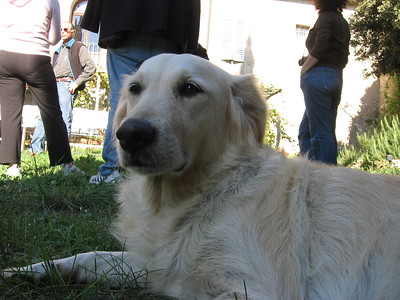
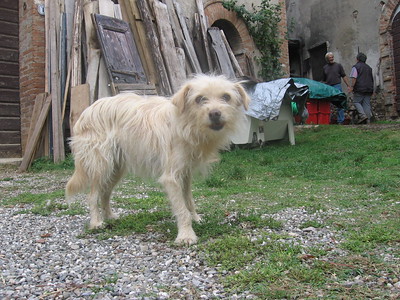
    Mama Dawg

    Little Alpha Dawg

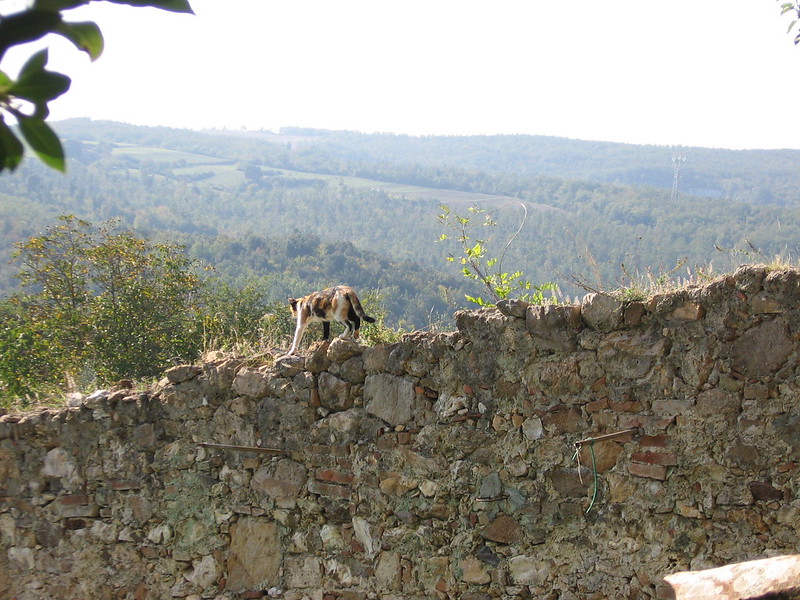
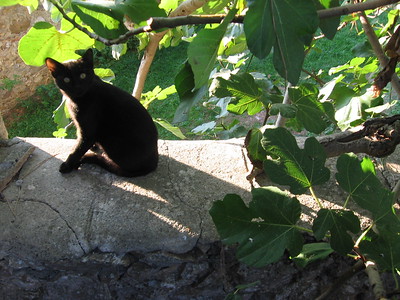
    Vorpal kitty under a fig tree

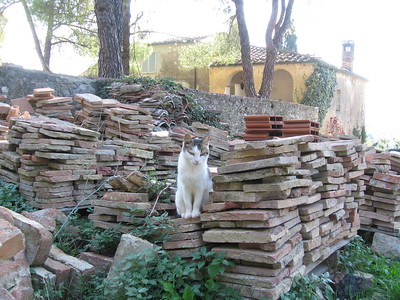
    Friendly guardian of the tile pile

    To be continued…

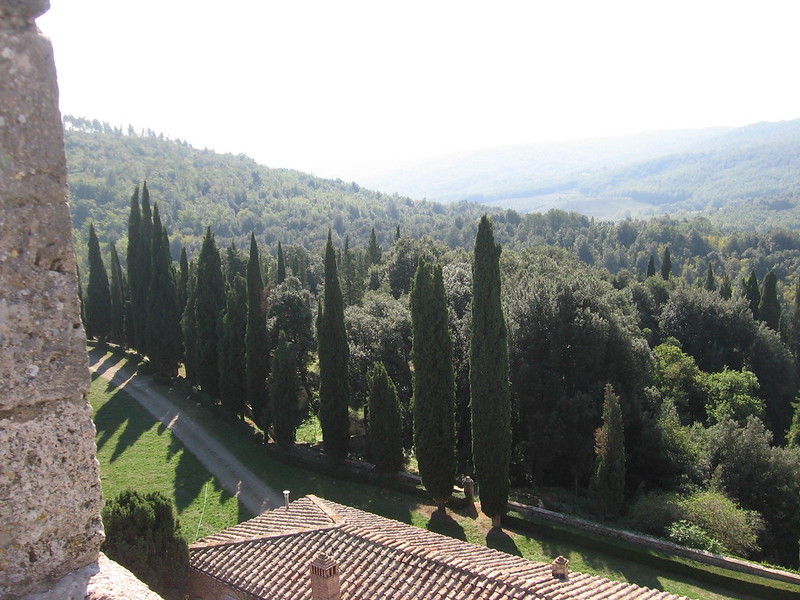
  • View from the top of the tower at Spannocchia.

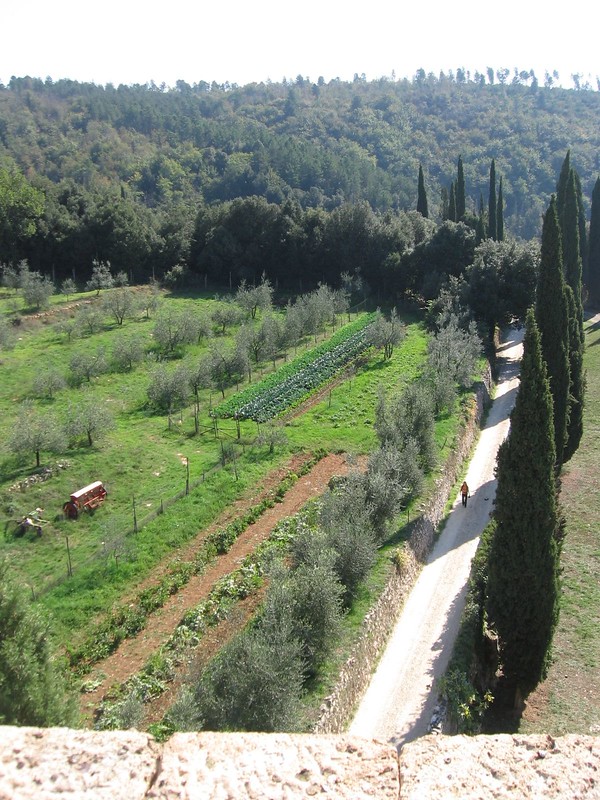
    View of some of the vegetable gardens and olive trees from the top of the tower.

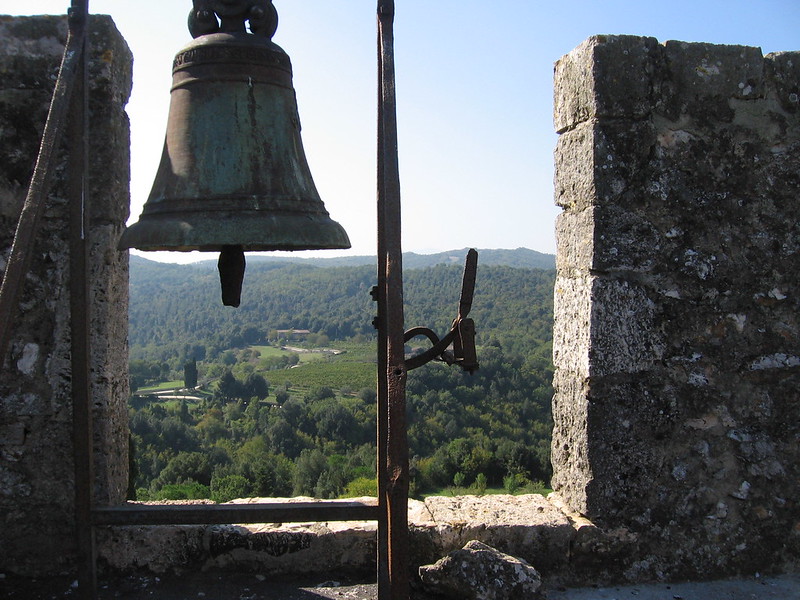
    The bell at the top of the tower.

  • Domenica, 15 ottobre 2006

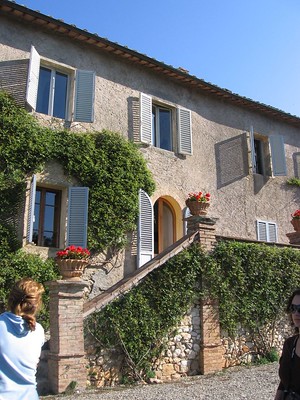
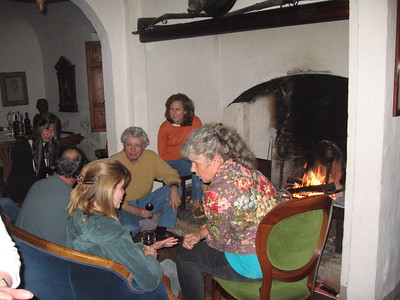
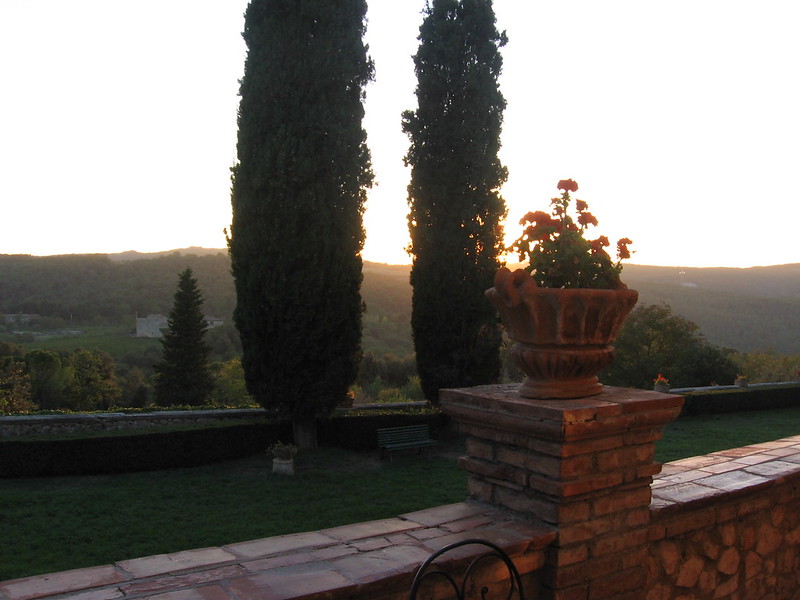
    Every evening at 7 p.m., there was wine for the guests on the terrace. The first evening, there were appetizers for us – cheese and olives, carrots, and bread. The wines were organic, and those of us who generally can’t drink red wine because of sensitivities to sulfates found to our delight that it did not give us headaches! For the rest of the week, Randy and Wood prepared a fire in the living room for us to gather around, as the temperature became cooler. Watching the sunset from the terrace, sipping a glass of true house wine, as it was made on the premises from their own grapes, was the perfect way to wind down from a wonderful day.

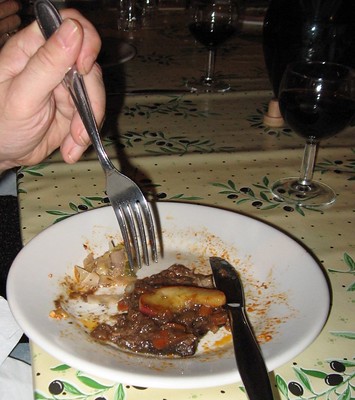
    At 7:30, we were called in from this pleasant gathering to the main event: dinner at Spannocchia. On the first night, the feasting was definitely kicked off right. For the primo piatto, pasta con melanzane (pasta with eggplants). Sandy is not usually crazy about eggplant and he loved it. I’m glad I have the recipe, because I already loved eggplant. The secondo piatto was cervo (venison) with apples, with a contorno (side dish) of sweet braised cavolo (cabbage). This may have been my favorite meal at Spannocchia, but it would be tough to choose from all the competition for the honor. The secondo is always followed by a simple insalata (salad). Most of the food served at Spannocchia is grown or raised there. Occasionally I saw the food in the garden that I would be served later in the week.

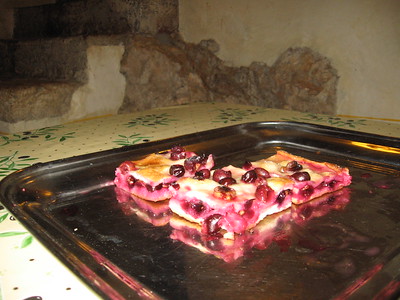
    The dolce (dessert) was seasonal and special. A traditional harvest dish, schiacciata all ‘uva is made with whole grapes, including the seeds. The result is a combination of sensations – sweet and tart, creamy and crunchy, in other words, delicious. Note the wall in the back of this photo. There were places on the back wall of the dining room where outcrops of the underlying rock either stuck out or were plastered over, making a very rustic and uneven wall.

    After a short class meeting in the living room, we collapsed into our bed, covered with a thick down comforter. Ahhhhh, I thought. How will I ever leave this place?

    To be continued…

  • Sunday, 15 ottobre 2006

    After we all unpacked and settled into our rooms, Charlie took us for a walking tour through part of the estate. The Cinelli family, which has owned this land since the 1930s, decided to do their best not only to maintain the preservation of its history, but to return the land to its organic agricultural roots, making its systems as sustainable as possible. Agrotourism has proved to be quite helpful in raising income, but it is far from a profitable venture. It has been a huge task for Francesca Cinelli Stratton and her husband, Randall.

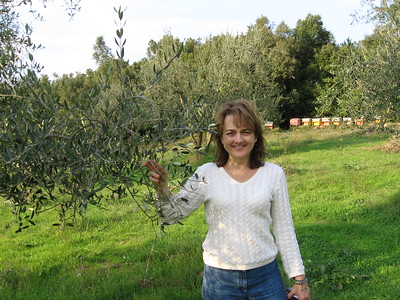
    We first veered off the road into one of the olive orchards, which had a line of beehives at the back. Unfortunately, the olives weren’t quite ready for harvest, but Charlie fooled a couple of people into tasting them. Spannocchia did not have any olive oil for sale, but it uses the oil that it produces and supplements it with oil from other farms in the area. Teresa (right) did her project on olive and oil production.

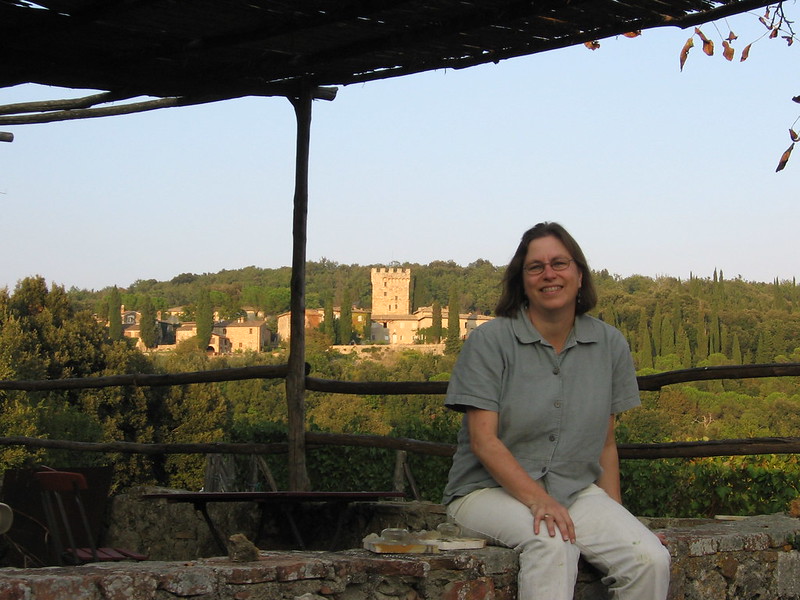
    Because of the marble, Italians call the unpaved roads of this region “white roads.” We ambled downhill on a stone-wall lined road, completely in awe of the scenery around us. There was the scent of wild mint and wild fennel permeating the air, and wildflowers and herbs all around our feet. Looking up and back, we were greeted by a grand view of Spannocchia (at top).

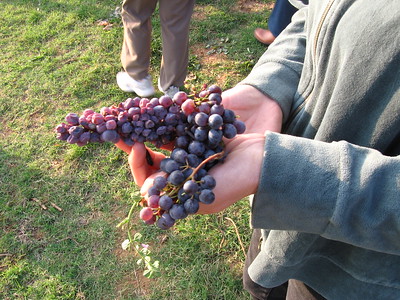
    Then we walked through a gate into a vineyard, where the San Giovese grape harvest had just finished only a week before. There were some bunches of grapes on the ground at the ends of the rows, and we all had a taste. At the edge of the vineyard we walked along a row of fruit trees and suddenly I had a strong multi-sensual memory of the road leading up to my grandfather’s South Carolina farm, where he grew several kinds of fruit trees and a grapevined fence along a sandy road. My entire soul felt full – I don’t know how else to describe it.

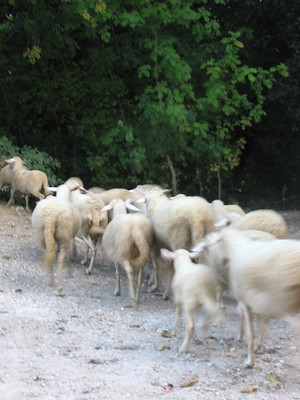
    On the other side of this road, leading up to one of the rental houses on the estate, a herd of sheep had been let into one of the harvested vineyards to graze. Later, an intern shepherdess led them into their safe haven for the evening.

    This truly was a fairy tale place.

    To be continued…
  • Sunday, 15 ottobre 2006

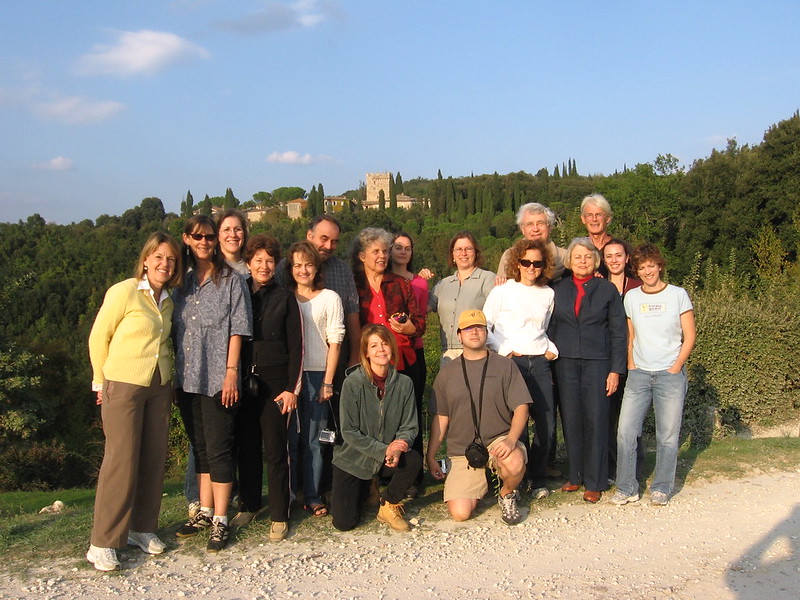
    When we all got on the bus that would take us to Spannocchia for the next week, it was the first time the 14 class members had all been in one spot. Up until then, we had met through Blackboard on the Internet. Not everyone in the group was a student – Sandino and Randy were tagalong spouses, and Shirley was not a part of the official class. But they were all valuable parts of our class activities at Spannocchia. Along with Charlie and Debby, we numbered nineteen.

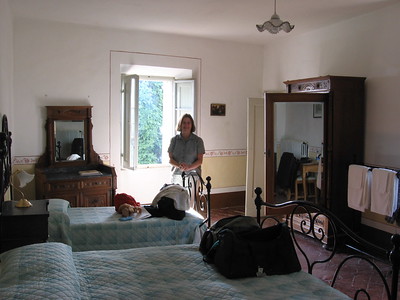
    We arrived at Spannocchia and filled out the paperwork for stranieri (foreigners), then Giuseppe showed us to our rooms. When he opened our door with a skeleton key, we stepped inside and my breath was taken away.

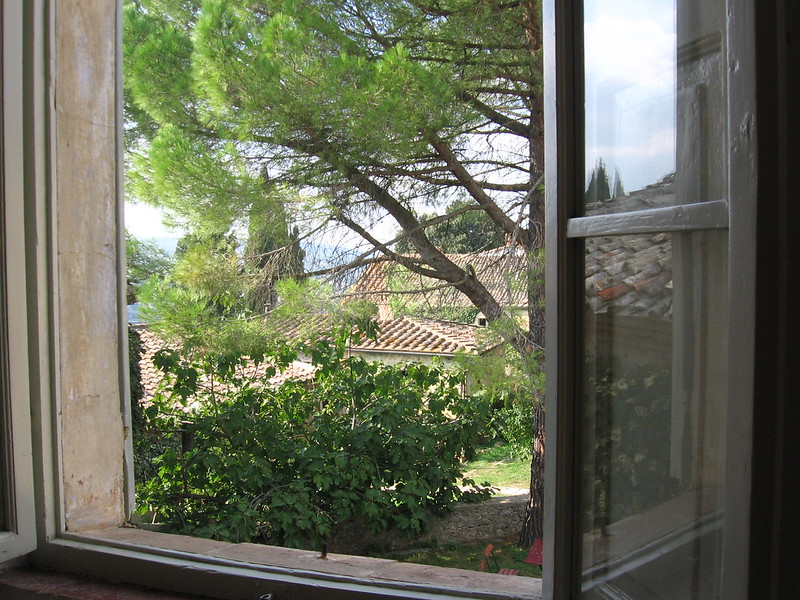
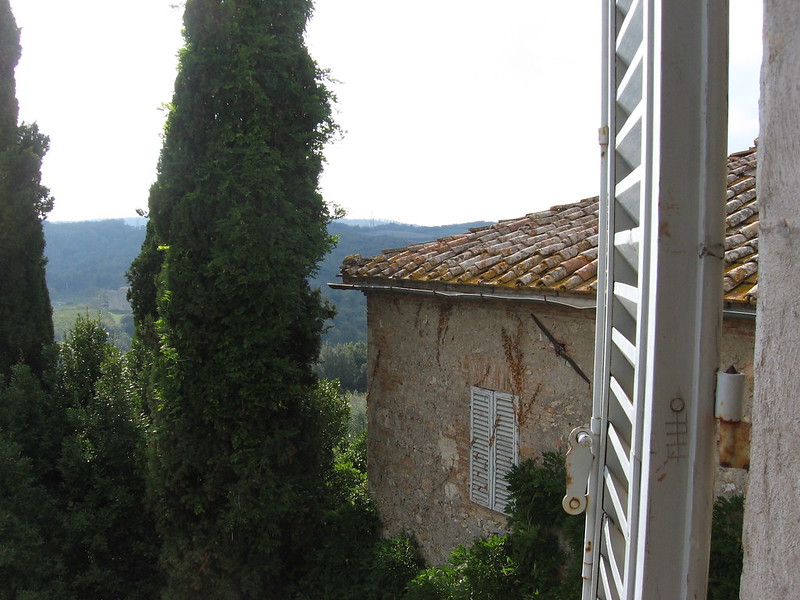
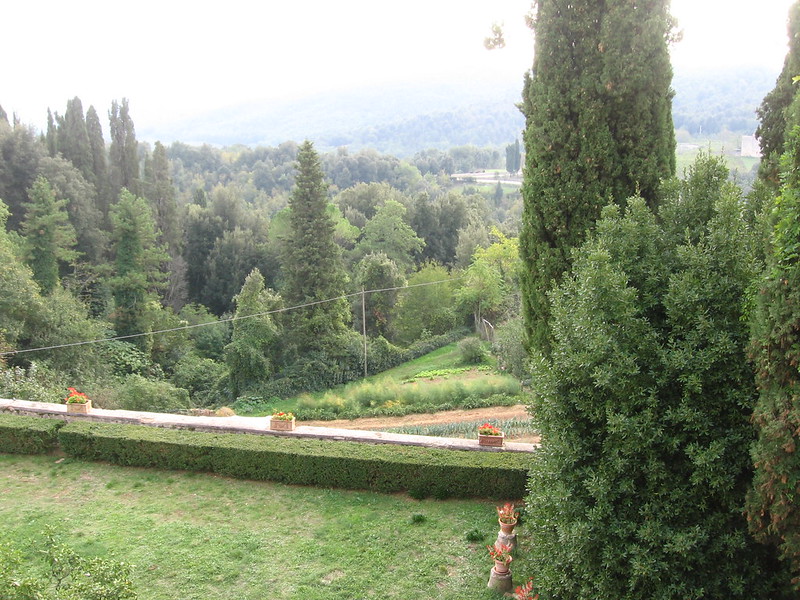
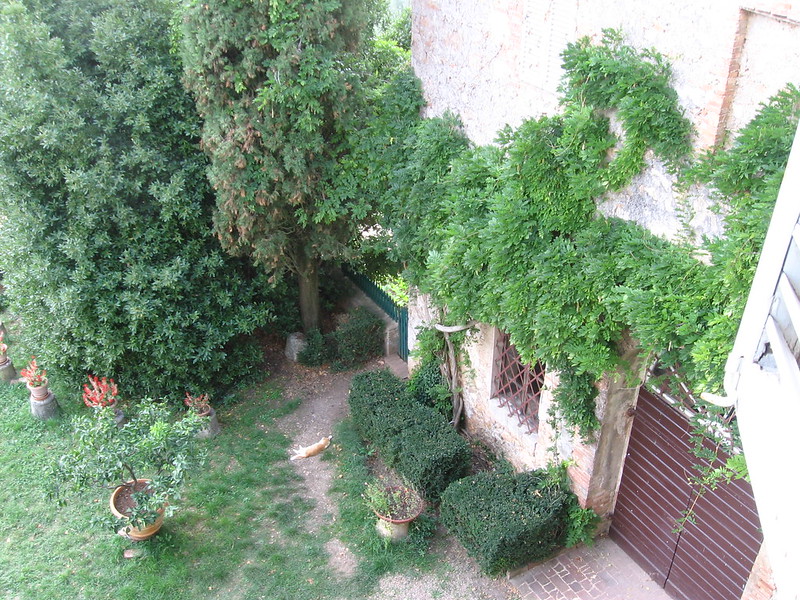
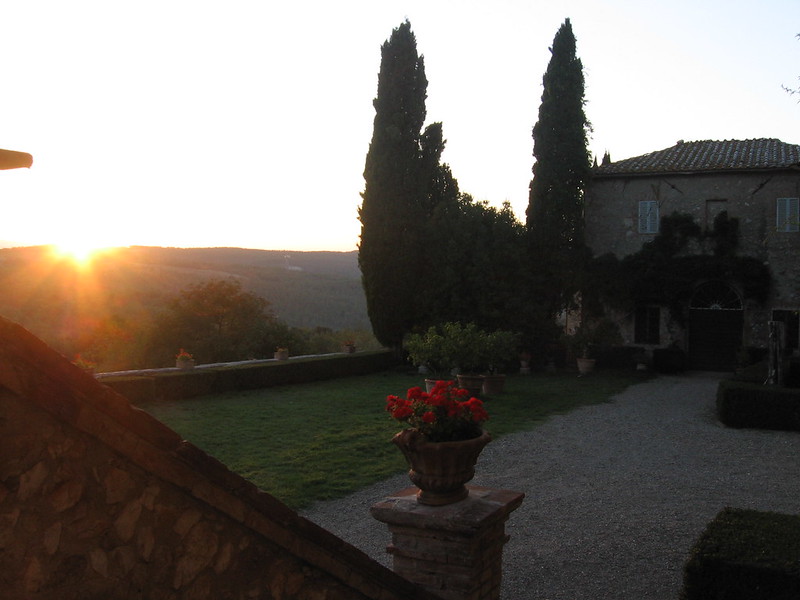
    I ran over the polished, uneven brick floors to the two windows, each looking out to a different vista. Leaning out the window that overlooked the farm courtyard, I saw Debby looking up at me, grinning. “How do you like your room?” she sang out.

    “Oh my God. Oh my God.” I caught my breath, and my eyes began to fill up with tears. “It is the most beautiful room I have ever seen in my life.”

    We had paid for the most inexpensive room, but Charlie and Debby upgraded our room in appreciation of my work for Slow Food. It had its own little bathroom, and although I did not see every room, I suspect that it was the most beautiful bedroom at Spannocchia. Because how could there be one with better views than these?

    And people have been enjoying them for 900 years…


    To be continued…