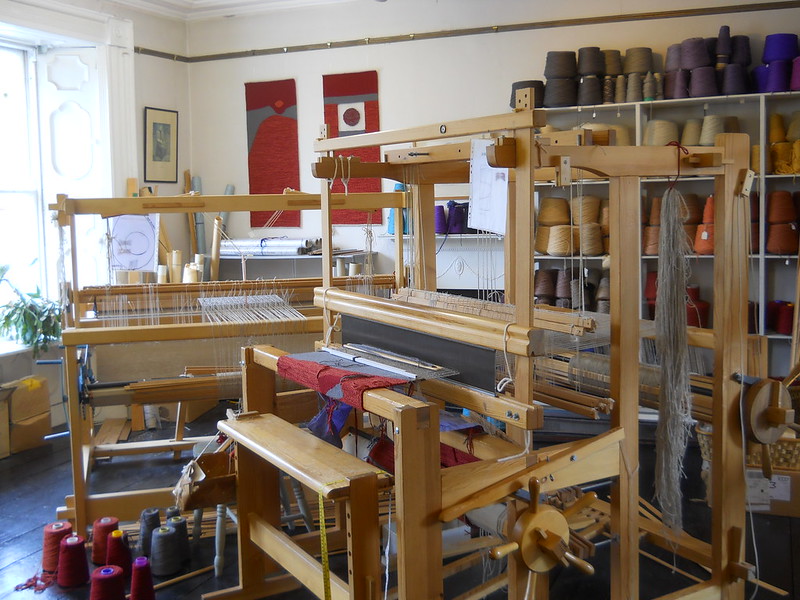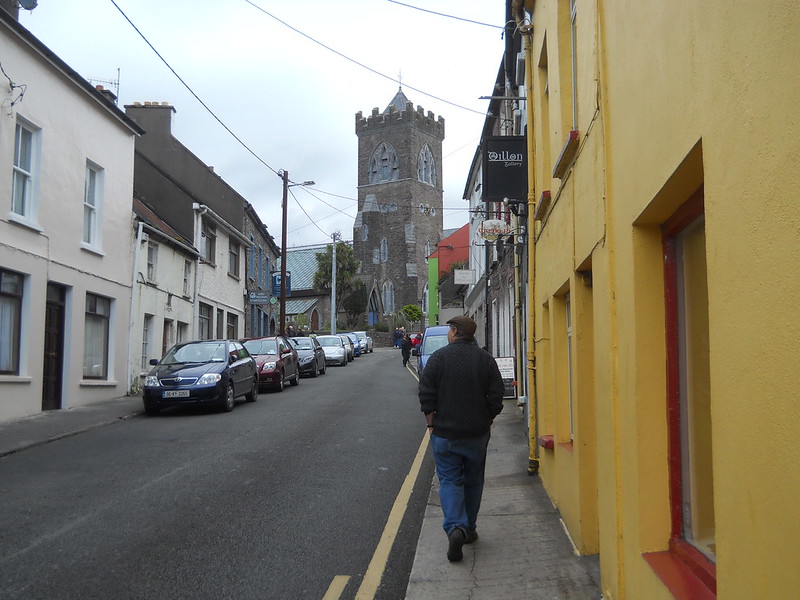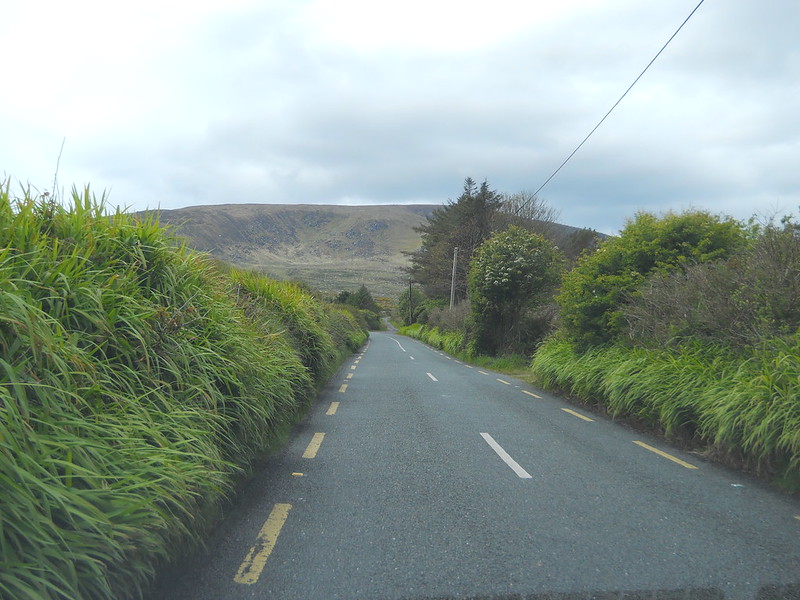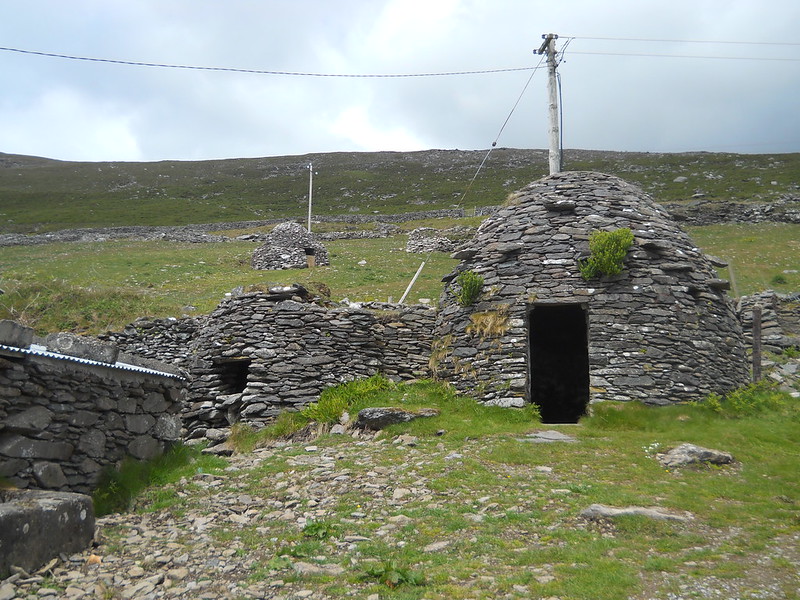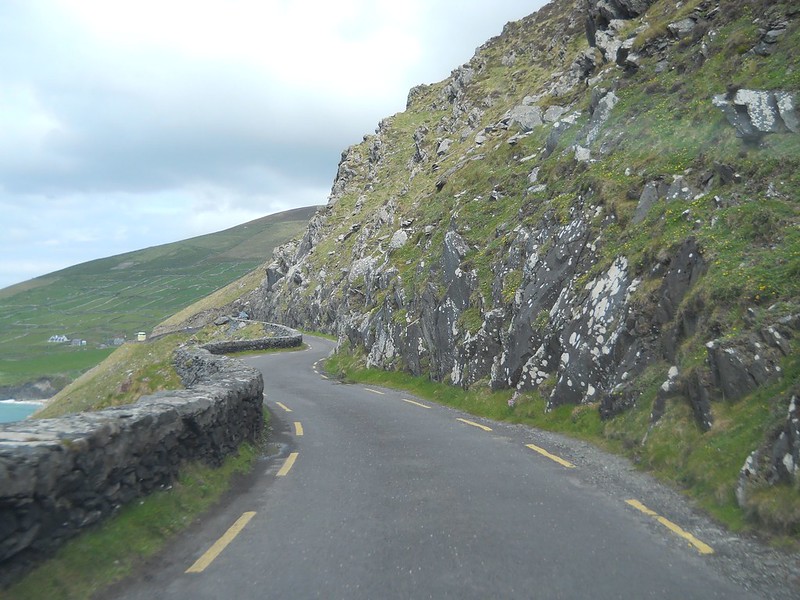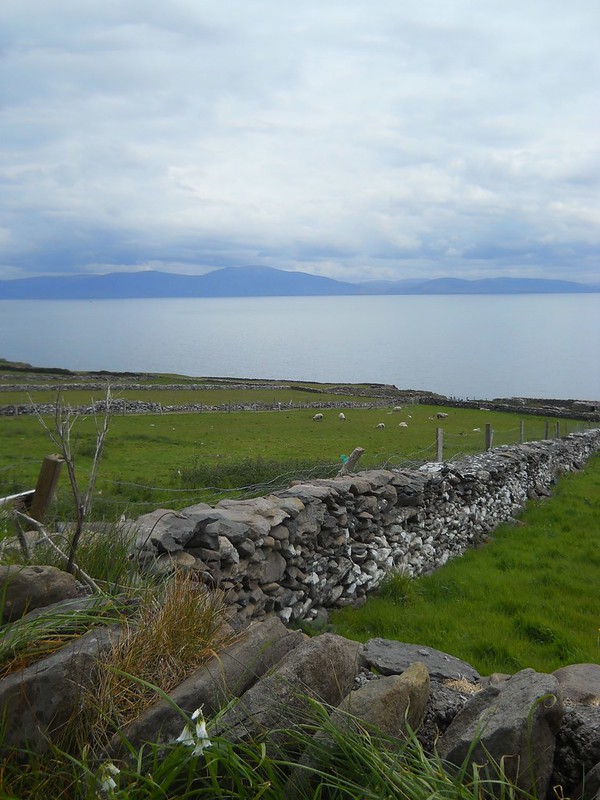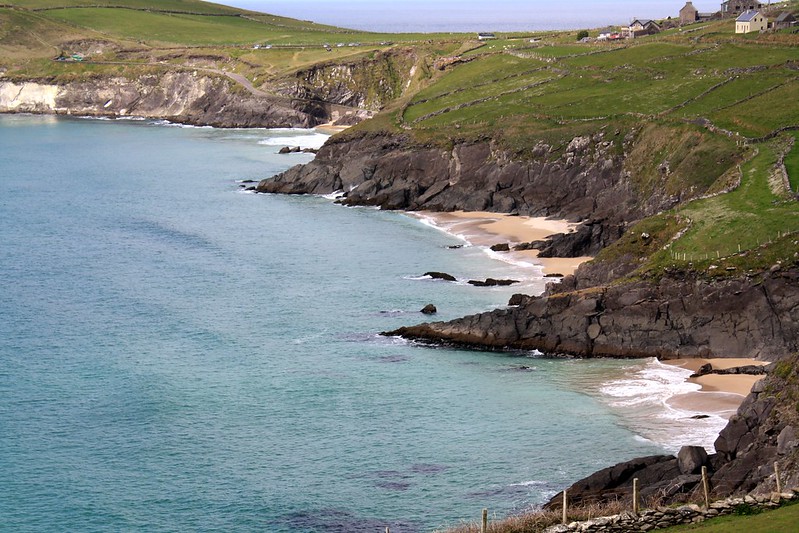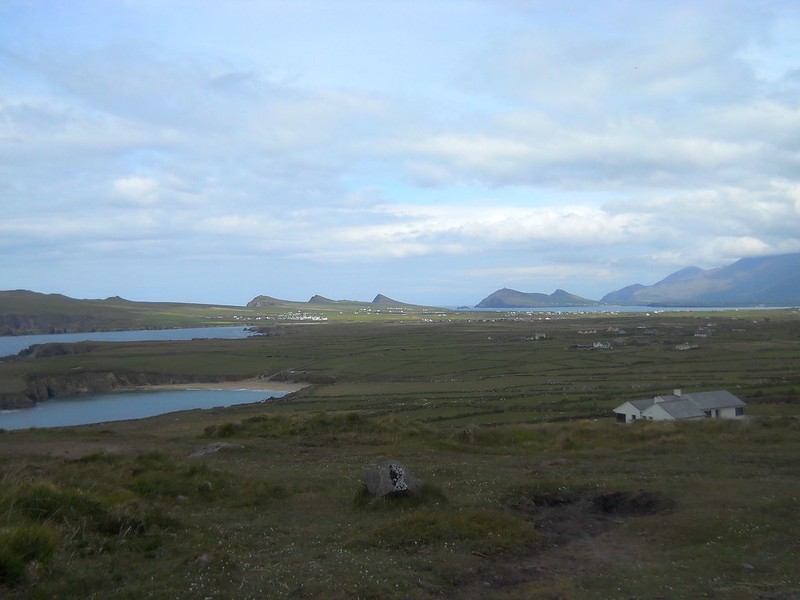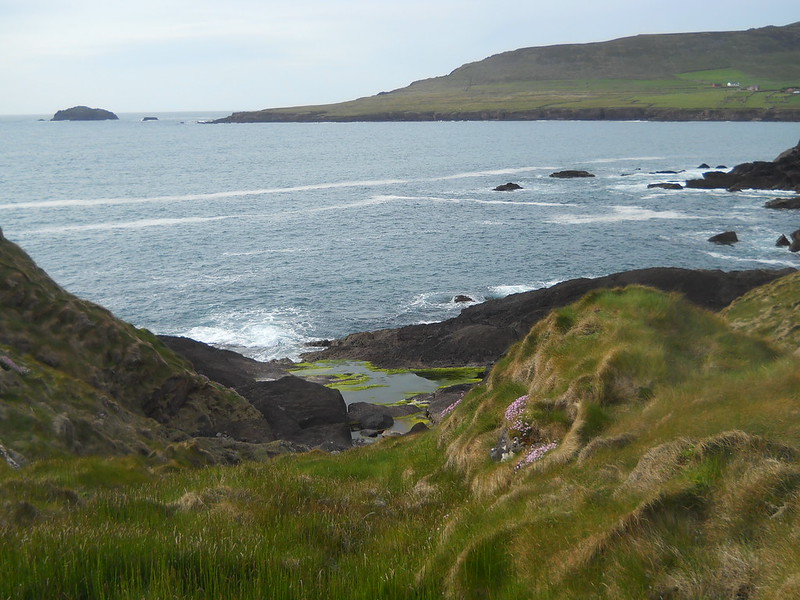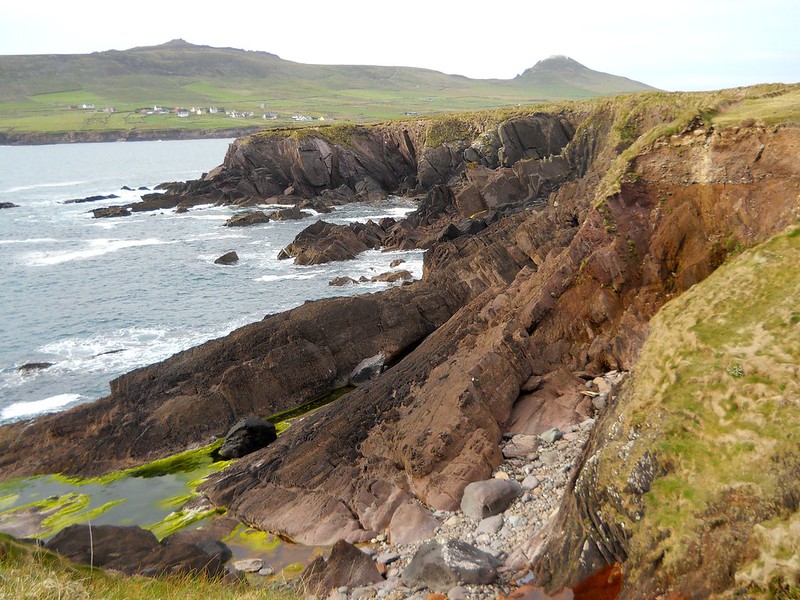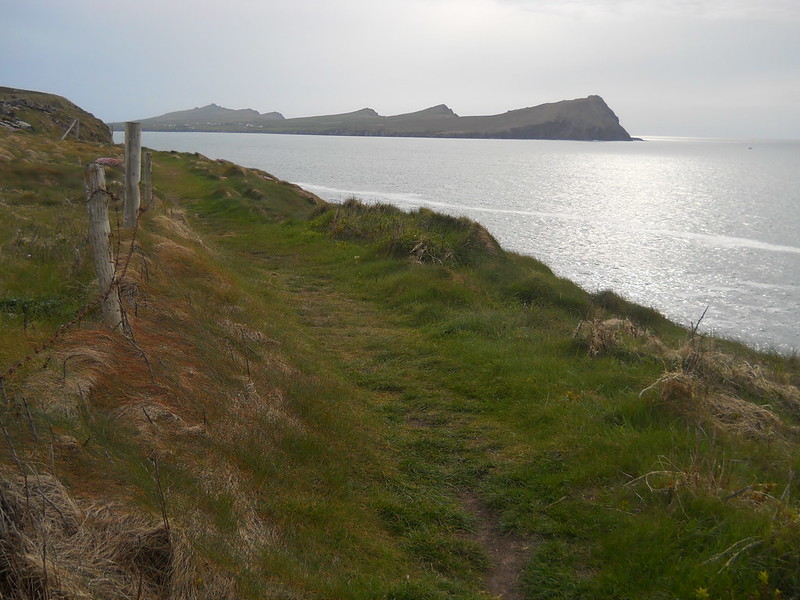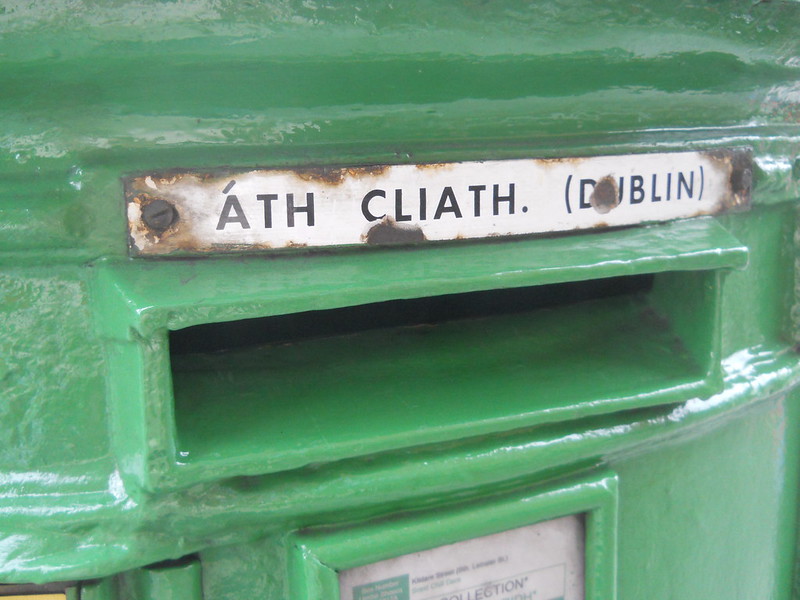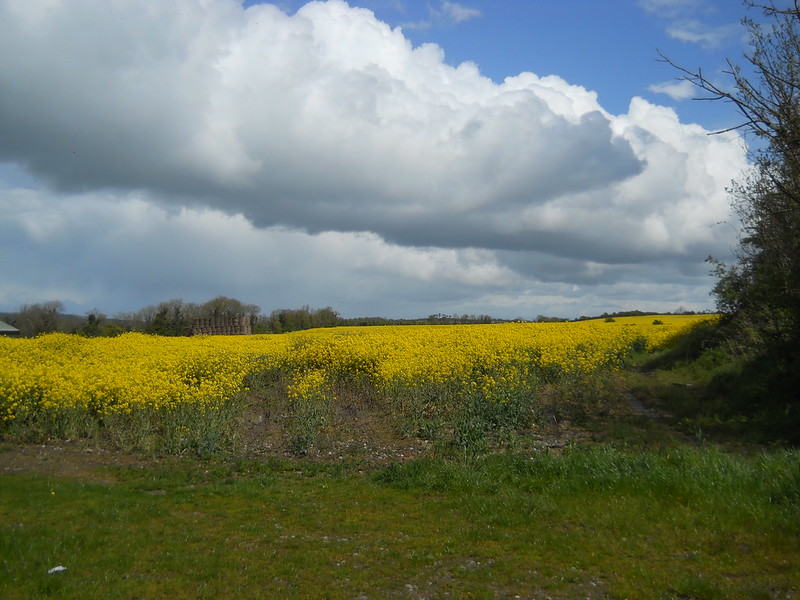
• After breakfast and one more cliffside stroll we headed into Dingle. We were both eager to find some art galleries and in particular I wanted to go to tapestry weaver Lisbeth Mulcahy’s studio and shop. She was out of town, but I was able to take a photo of her studio. We bought some small prints at Dingle Artworks by June McIntyre, an artist who painted scenes of the cliffs we had just hiked. Turned out that she lives next door to the place where we spent the night. Ran into other North Carolina people at Dingle Woolen Market. We stopped for coffee and cake at a little cafe and set out for Slea Head Drive and its magnificent scenery before we left the Dingle Peninsula.

    I wish that we could go back and spend a week exploring the Dingle Peninsula’s historical sites and walk along the sea cliffs. Do some art work and swim in the ocean. One night and one day was definitely not enough.

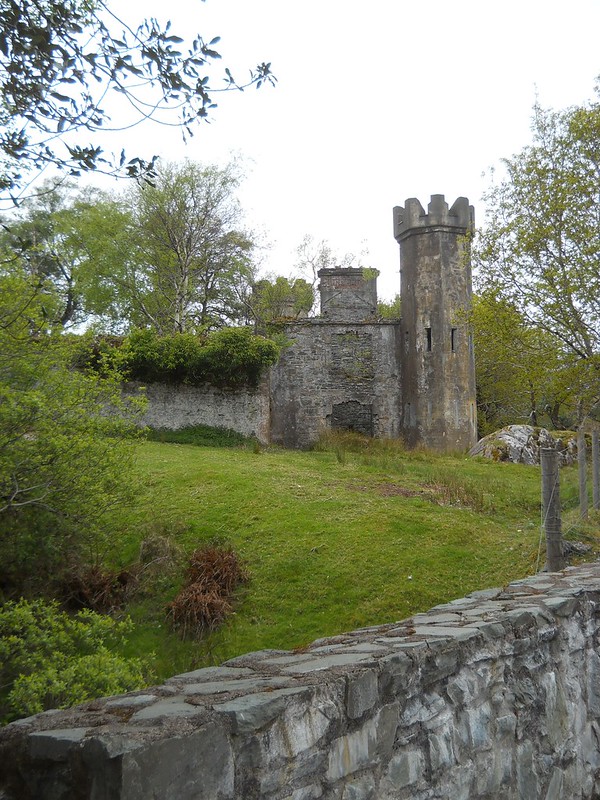
    Ancient beehive huts, dry wall stacked and watertight for about 3000 years

    Next post: Thursday, May 17, 2012: Connor Pass

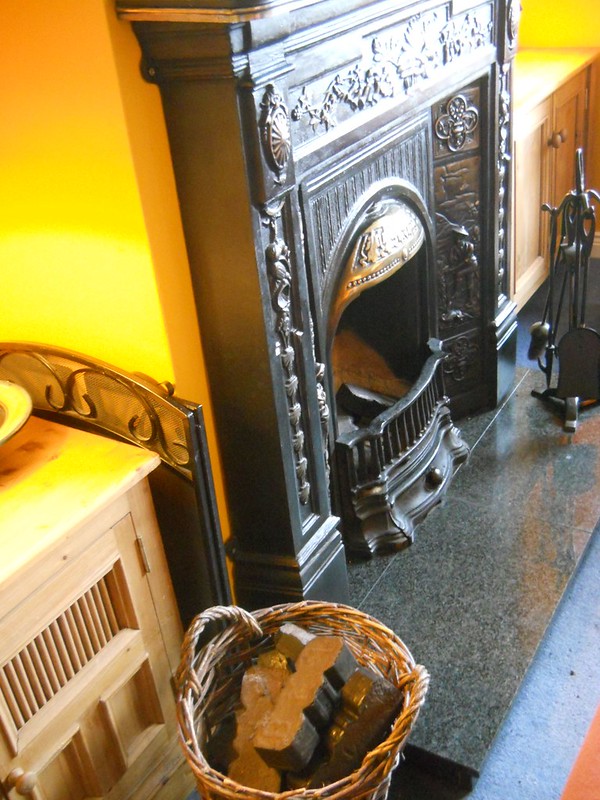
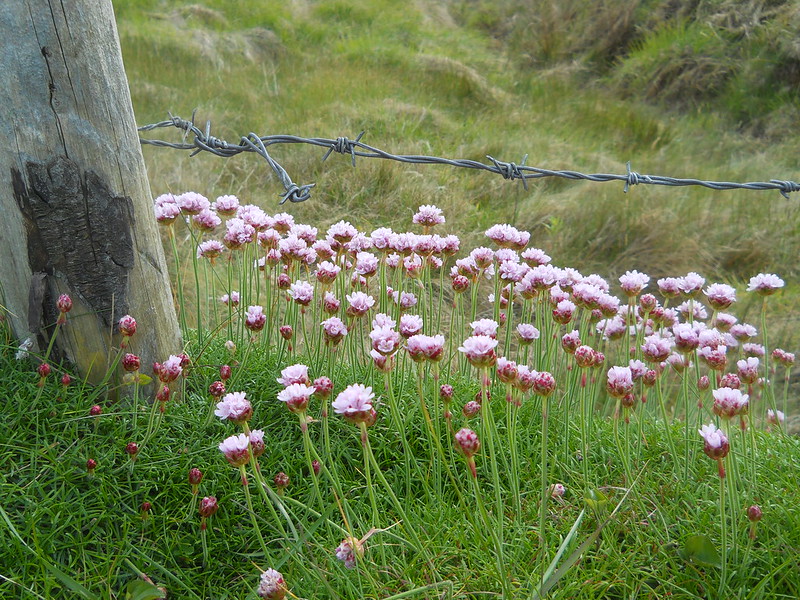
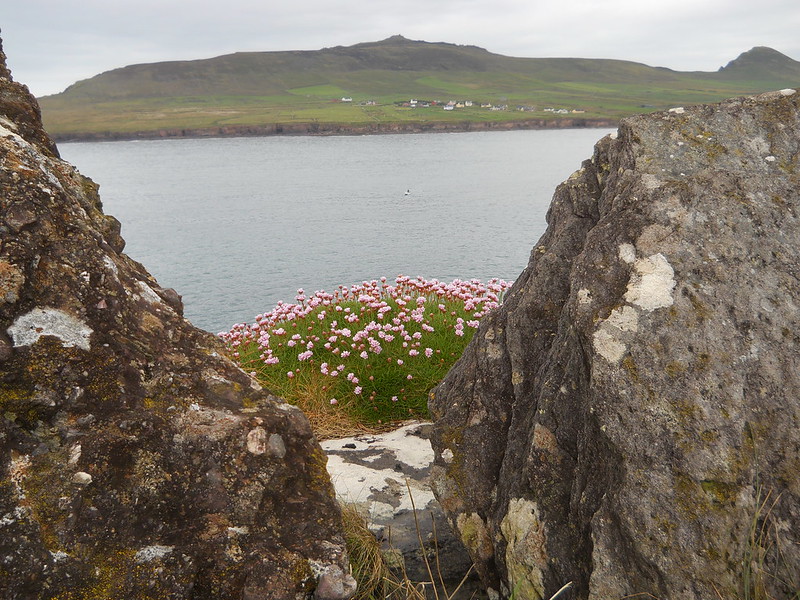
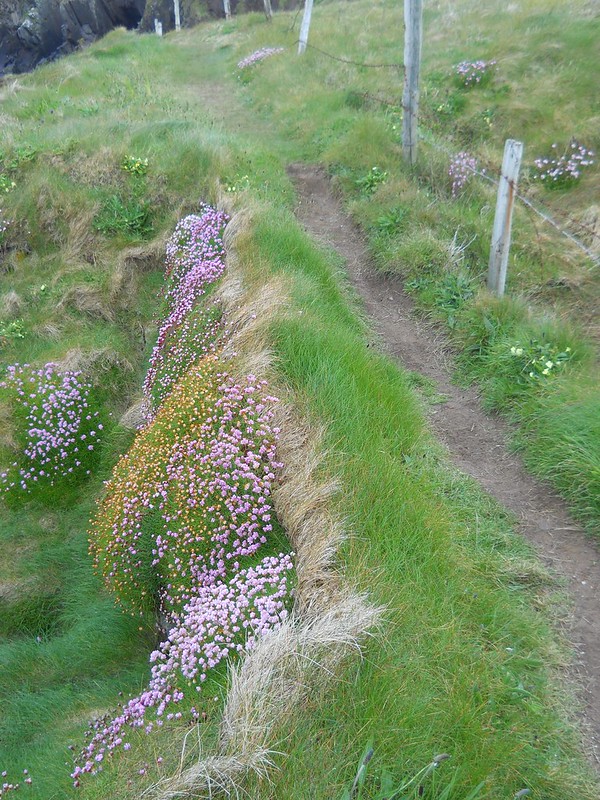
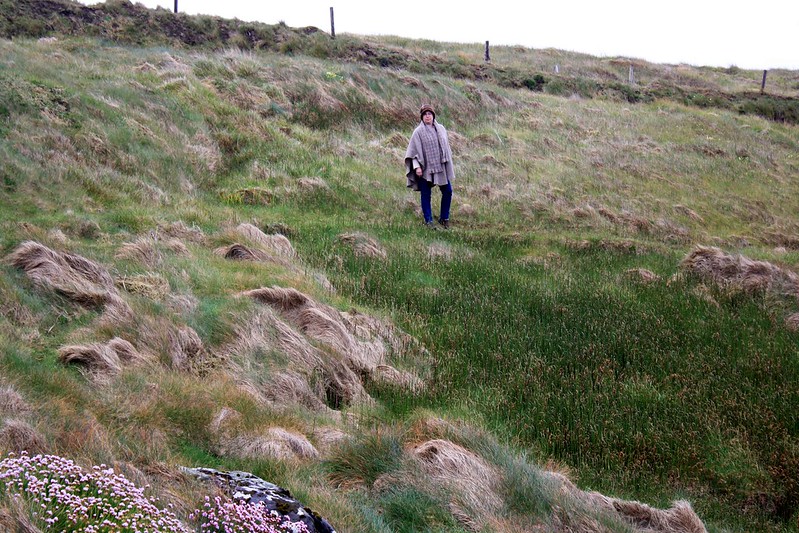
  • Our place to stay on the Dingle Peninsula was Gorman’s Clifftop House in Ballydavid. When we arrived, there was a peat fire in the fireplace and Sandy immediately collapsed for a nap in our beautiful spacious room. I had to get out on those glorious cliffs right in front of us for a walk with my sketchbook, though. Sandy joined me out there the next morning after breakfast.

    That evening we celebrated our anniversary with a meal in the restaurant there, and drove the short distance to Dingle to see what was happening in town. There was not much happening in Dingletown on a Wednesday night, unfortunately. The only two pubs with traditional music were crowded with standing room only, so we wandered back “home” and decided to hit the town and drive the Slea Head Drive in the morning. Could the scenery be any prettier than what we saw today? It seemed doubtful.

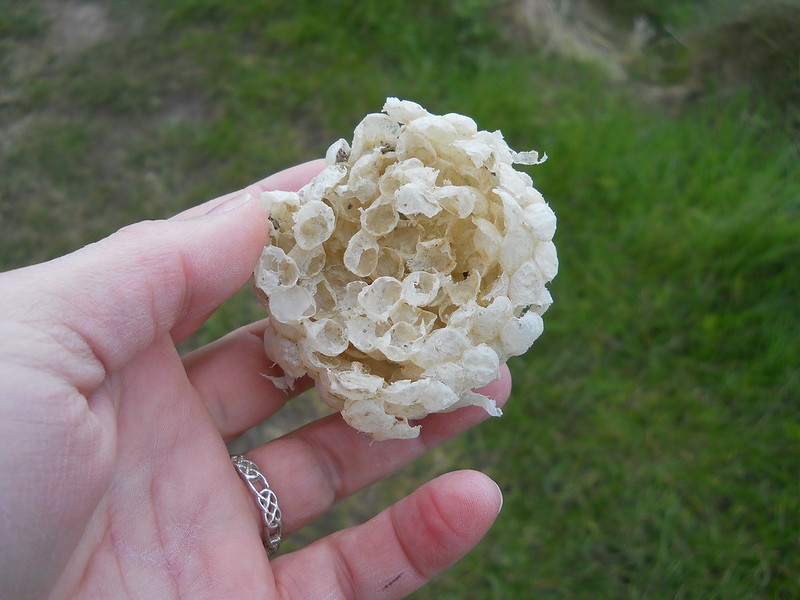
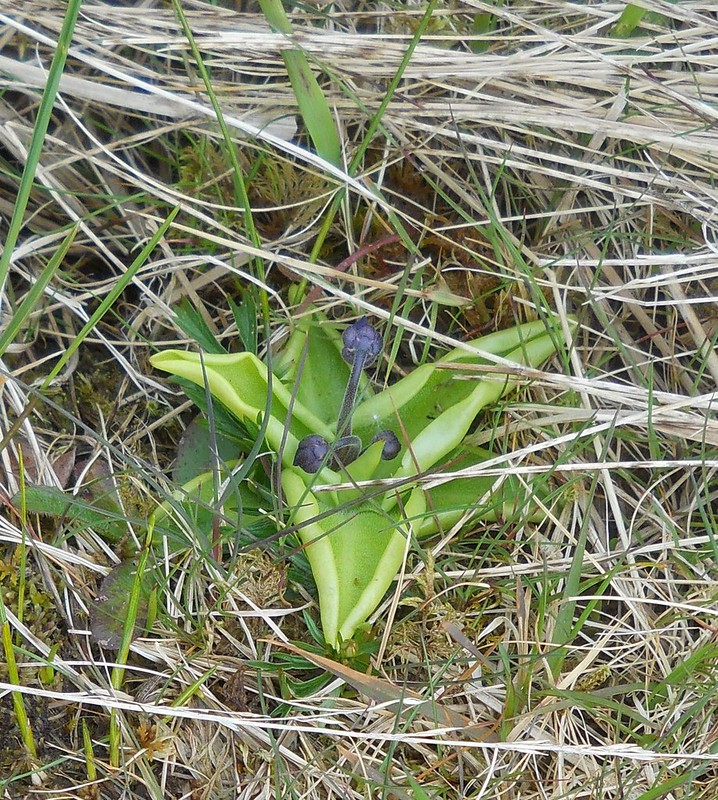
    What the heck IS this thing?

    Next post: Thursday, May 17, 2012: Dingle and Slea Head Drive

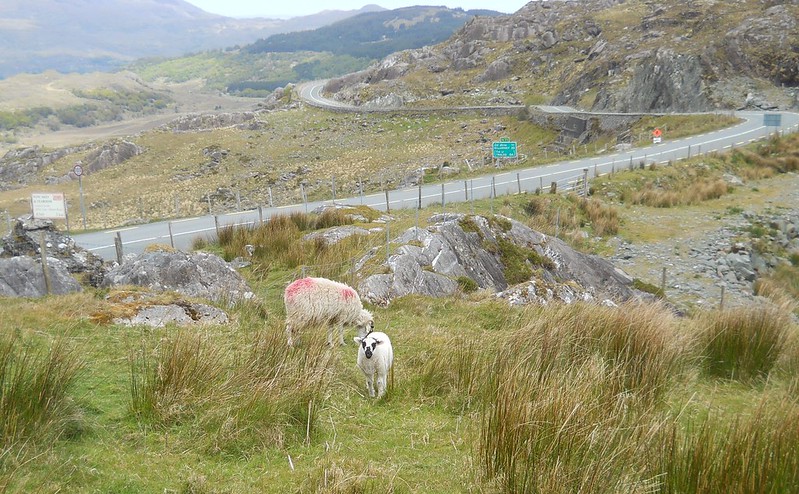
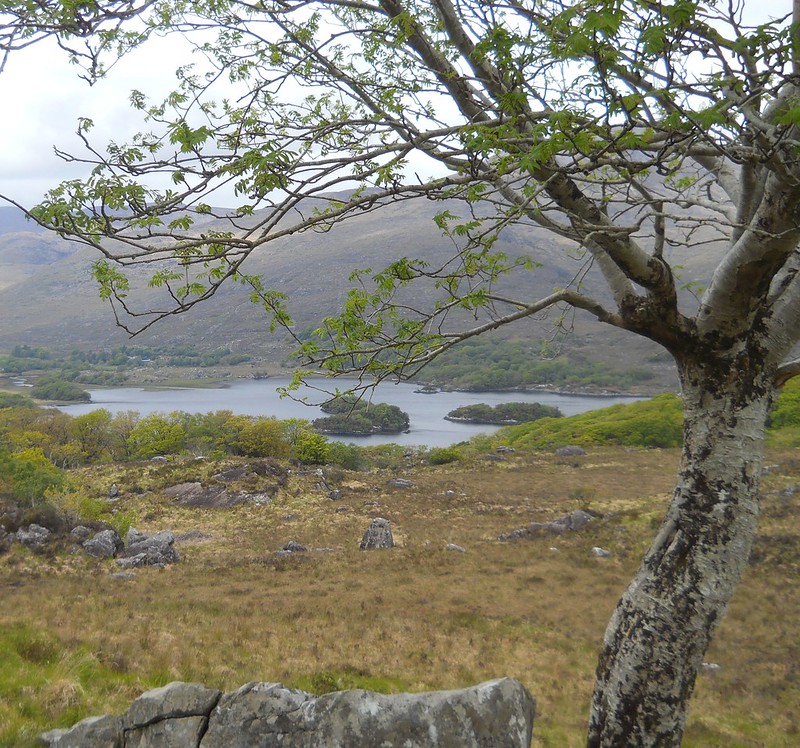
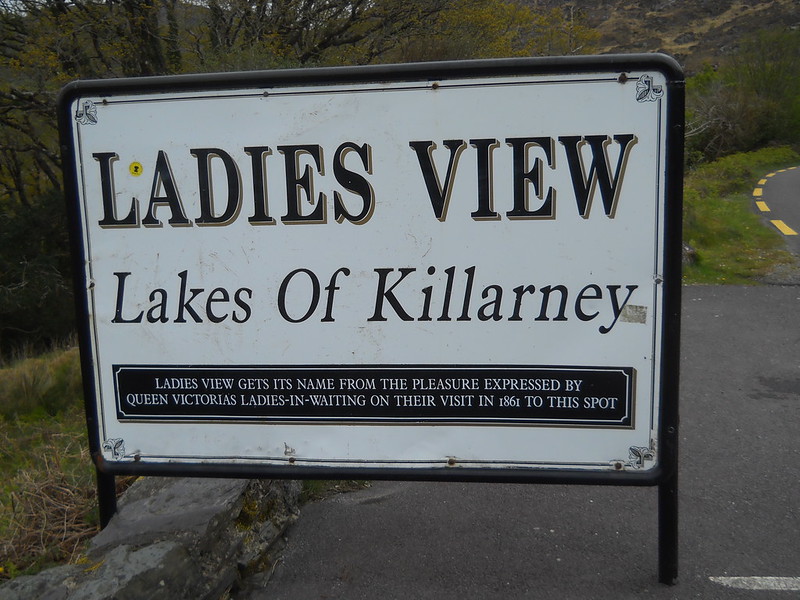
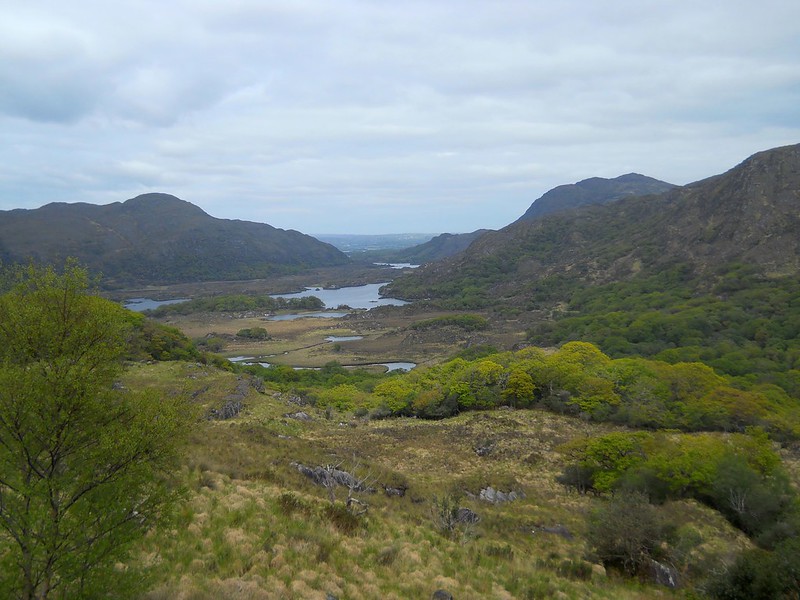
  • The plan was to drive around the Kerry peninsula on the Ring of Kerry on our way to Dingle. Then Sandy turned right when I said left, and there aren’t many good places to turn around. Which was just as well, because the north edge of the Ring of Kerry has beautiful scenery around the Lakes of Killarney, and we would have missed all this going the other way, and it made me feel a little better to get to our next lodging a little sooner. I like to settle into a base and explore out from there, and that didn’t happen much on this trip. Seemed like we were almost always on our way to the next place.

    Next post –Wednesday, May 16, 2012: Ballydavid

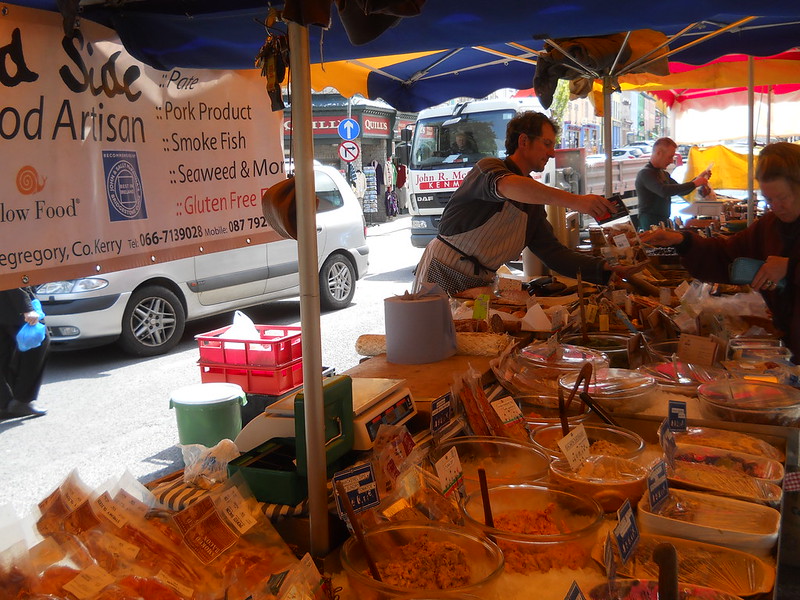
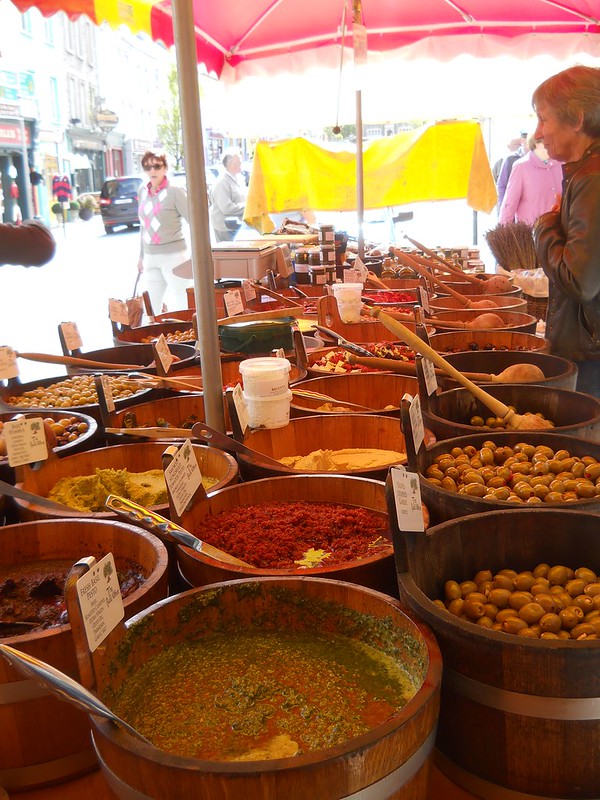
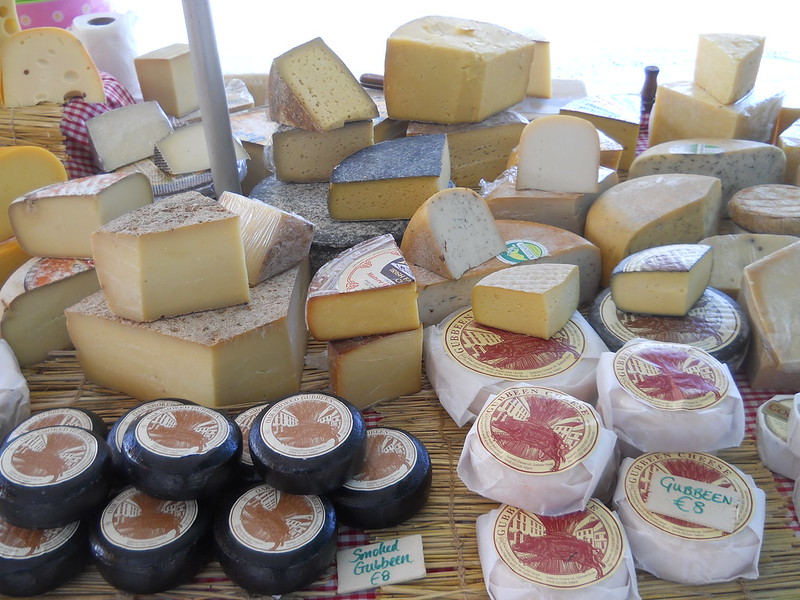
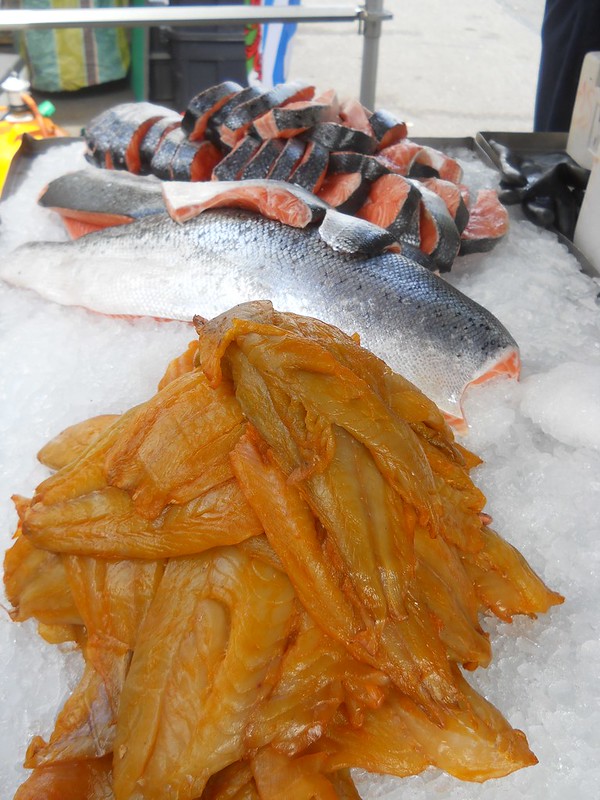
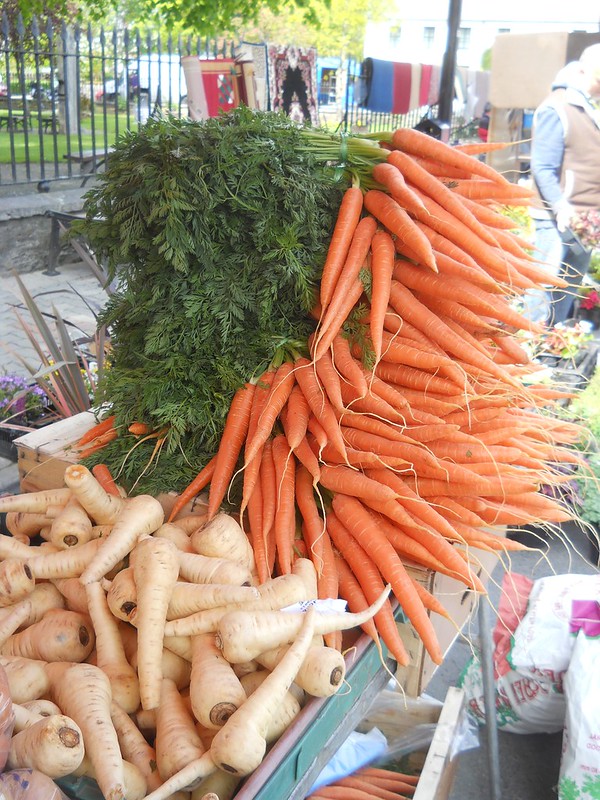
  • Wednesday morning was a big shopping day for us in Kenmare. Sandy bought sweaters and shirts and a handwoven cape and scarf for me in Glenaran Irish Market, silver Celtic knot wedding bands in honor of our 25th wedding anniversary at Finnegan’s Jewelers, books including a field guide to Irish wildflowers at Kenmare Bookshop, and we wished that we could buy some of the fresh foods at this market in the center of town. Kenmare is a foodie town, and Slow Food is present, so you know I had to take photos. Food porn alert.

    Next post – Wednesday, May 16, 2012: The Ring of Kerry

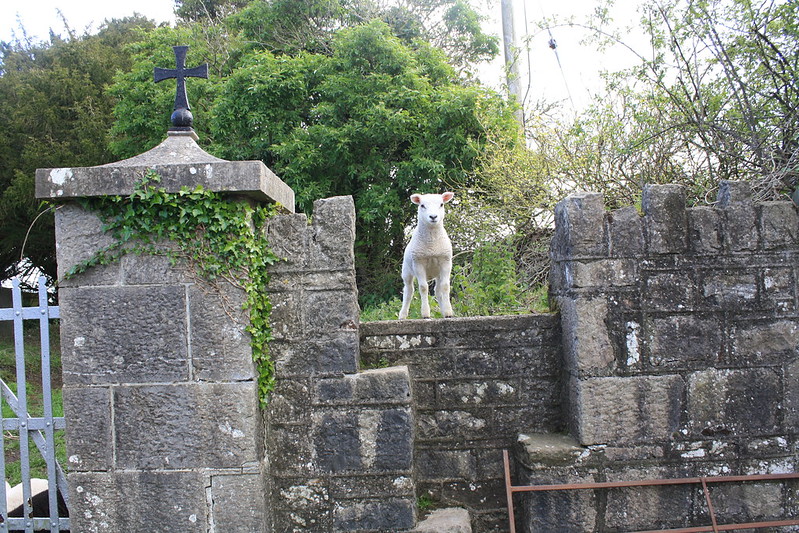
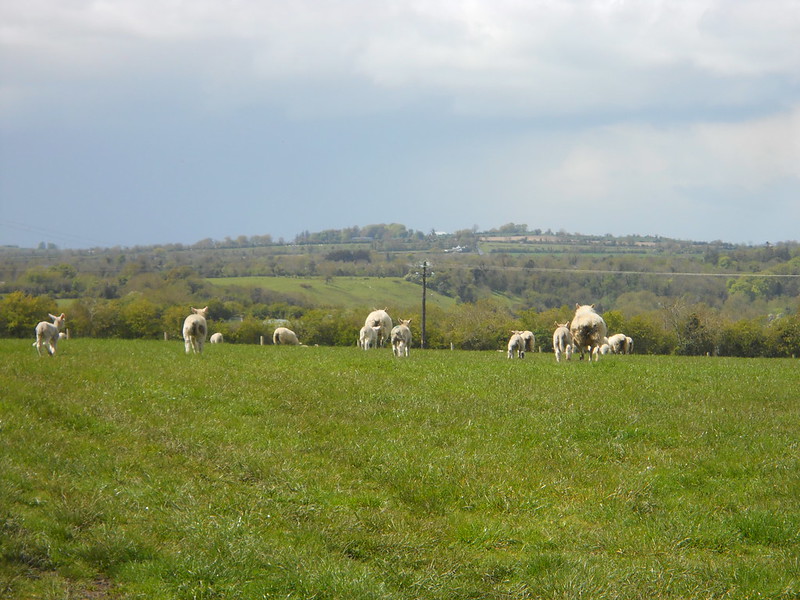
  • We meandered to the south on Tuesday, nearly a full day of driving. In County Meath close to Newgrange, we stopped at a spinner/weaver’s farm and shop, Boyne Valley Wools. Her work was beautiful and inexpensively priced, and if she had taken credit cards or if I had had cash I would be the proud owner of one of her scarves. Her farm was also interesting because it was in view of Newgrange and had an old cemetery on it where the lambs played. There was also an old stone bridge that no longer crossed water.

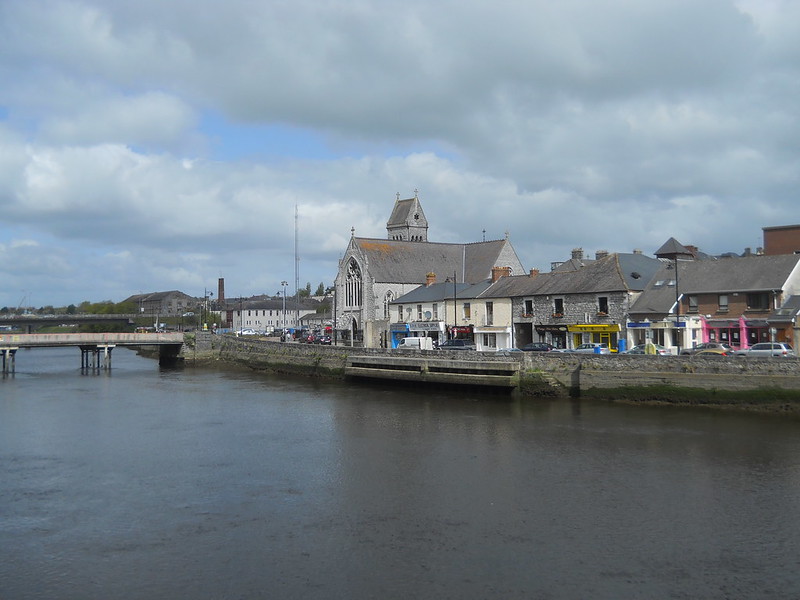
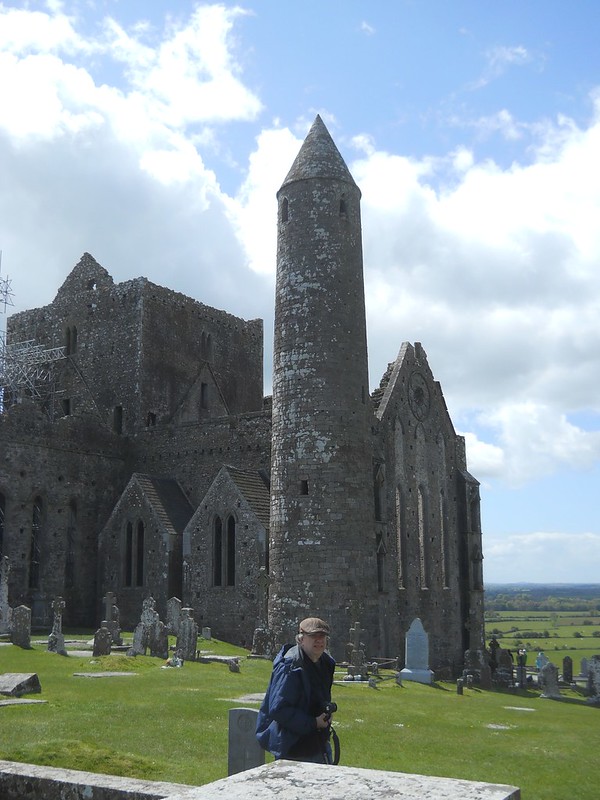
    After that, we briefly visited the Battle of the Boyne site, but since we were out of cash and had to get going to arrive at our destination in time, we headed to Drogheda in search of an ATM. We were tempted to explore this pretty riverfront town, but we had enough discipline to instead drive a few hours on the fast motorways to our next stop, Cashel, famous for the “Rock of Cashel,” a group of medieval buildings that began as a fortress in 4th-5th century A.D. and became a cathedral in the 12th century. It is said to be the place where St. Patrick converted the King of Munster to Christianity. Cormac’s Chapel is undergoing some work, but it was a lovely place, not only for the grand ruins and the cemetery, but for the view. It is one of the most visited heritage sites in Ireland.

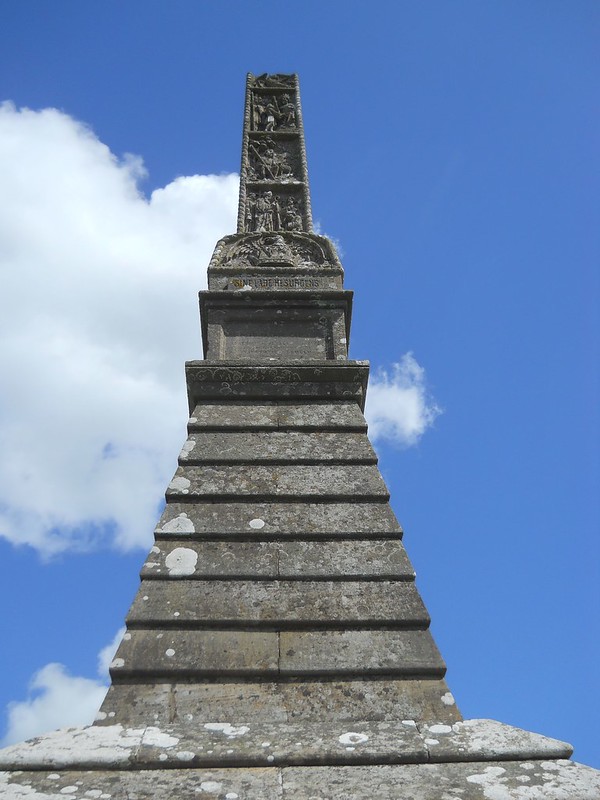
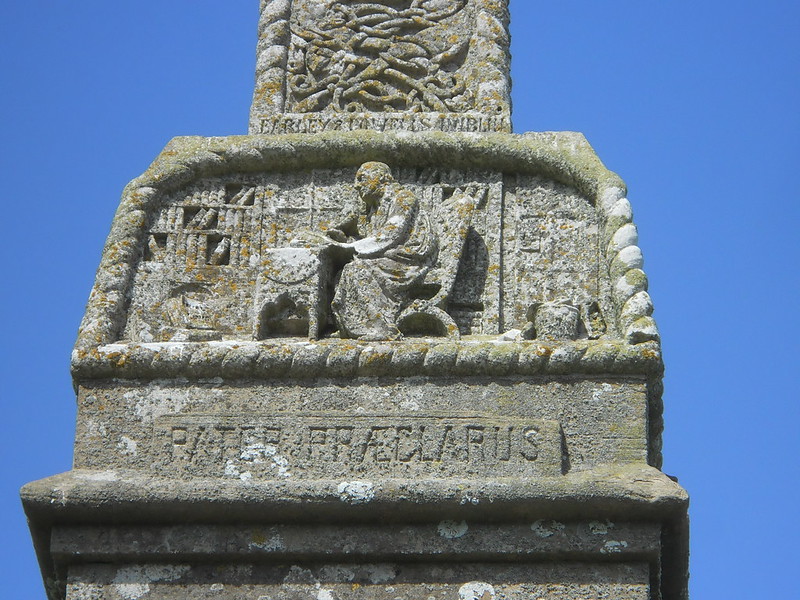
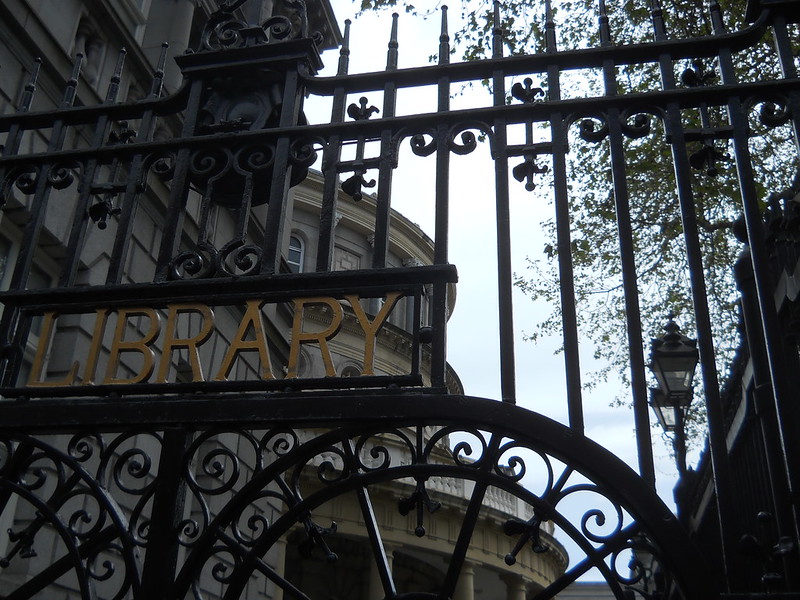
    Of course I love that this monument to St. Patrick featured a library.

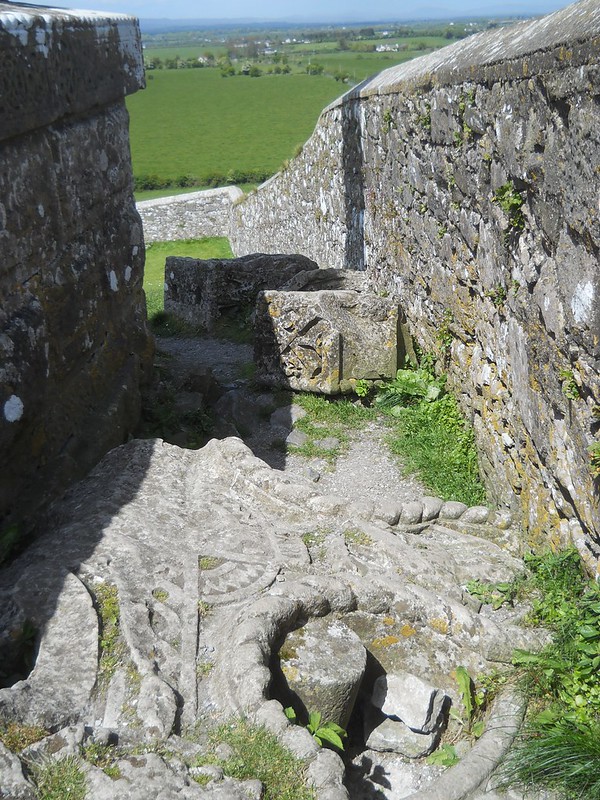
    Here’s the part of the monument that broke off. I wonder how that happened?

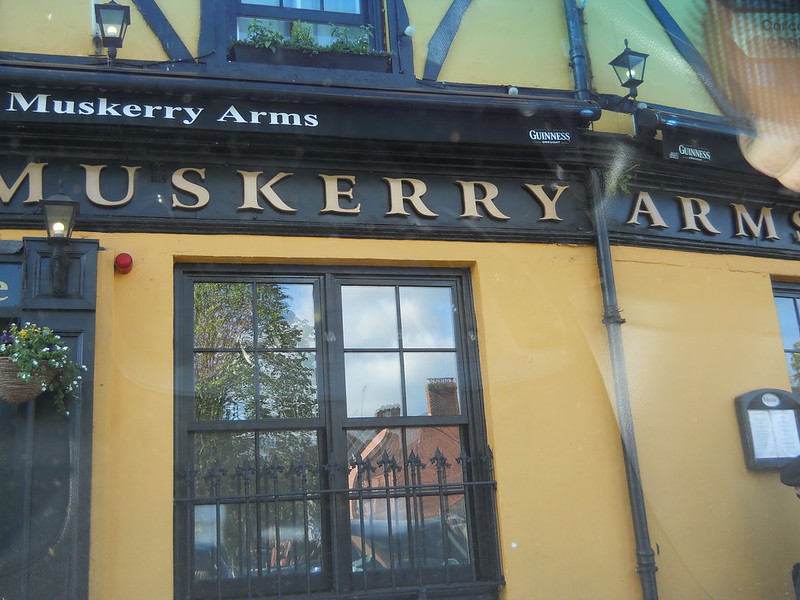
    Sandy really wanted to kiss the Blarney Stone, so we detoured to Blarney just outside of Cork. We ended up only kissing the outskirts of Cork, because by the time we got there it was late and I was only doing it because Sandy wanted to do it and then he didn’t want to pay the admission. He already has the gift of blarney anyway. Instead of that, we stopped in Muskerry Arms to use the restroom and ordered drinks when the bartender noticed us, because we are easily motivated by guilt. I’m glad that we did though, because we met Tigh, a retired Irish/English teacher, who talked to us about education (”The boys don’t want to learn Irish. ‘Will it get me a job?’ they say.”) and taught us how to properly pronounce our name. Tigh also remarked that “We talk about weather all the time because nothing ever happens here.”

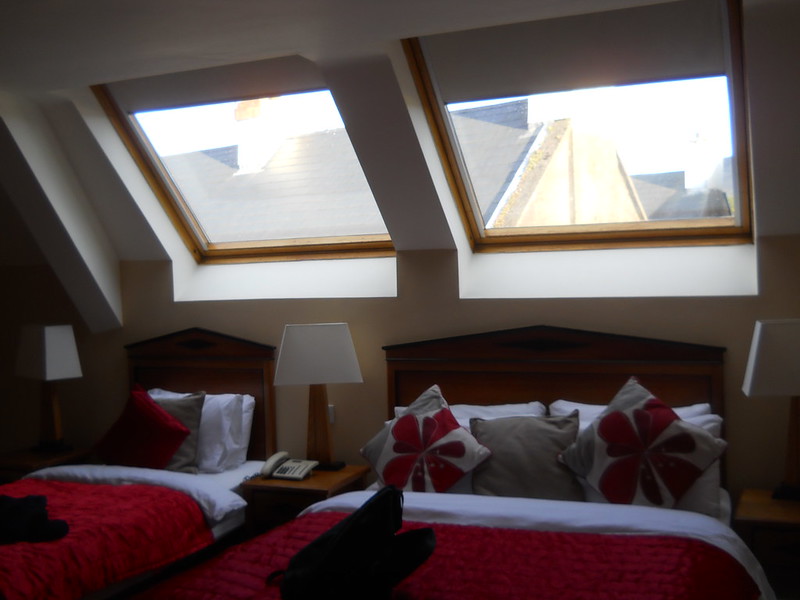
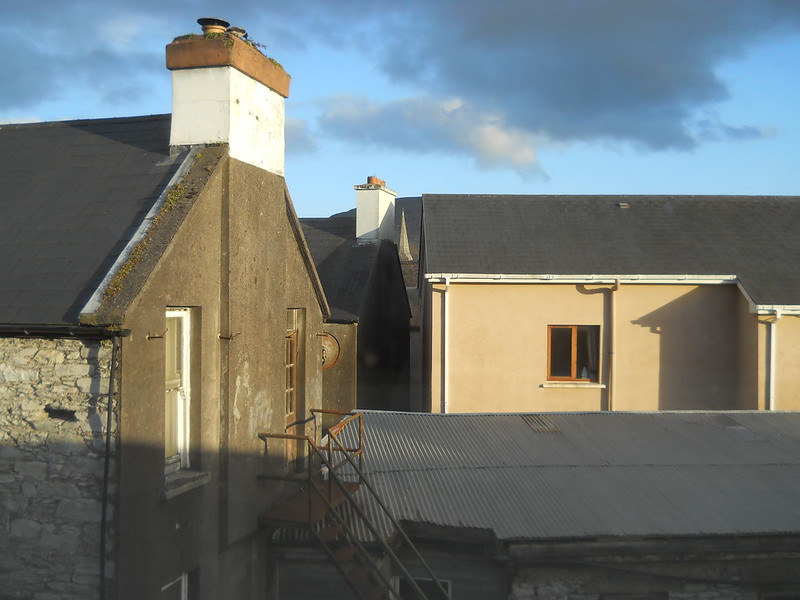
    We had to keep moving because the fast highways were behind us. It would be mostly narrow country roads for the rest of our trip. We arrived in Kenmare at Davitt’s around 8 p.m., where we booked a room in their bed and breakfast above the pubs. I was surprised at the beauty and comfort of the room, and the only noise that bothered me was a dog barking next door. The hotel and restaurant was decorated with early 20th century prints and decor, which is my favorite art period. The bedroom had skylights looking over the rooftops. It was clear enough that night that I could see the stars. The food was wonderful. It was not a traditional pub, although they did have a couple of local musicians playing traditional music for a couple of hours. I regretted almost immediately that I had booked only one night here. It was definitely one of the nicest places that we stayed.

    Next post: Wednesday, May 16, 2012: Shopping in Kenmare

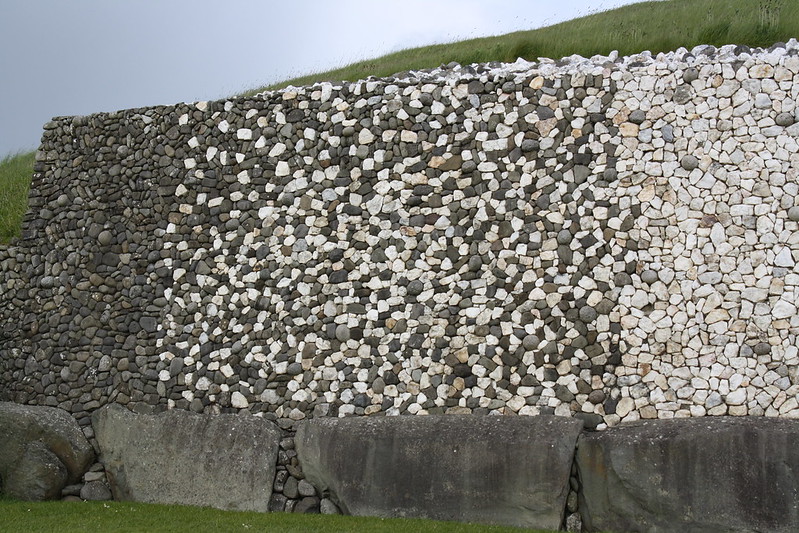
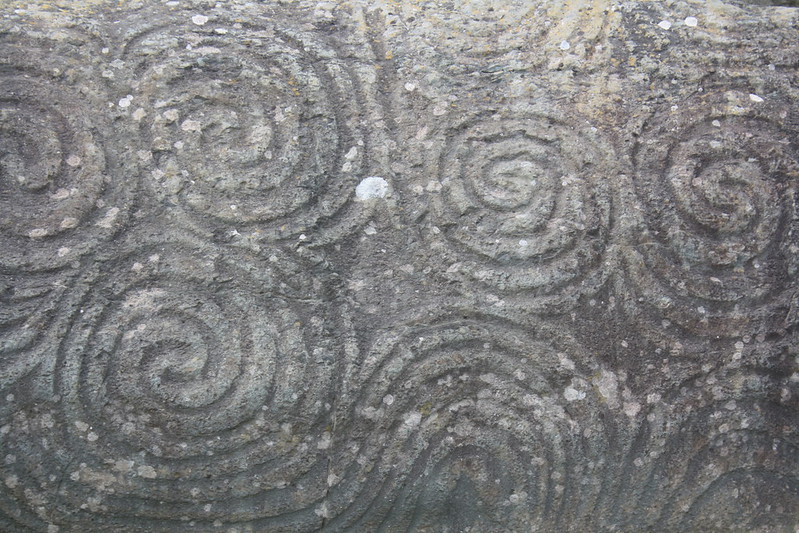
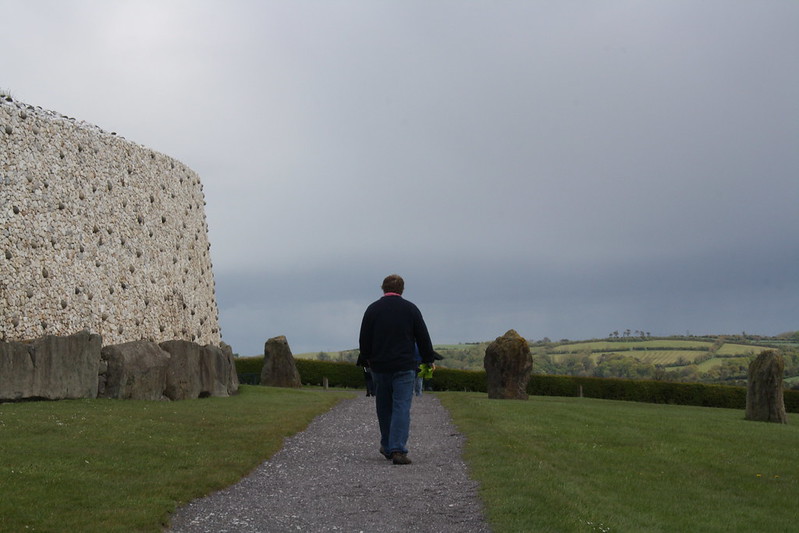
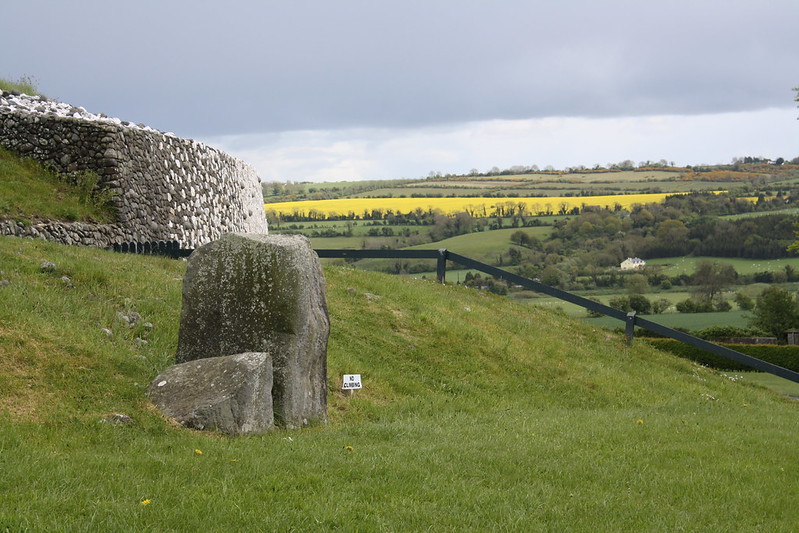
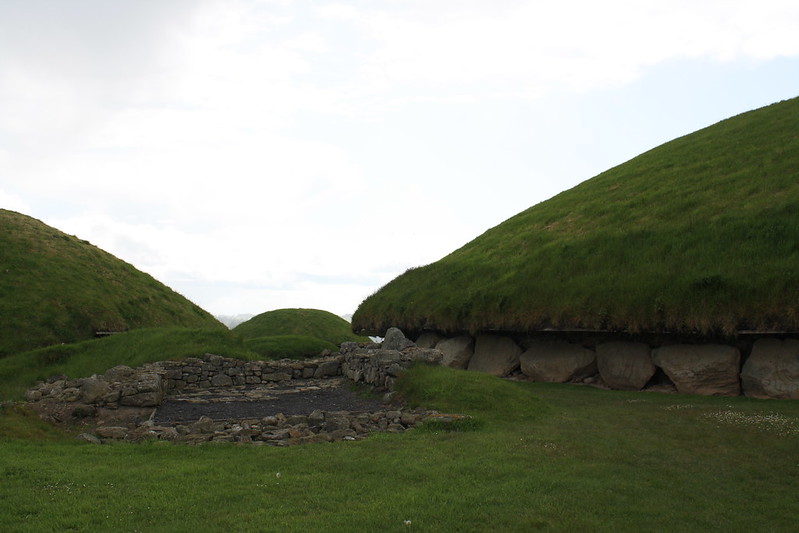
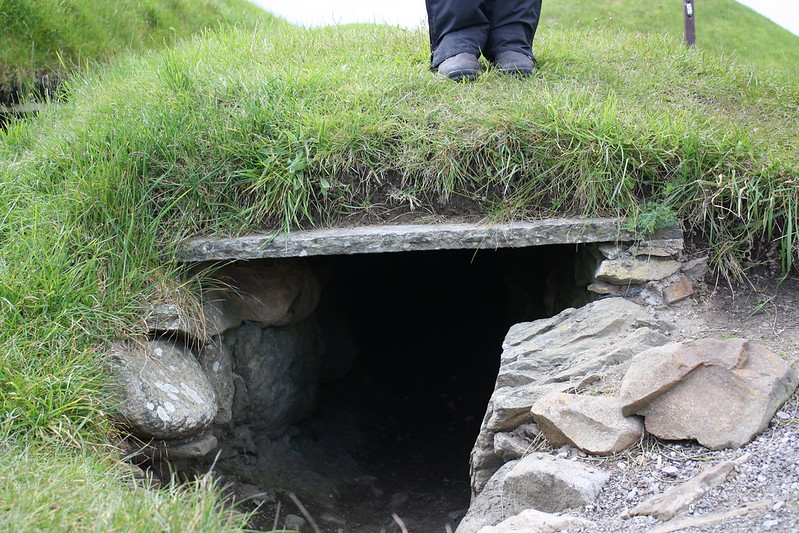
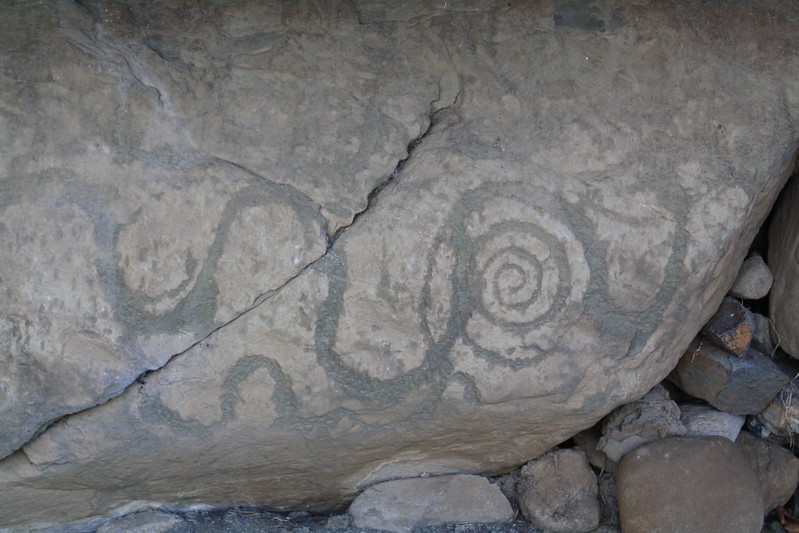
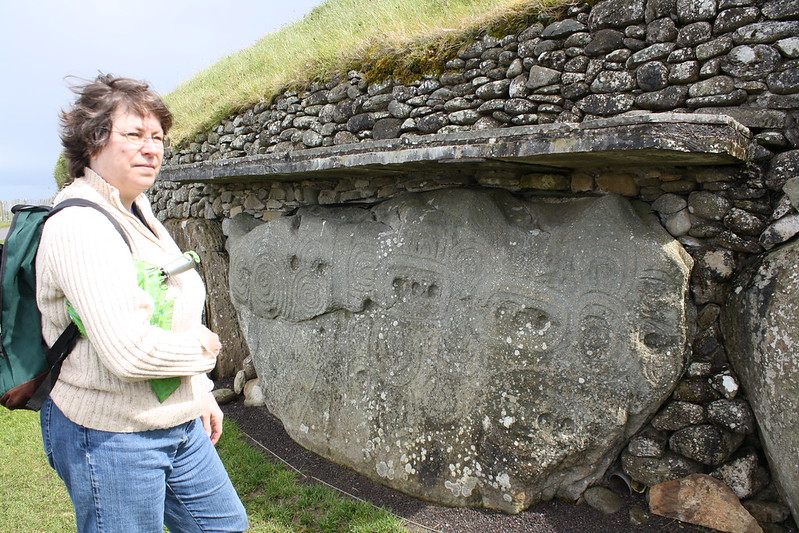
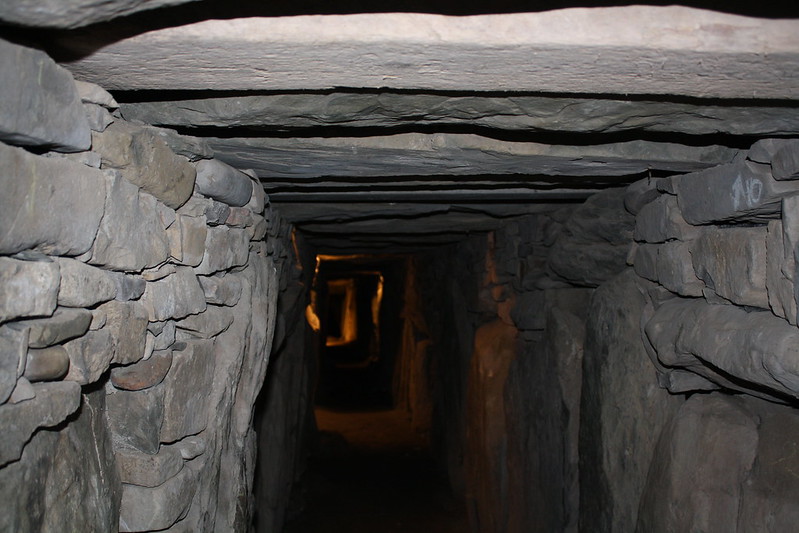
  • Photographs from our visit to Brú na Bóinne, the Newgrange and Knowth sites. It was a blustery day and we got cold and wet despite our umbrellas. It taught us to keep our raincoats close at hand in future outings in Ireland.

    Next post – Tuesday, May 15, 2012: Heading south

  • On Monday morning, we had an elegant full Irish breakfast, then caught a taxi to the airport. We meant to take a bus, but a taxi zoomed up to us at the bus stop and offered to take us to the airport for the same fare. The taxi driver talked about the referendum that the “Yes” and “No” signs everywhere referred to, and said that he was not going to vote. “We’ve voted ‘no’ on this twice before. They’re going to keep bringing it back for a vote until we vote the way they want us to, so why bother.”

    We picked up the rental car at the airport, where I was told that my credit card did not cover the car insurance even though I checked with Visa beforehand. I still don’t know if I was misinformed by the person on the phone or ripped off when we got there, but I was not inclined to argue about it all morning, so we bought comprehensive insurance and rented a GPS. The rental itself was cheap – $89 for 8 days. Later when we got on the roundabouts and the narrow roads, I was grateful for both of these things.
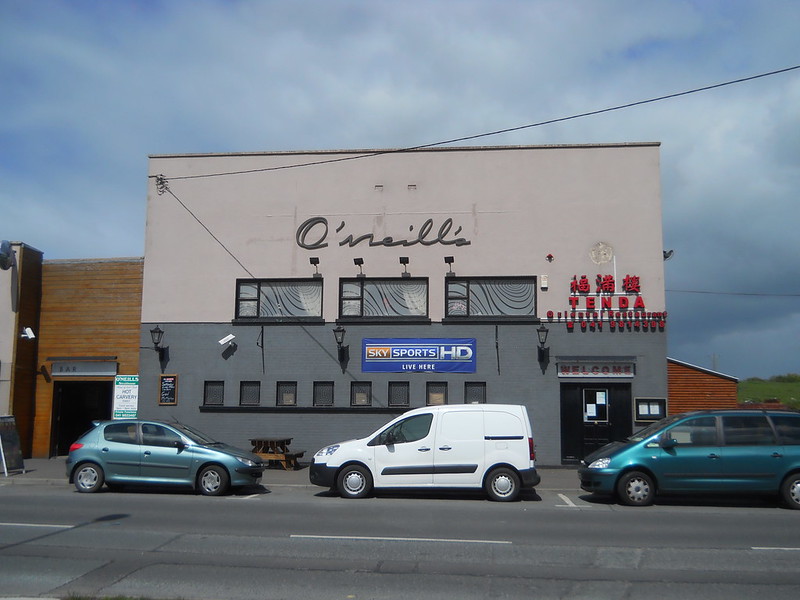
    The motorways, like our interstate highways, were fast and easy. We got off the motorway, and in a few minutes the GPS stopped updating when I didn’t realize it wasn’t plugged in. We turned down a lovely back road and ended up in Duleek, where we decided to stop and recalibrate the GPS. As luck would have it, we pulled up to a restaurant/bar named O’Neill’s. According to the book McCarthy’s Bar, one of the first rules of travel is that you never pass a bar with your name on it. It was lunchtime and so we would just get a soft drink and consult our map.

    The guys who lined the bar at O’Neill’s had either gotten off their shift a few hours before or had just gotten back from a football game they attended in Scotland the night before, and they were in fine moods. When we decided to order a Smithwick’s and a Bulmer’s cider, our drinks were bought for us. When they discovered that we were O’Neills, nothing would do but that they get the owner, Seamus O’Neill, down there from his office to pose with us for photos. When we told them where we were headed that afternoon – the oldest passage tombs in Europe and a UNESCO World Heritage site just down the road – no one had been there. “Any monkey can build a cave,” one said.
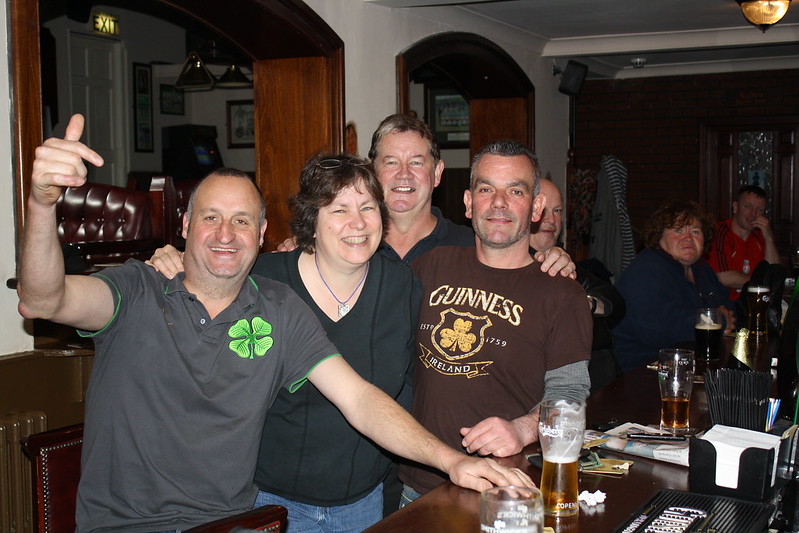
    The most gregarious of the gang, Hilly, did his impressions of Robert DeNiro, Marlon Brando, and Sylvester Stallone for us. Many photos were taken. Another round appeared before us. We insisted that even though we were having a wonderful time, we could not drink any more alcohol and we had to get on the road. Hilly took Sandy across the road to his apartment and had us take a photo of him and the football club sign on his gate, then pointed us in the right direction.

    This time we found Newgrange Lodge, an inexpensive but cozy place just five minutes walk from the Brú na Bóinne Visitor Centre. There was still time to tour Newgrange and Knowth, so we stowed our stuff in our room and headed down the road.

    I could not possibly do justice to describing these megalithic era monuments and tombs and art. I’ve provided some links if you’re interested. I’ll summarize to say that these are older than the pyramids and Stonehenge, and are still being excavated and studied. Knowth in particular is fascinating because so many structures over the centuries have been built on the site. Newgrange is amazing because you can go into the passage, stand at the center, and watch a demonstration of how the sunlight comes in and illuminates the center chamber at the same time each morning. There is a very competitive lottery to get into this chamber during the Winter Solstice, when the passage is aligned with the sun’s rays to fill the chamber with bright light as the sun rises. These sites here in the Bend of the River Boyne contain one quarter of all the megalithic era art found in Europe.
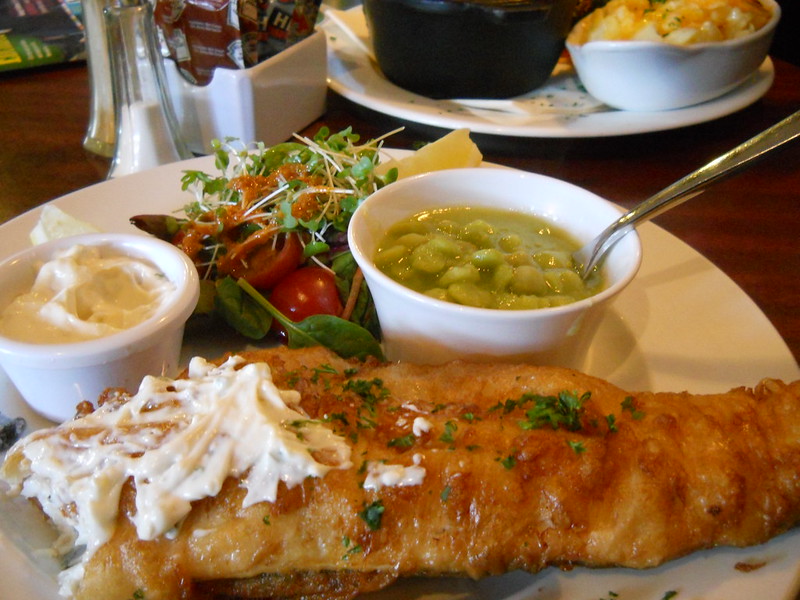
    We headed to the nearest pub for fish and chips and beef and Guinness pie, where we discussed our afternoon with another couple who had been there too. We were the only people on the restaurant side of the building except for one older man at the bar. Suddenly he turned to us and said, “Can I ask you – why are you here?”

    I explained that we were here to see Newgrange. That didn’t satisfy him. I explained that we were in Ireland to celebrate our 25th wedding anniversary. That didn’t satisfy him. I asked him to clarify his question. He wouldn’t. He asked again, “Why are you here?” A woman with a twinkle in her eye walked through the room, rolled her eyes and waved her hand dismissively at him as she passed our table.

    Frustrated and tired, I told him that he was just messing with my head and I was too tired to deal with it. Then he talked about the High Kings of Ireland. He told us about playing in the tomb on the hill when it was a fallen-in pile of rocks when he was a little boy. “Nothin’. It’s nothin’.” He shook his head and walked outside.

    As we left, we passed him smoking a cigarette outside. He wished us a good holiday, and we drove on the “wrong” side of the empty road back to our lodge, puzzled at the lack of regard or interest the locals had for these colossal archaeological sites, studied and maintained with beauty and care, drawing people from all over the world, in their own back yards.

    The next post will be dedicated to just photos from our visit.
    Next post: Photos from Newgrange and Knowth
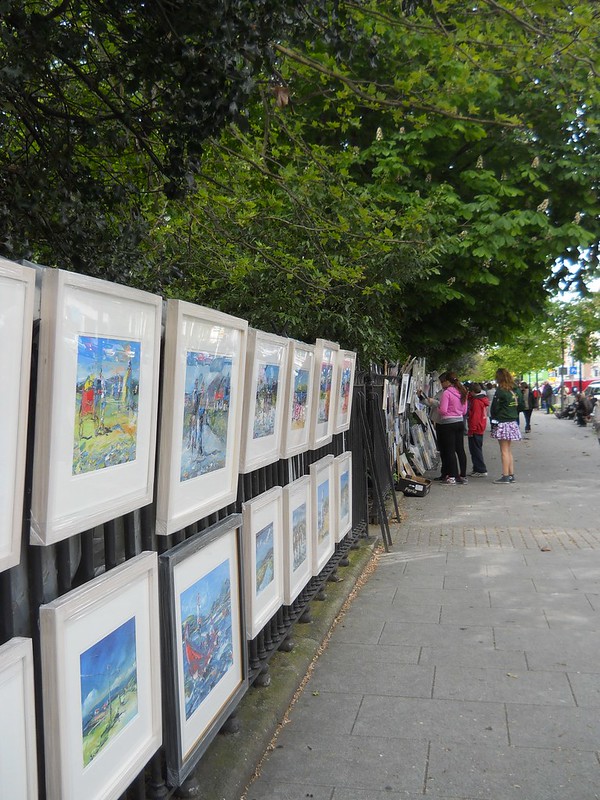
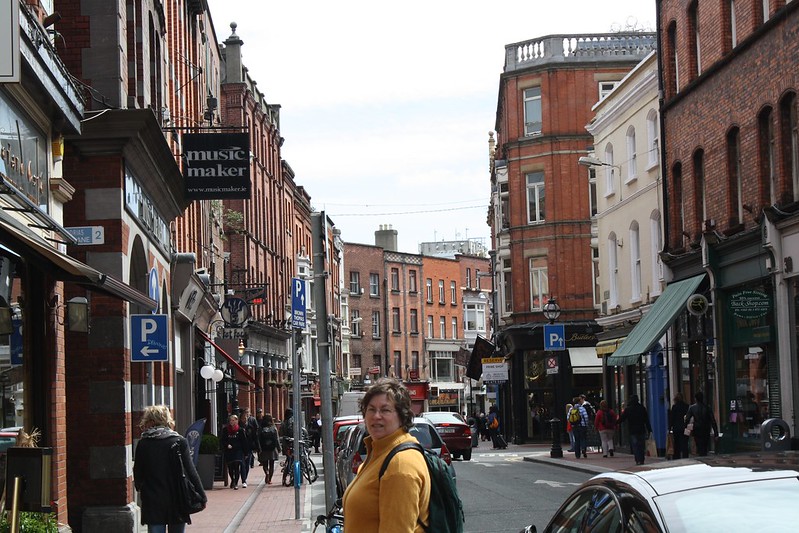
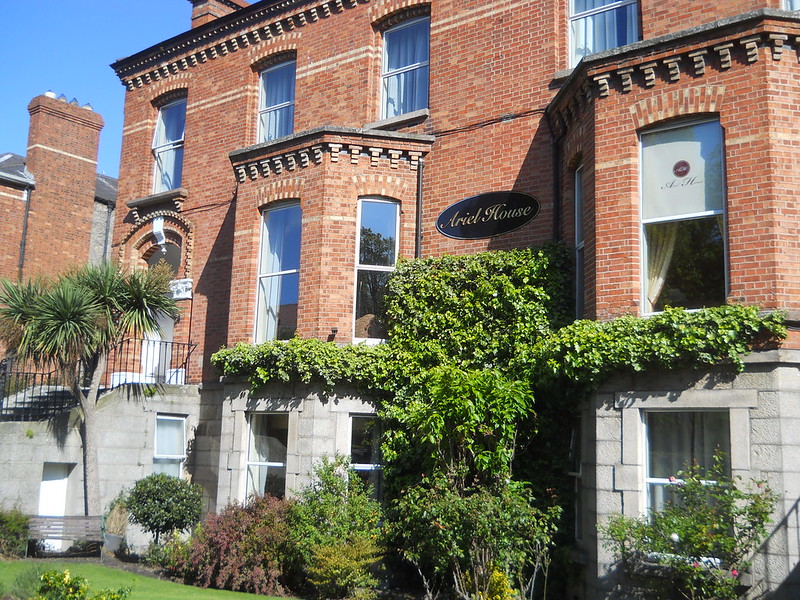
  • After an excellent breakfast at Ariel House, we braved a wicked wind to roam the streets of Temple Bar (very quiet on a Sunday morning, as you might think) and central Dublin until the museums opened that afternoon. A public art show wrapped two sides of the edge of St. Stephen’s Green, where, again, a young artist stepped up to us, told us about his experiences in the states, and added to the notes others had drawn on our map of Dublin. Such friendly folks, these Irish.

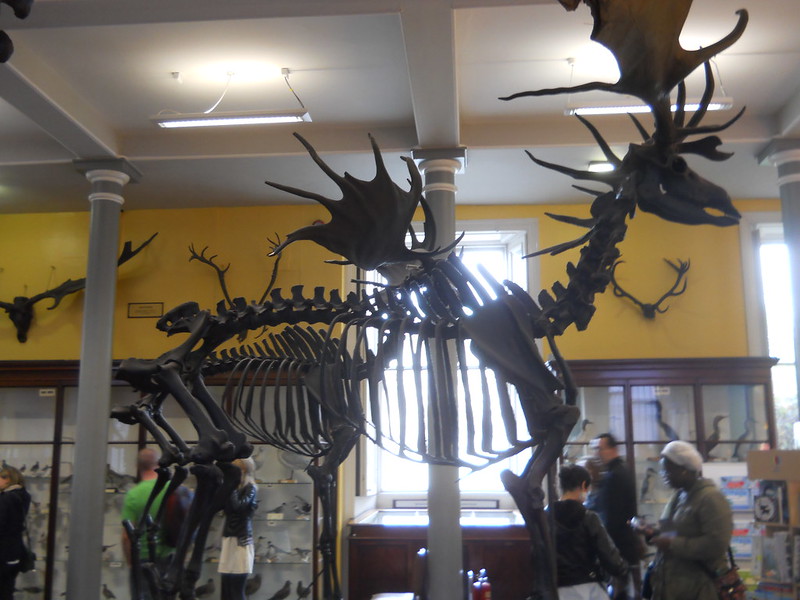
    Then we headed first to the National Museum of Natural History briefly, which was a old-style glass-cases full of taxidermy type museum. We looked through the native fauna and mineral displays, and then walked through the National Gallery of Art, which had a few famous world artists as well as Irish artists, but what we were really slavering after opened at 2 p.m.: The National Museum of Archaeology, a beautiful old building full of ancient Celtic treasures.

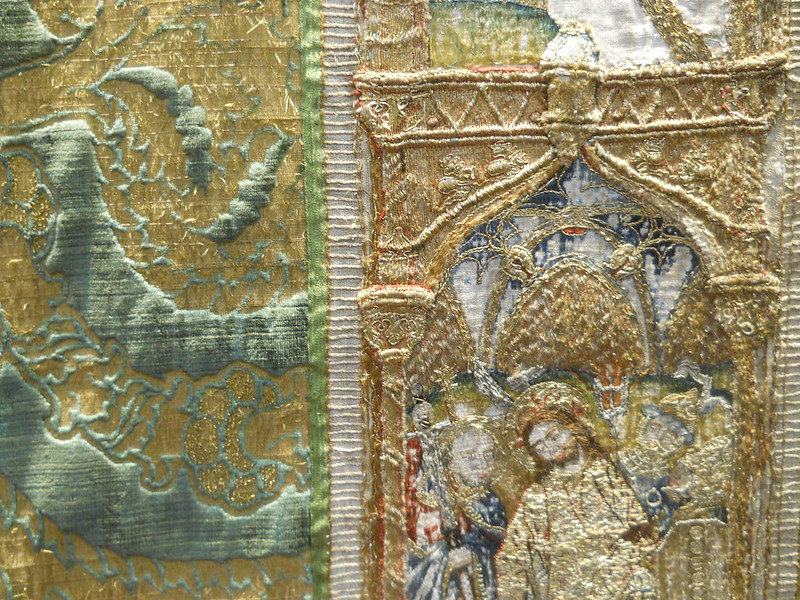
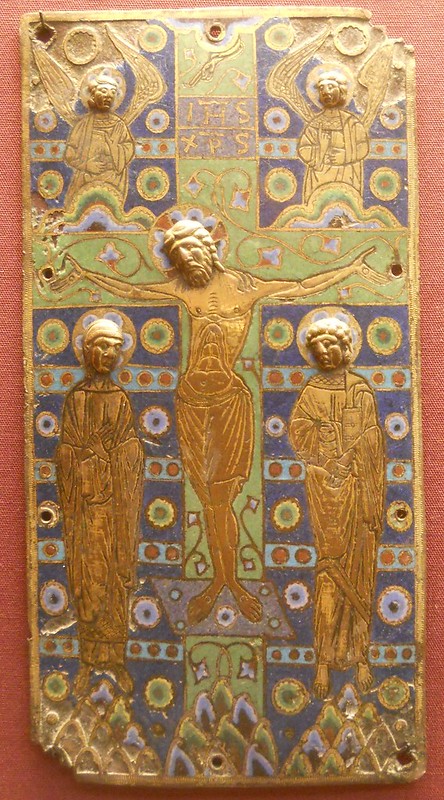
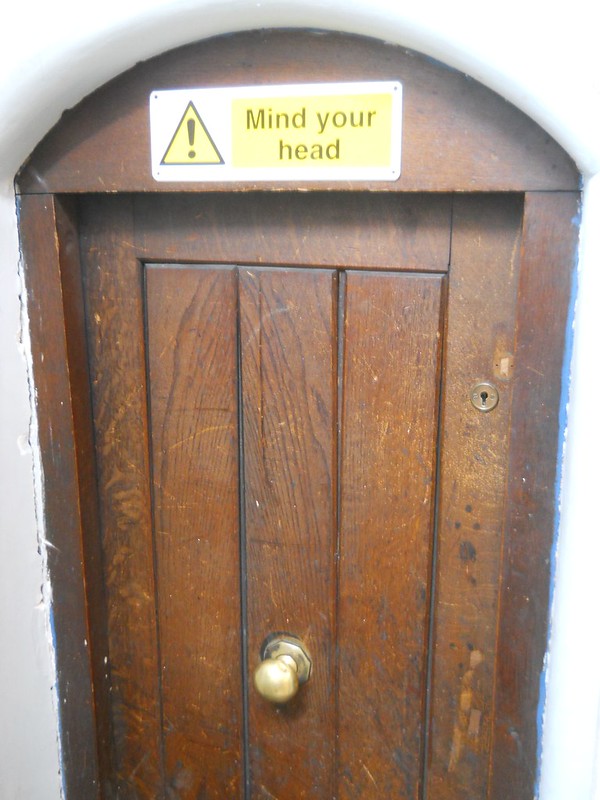
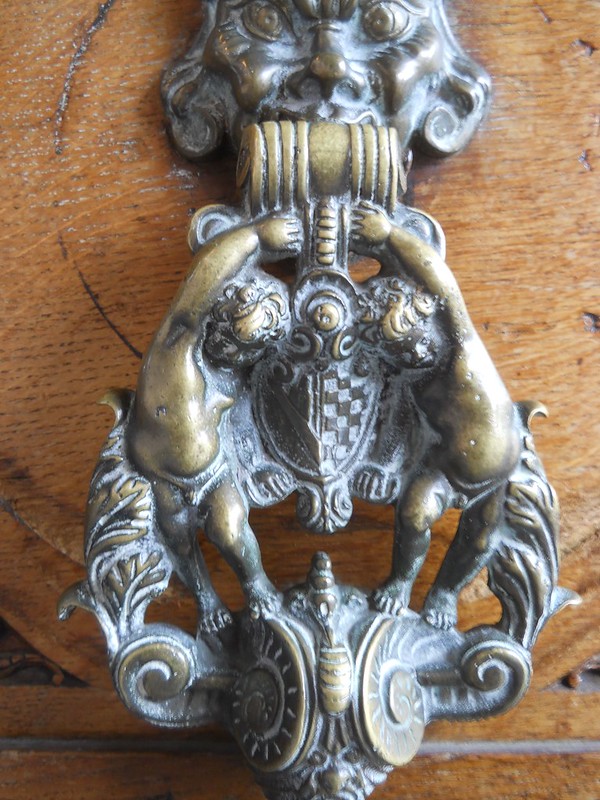
    I took a lot of photos here without flash, but even though I checked with several guards for permission, I still got ugly looks from the other patrons. My purpose was to document ideas for an art history research class that I’ll be taking next spring, and boy did I get plenty of ideas. The treasures that have been pulled out of the Irish bogs, including clothing and books, are amazing. I saw bog mummies with nearly perfect hands, which I did not photograph because I feel funny about bodies on display. Embroidered treasures and golden gem-encrusted reliquaries and book shrines. Egyptian treasures as well – I saw ancient tapestry woven textiles. A little Alice in Wonderland door (”Mind Your Head”) beside a steep old spiral staircase. The tilework and woodwork and structure of the building were as fascinating to me as the trove housed within. Even the doorknockers drew me in.


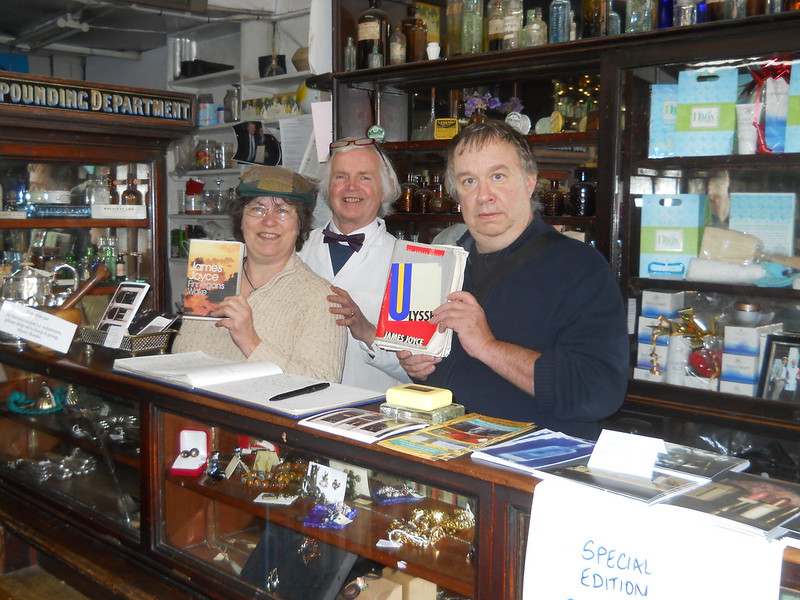
    When we forced ourselves to leave at 5 p.m., we decided that it was time to find a pub and something to eat. As we walked along the nearly traffic-less Sunday afternoon streets, disagreeing on our options, Sandy spotted an interesting looking shop that was open: Sweny Chemist. He knew that I had read some James Joyce before our trip and was attempting Ulysses, and a sign in the window said it was where Leopold Bloom bought his lemon soap. Well. Although I am at the moment 28% finished with Ulysses and may not ever be 100% finished with it, my inner literary groupie thrilled to this information. The lemon soap – I remember that! Oh joy! We went inside to find the quaint little shop full of interesting knick-knacks and Joyce collectibles and a table full of used books. The volunteers there invited us to a out-loud circle reading of Finnegan’s Wake at 6:00, a cup of hot tea, and pints at a nearby pub afterwards. We weren’t sure. We were tired and hungry and were familiar enough with Finnegan’s Wake to know that it was filled with poetical Joyce-created words, beautiful but barely sensical. We went to the pub they recommended across the street, The Ginger Man, where we were promptly served our beef and Guinness pie and chicken/mushroom pie, and finished in just enough time to decide that this was an Irish experience that would be unique and that we should do it.

    So we sat in with the reading group, which included Brazilians and Italians, enunciated Joyce’s fantastical words with our Southern drawls as best we could, and went out with P.J., Mirko, and Emanuele for drinks at the Ginger Man afterwards. We learned a lot about living in Ireland from those who were native, and some, like Mirko and Emanuele, who were there on work Visas. I’m really glad that we made the choice we did.

    Next post: Monday, May 14, 2012: County Meath


  • >Since we were too early to check into Ariel House, we left our luggage there and hopped back onto the DART train to go to Trinity College, where I wanted to see the Book of Kells. This was a major item on my list, and in retrospect I maybe should have waited until I was more awake. Nevertheless, we took a short student-led tour of Trinity College and filed into the Old Library where the Book of Kells, Book of Durrow, and Book of Armagh are on exhibition, all famous illuminated manuscripts over 1000 years old. The Old Library is one of the most beautiful libraries in the world, and there were more manuscripts on display down its long hall.

    But do you think that I remember much of this? No. I have a hazy memory of nudging myself into a double circle of tourists looking at the books through a glass case, and old books on tall wooden shelves to the top of tall ceilings and ladders, and to prove it wasn’t a dream I came home with a couple of refrigerator magnets from the gift shop. So thank God for You Tube:

    Then we gave in and went back to Ariel House, where we slept for a few hours. They say that you should force yourself to stay up and get on European time the very first day. I say they must have slept within the 24 hours prior to landing in Europe.

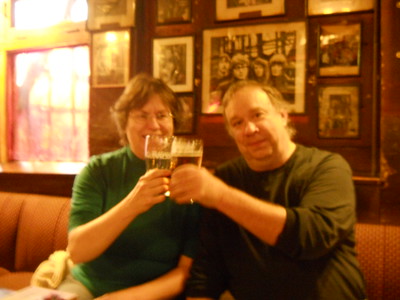
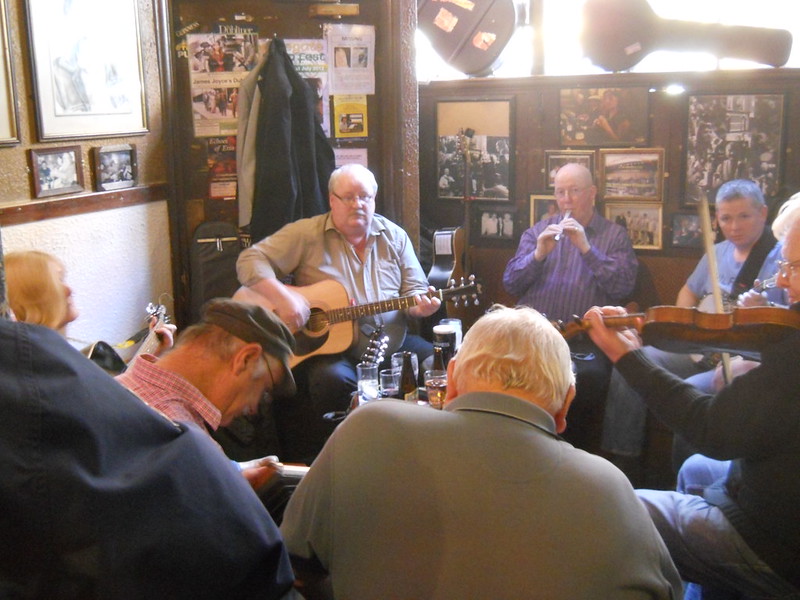
    When we arose, the woman at the front desk gave us a map and circled some pubs and restaurants she thought we’d like within walking distance. It was a bit cool but a fine afternoon for a walk. The first pub we stopped at was O’Donoghue’s, where the notes of fiddles and flutes were wafting out the door. We ordered a couple of pints of Guinness, tipped the bartender, and found seats in a small room behind the room with the music and the bar. There was a family from Portugal, a group of locals who seemed to be talking about politics, and a good-looking young couple who seemed to be very in love with each other. We toasted our old friend George O’Rourke, and ourselves.

    I walked into the front room to take a photo of the musicians, and an old man sitting at the bar stopped me, welcomed me to Ireland, and introduced me to his cousin Jerry.

    When I returned, Sandy was talking with the Portuguese family. They left, and the young woman across the room began talking to us. Soon she and her boyfriend joined us and gave us advice on where to go during our very short time in Dublin. They also advised us about tipping. We found out from them and others that the Irish don’t make their bartenders and waiters live off tips like they do in the U.S. so the tipping culture is quite different.

    These two, Niamh and Johnny, became our first Irish friends (on Facebook as well!). We would find out that we would never lack for conversation at any pub if we were open to it. And we would discover, when we heard his song on the radio later that week, that Johnny and his band, The Aftermath, are accomplished musicians. I hate that our photos from this night are unfocused, because it was a great introduction to Irish pubs and people. We genuinely felt welcome to the Irish party. (2020 Update: Niamh and I are still friends on FB and Instagram.)

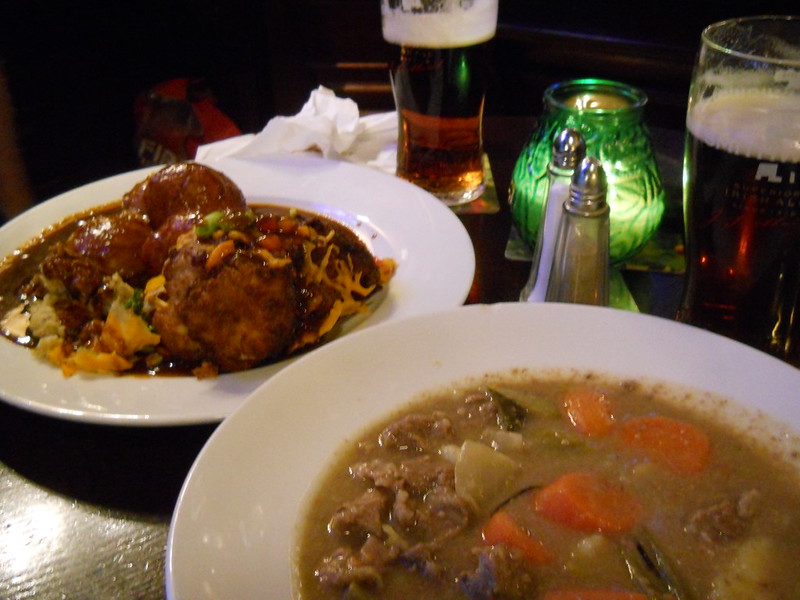
    We explored around the older part of Dublin until we found O’Neills on Suffolk St., a large pub with lots of little nooks up and down stairs and a “carvery” (what we would call a buffet, I guess) that Johnny and Niamh recommended. We ate Irish stew and stuffed chicken, drank Smithwick’s, bought a t-shirt, and headed back to the guesthouse. There was a time when Sandy and I could have stayed up and partied with the best of them, but those years are long gone, and we knew it. So we did what we knew in our nerdy hearts was best – we got some sleep so that we could hit the museums on Sunday with some fresh energy.

    Next – Sunday, May 13, 2012: Dublin

  • Saturday, May 12, 2012

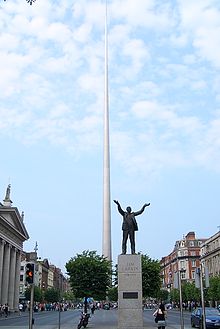
    After touching down early in the morning at Dublin Airport, bleary from our body clocks’ insistence that it was 1:30 a.m., we muddled our way to a city bus taking us to the center of Dublin, where we hopped off too early on O’Connell St. on the advice of someone who probably didn’t understand me. We found a DART (train) station after some wandering around. One of our first sights was The Spire. I didn’t get a photo but I keep finding my thoughts returning to this sculpture. It reminded me of a recurring dream I have about trees so tall that I cannot see the tops of them. How did they erect such a tall structure? It melds into the sky and makes you wonder if it ever ends. I think that it is a fitting symbol for the Ireland we explored.

    One of the many things I learned about Ireland in my preparations for this trip is that although it looms large in our American imaginations, it is actually quite a small country. The square mileage of Republic of Ireland is a little more than half the area of my home state, North Carolina. The population is small. Nearly half the population of Ireland lives in Dublin, the only large city. Most of us know about the Irish Diaspora of the mid-19th century, when so many of our ancestors in the U.S. fled the “Great Hunger” in Ireland. They were the lucky ones, because a million people died of starvation and disease. The population of Ireland today is about half of what it was 200 years ago. I’m not planning to give you a lesson in Irish history, but this is a vital part of understanding the Irish people and the nation that it is today.
    The Irish economy boomed from 1995-2007, a period they called the “Celtic Tiger.” A lot of EU money poured in and development surged. There was 0% unemployment. Now the young people are again leaving the country in search of jobs, and the streets of every town are plastered with political signs advocating voting “Yes” or “No” to a constitutional amendment that would change the way their economy is handled. People stopped us in the streets when they heard our American accents and said “thank you” for coming here (unsaid but politely implicit: “and spending your money”). There continues to be a lot of disappointment and turmoil in Ireland, but the days of the “Troubles” when violence was used to try to make a difference seem to be over for the most part now.

    But, I’m an artist, not a historian or economist. I’m going to concentrate on the beauty of Ireland in this series. It was the most beautiful place I have ever been in my life.

    Next – Saturday, May 12, 2012: Dublin