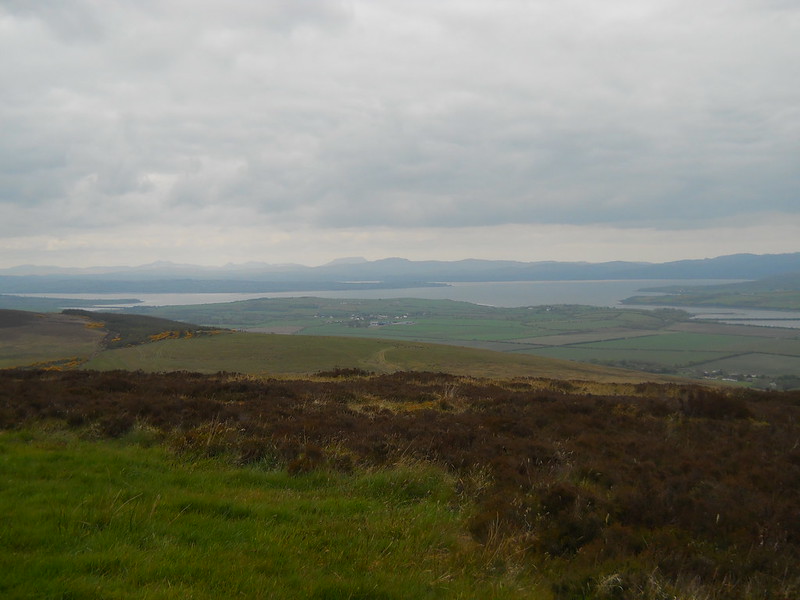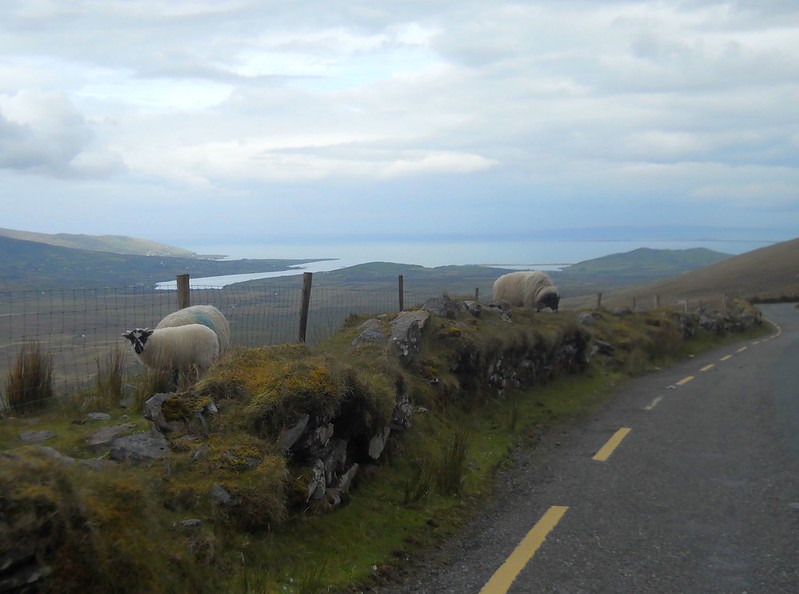
• After a short ferry ride across Lough Foyle, we were in the United Kingdom. The currency was now pound sterling and the speed limits and distances were in miles. The feel of the country was different. The houses tended to be larger, the fields tended to be fenced instead of walled. And yet the sheep were still everywhere.

    Our goal was to visit the Giant’s Causeway, a UNESCO World Heritage site, and then get to our hotel near the Dublin Airport fairly quickly. We had to return the rental car that night and we were tired already with most of the day behind us and a long way to go.

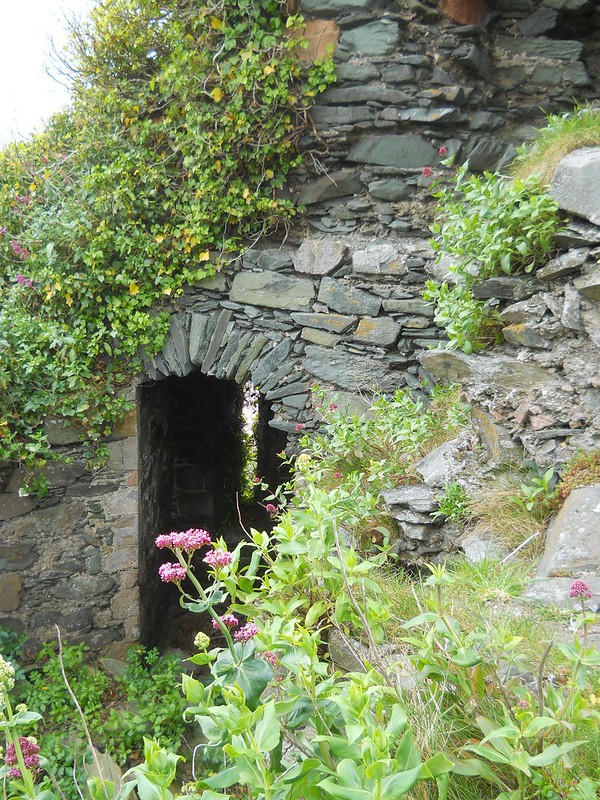
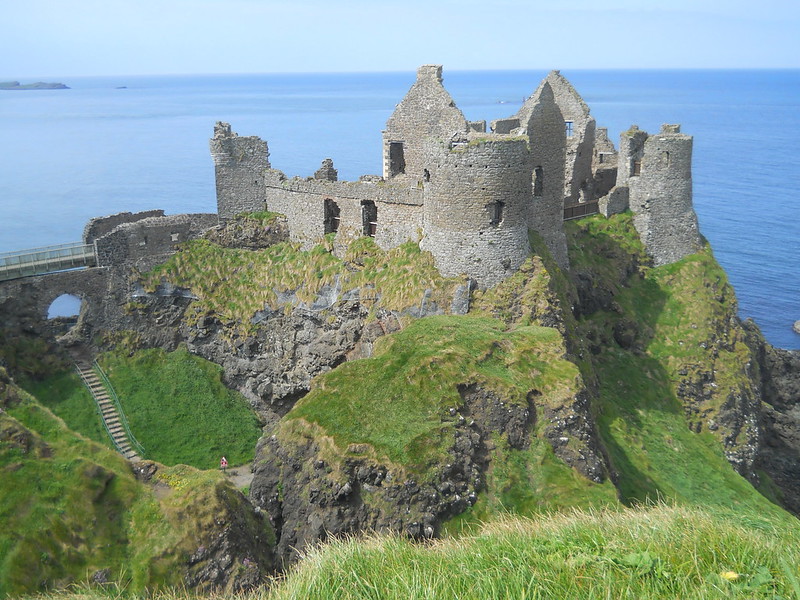
    We stopped briefly at Dunluce Castle, and had it been earlier in our trip I feel sure we would have paid to go into it, but instead we just took photos from the outside. This 13th century castle ruin is on the edge of the seacliffs, and one day the kitchen split away and fell into the ocean, taking the kitchen staff with it.
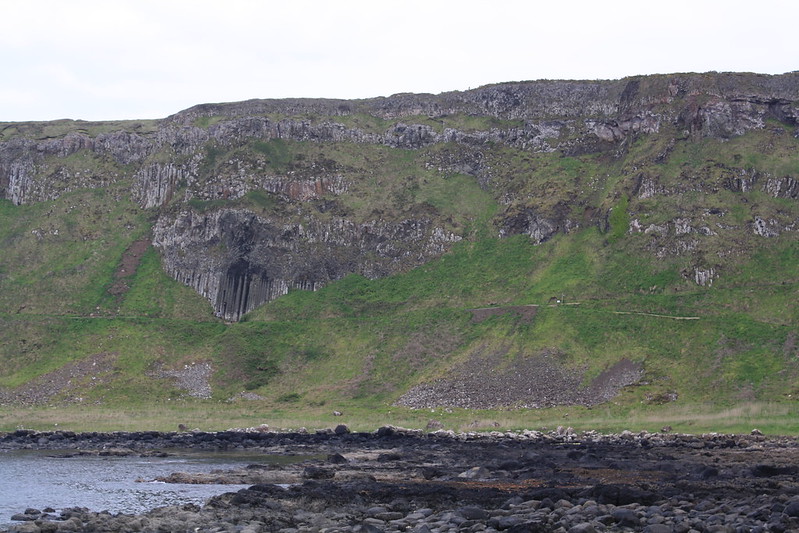
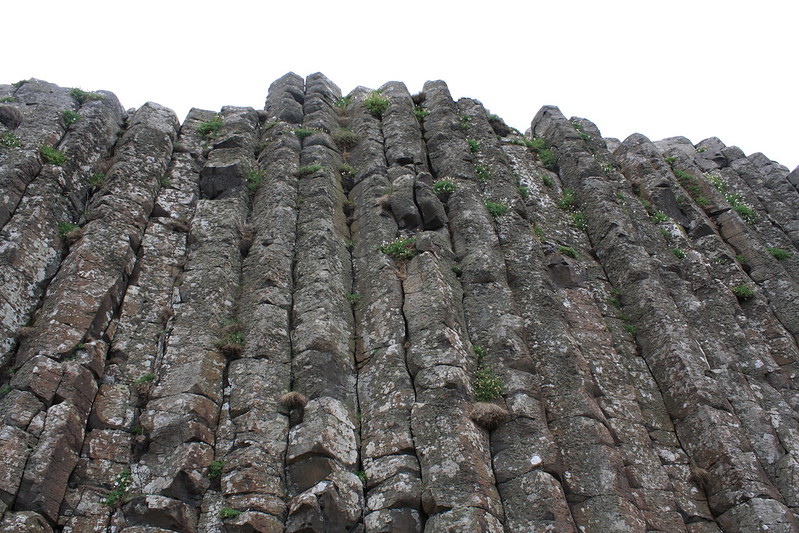
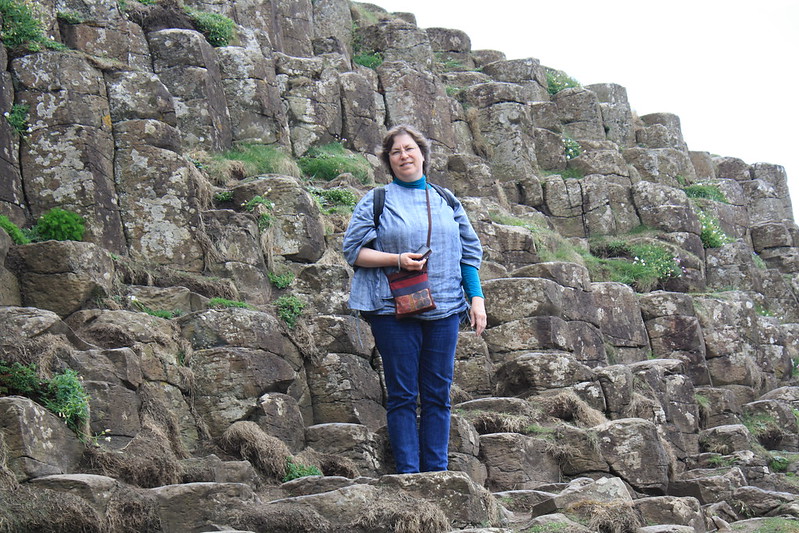
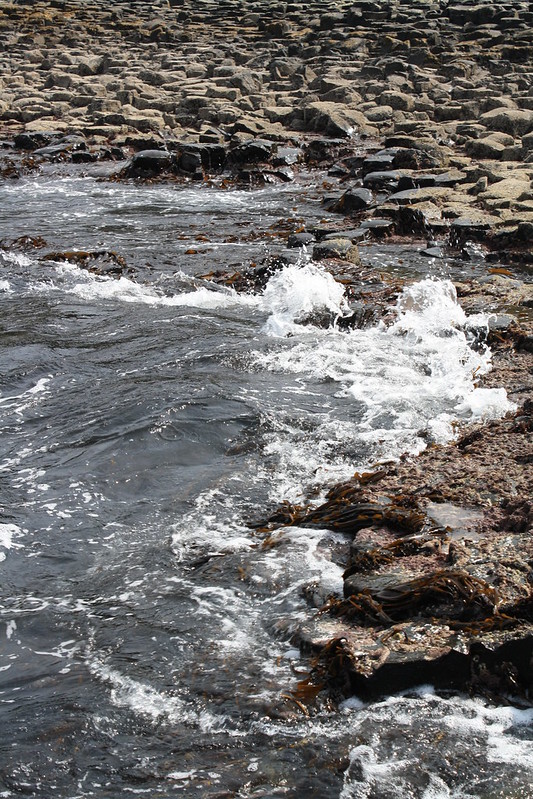
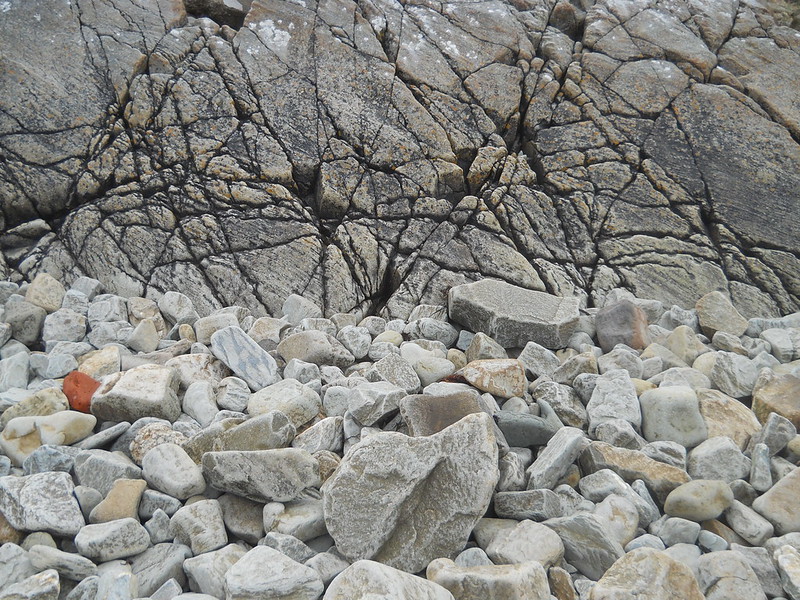
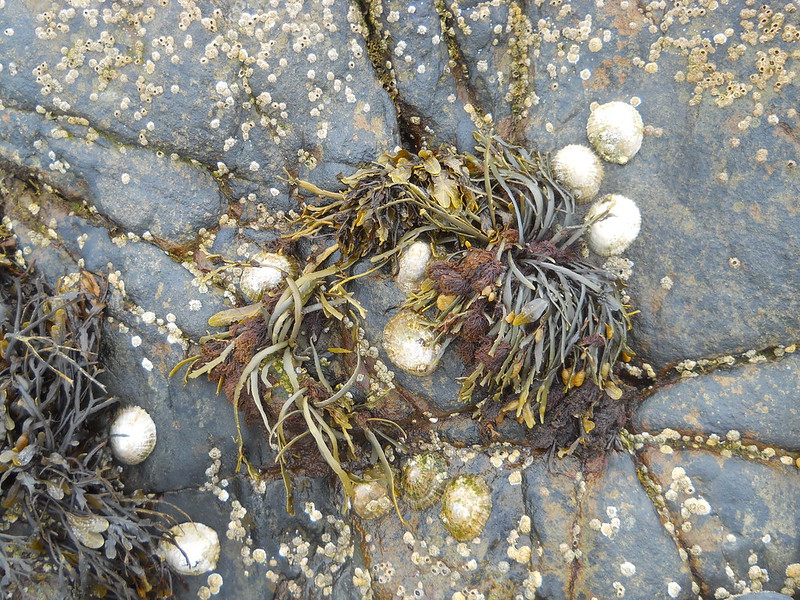
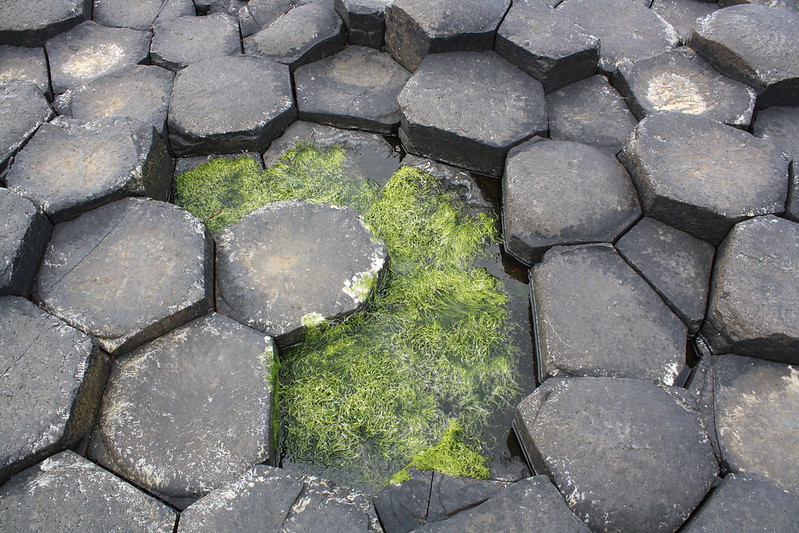
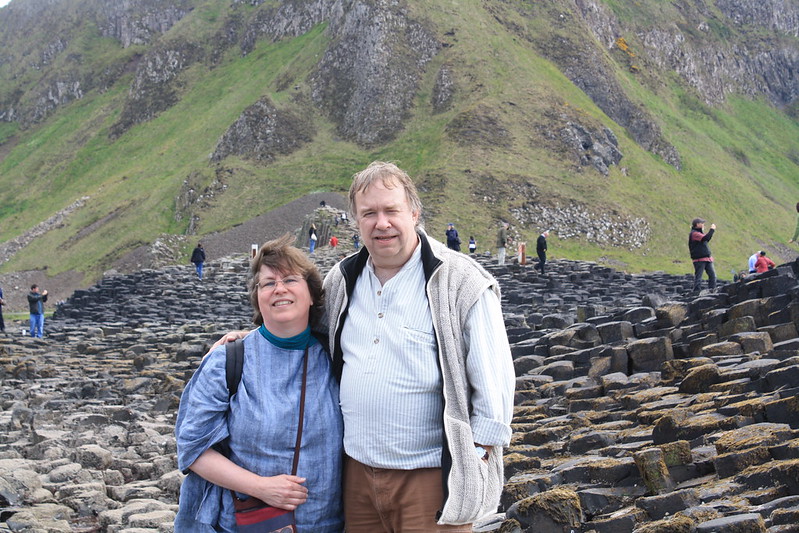
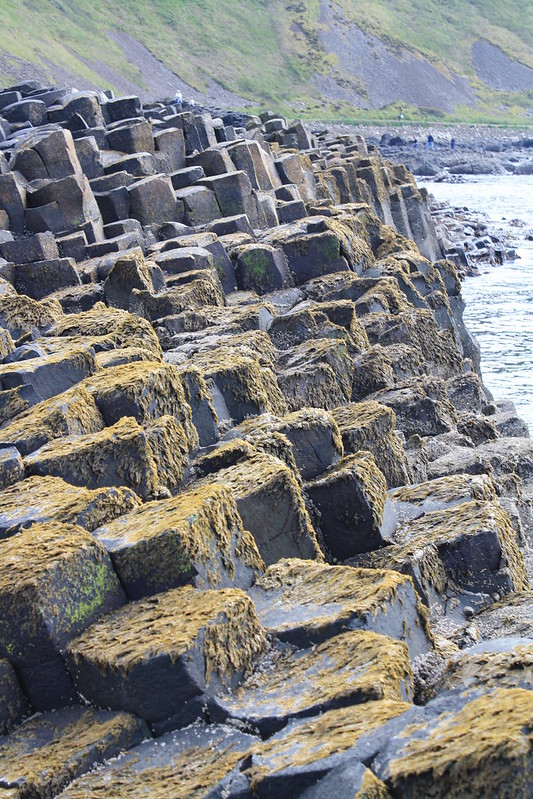
    Since I wasn’t feeling so hot, we parked at the Park and Ride in Bushmills and took a shuttle to the Giant’s Causeway, which was a bit cheaper. Then we took a shuttle again down to the stepping stones of Finn M’Coul. I wanted to save my energy for climbing around this mindblowing geological formation. Science says that it is a result of a lava flow that cooled slowly. Folklore says that the giant Finn M’Coul began laying a stepping stone path in the sea over to Scotland.
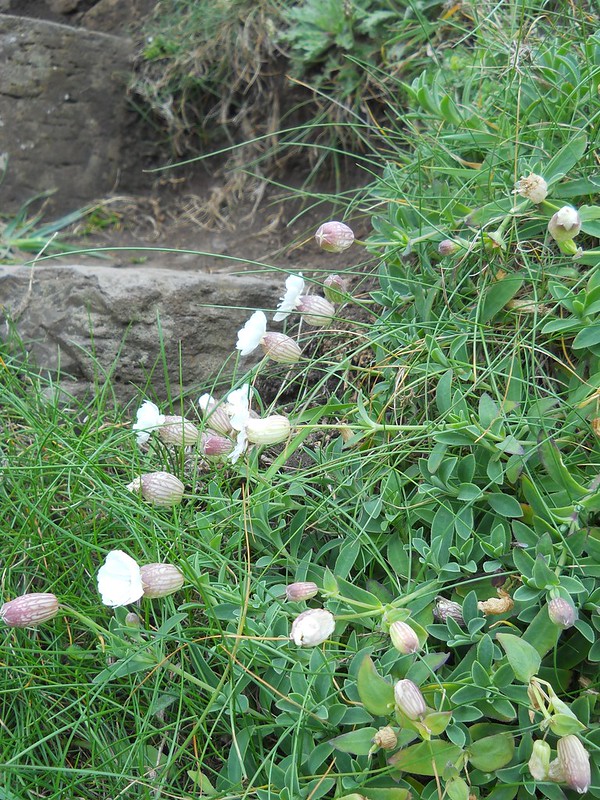
    Bladder campion – one of my favorite wildflowers

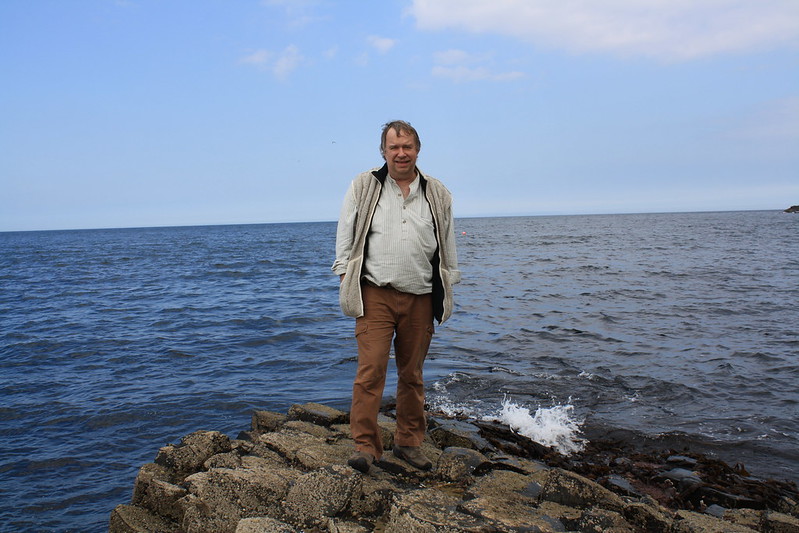
    If I lived near here, I’d want to go here every weekend.

    Next post: Coming home
  • On Monday morning, I awoke early with what I at first thought was a hangover. It wasn’t that we had drank that much on any one day or night, but over the course of the week I had drank more than usual so I thought maybe my body was catching up and punishing me. It turned out to be a virus, but fortunately the worst of it hit me after we got home. I was determined to get through the day, though, because the last major place where I wanted to go was on the agenda today.

    We decided to take the ferry near Greencastle, and to revisit Glendowen Craft Studio near Clonmany. I’m so glad that we did, because it was full of handwoven and local textiles, sewn and assembled by Ann McGonigle. If I had had the money and the room in my luggage I would have spent a bundle there. It was the first shop I had been excited about since we were at the weaver’s shop in Dingle. Although the woolen sweaters and coats and scarves were beautiful, I knew that I would not wear them here at home much. On the very coldest days a few days a year perhaps, but I am hot natured and can go without a coat when others are wrapped up and shivering. I bought a simple linen shirt (and wore it out of there, since I was on the third day of wearing my last clothes) and an Irish tweed shawl to wear this fall.
    When we reached Greencastle, we were a little early for the ferry over to Northern Ireland, so we drove up the road a little ways and discovered, completely by accident, an unstaffed public site of a 1305 castle ruin and Napoleonic Martello tower next to the shore. We spent about 30 minutes exploring the site. It was covered with vines and wildflowers and completely thrilled my inner child, since I lived to explore old abandoned buildings in the woods when I was a free-range kid.

    I took some video while I was walking up and down through the different openings, but it is all sideways and I haven’t figured out how to edit it. Maybe that’s something I need to practice before our next big trip.

    Next post: Monday, May 21, 2012: The Giant’s Causeway

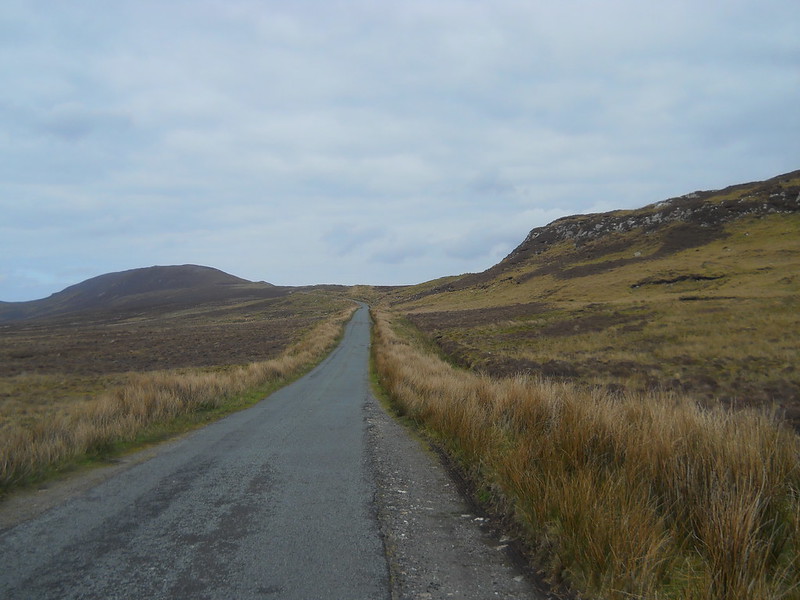
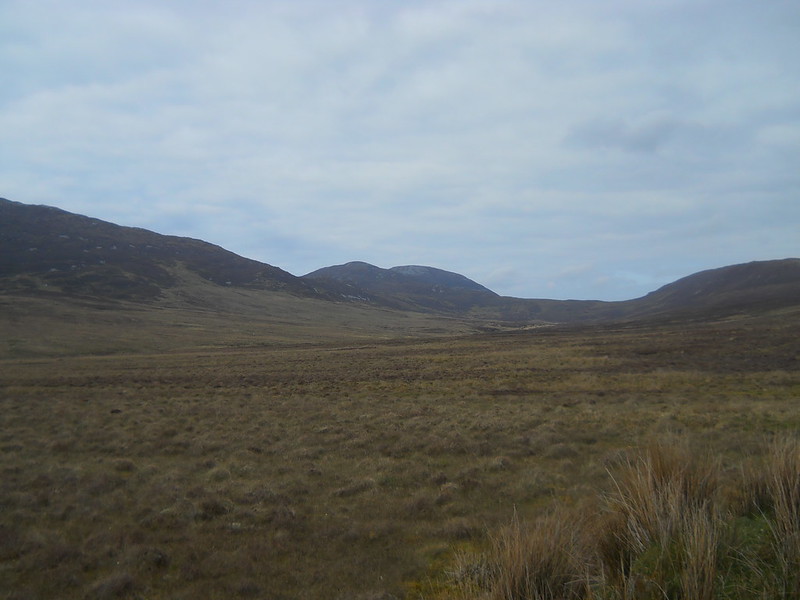
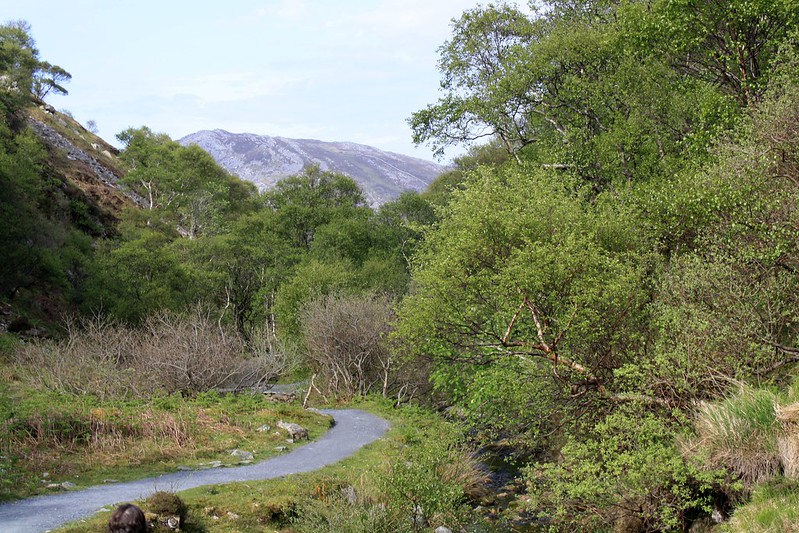
  • The idea was that we were going to take the “Inishowen 100 Scenic Drive” up to the northernmost point in Ireland, Malin Head, but a wrong turn changed our plans. And as it often happens, the wrong turn was not a bad idea at all. We ended up on a road splendid in its isolation and followed signs to Clonmany. Side trips in the country like this that make you realize that Ireland really is a country with a small population. I gather that this is similar country to the moors in Scotland. We both loved this road. You’d have to travel for miles to find country around here that did not have any houses or evidence of humans (other than sheep and this road).

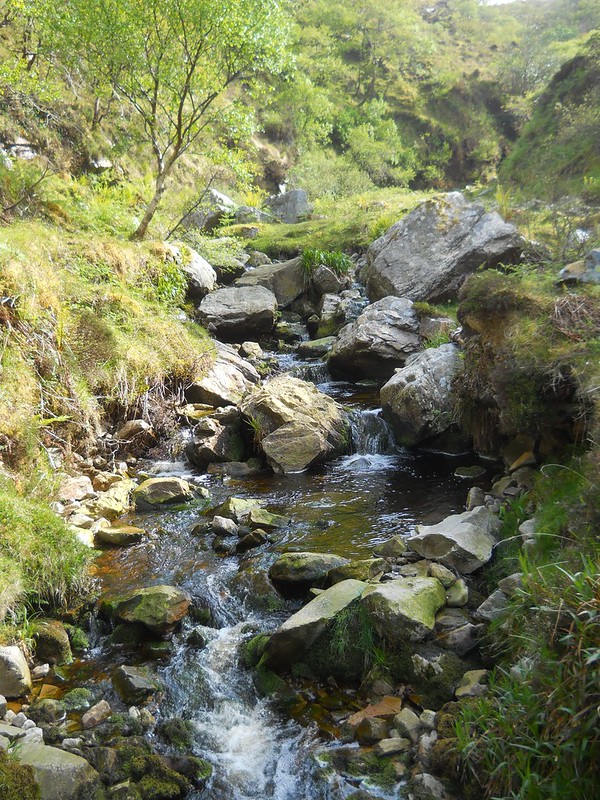
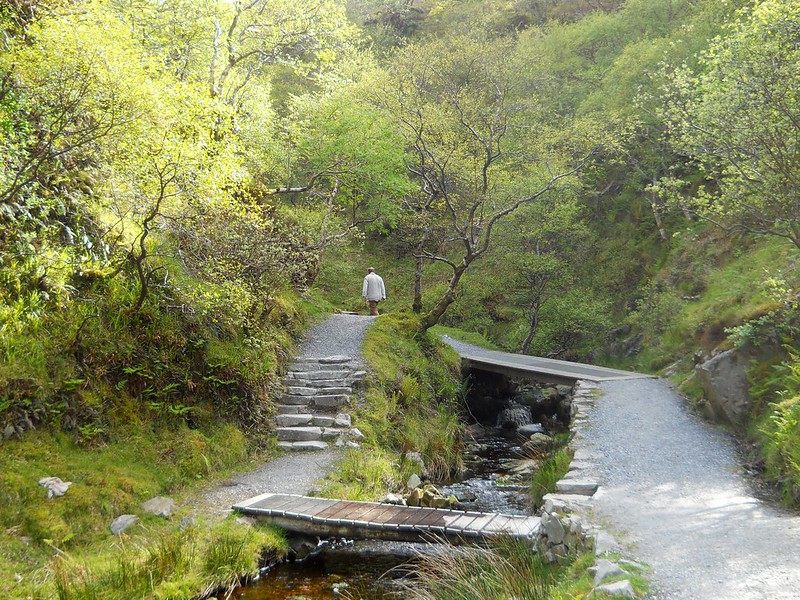
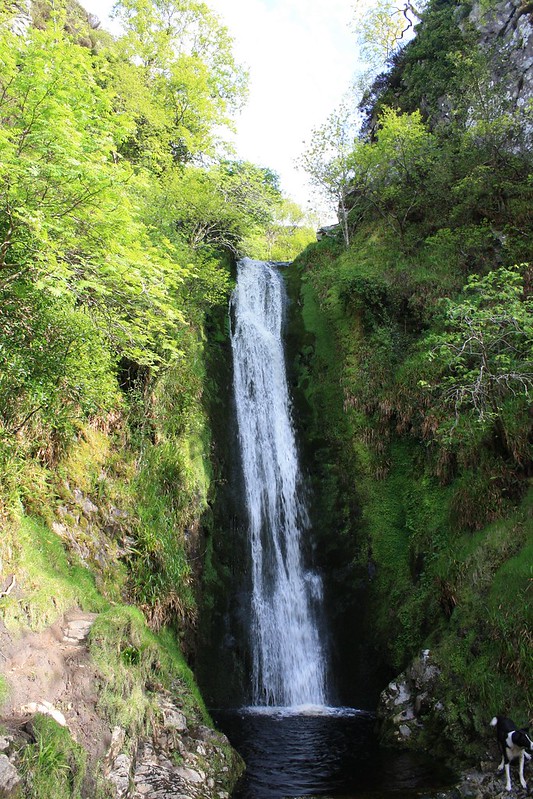
    We decided to look for a craft studio/shop that we saw advertised that was located near Clonmany. It was closed, but in our wanderings we discovered, quite by accident, Glenevin Waterfall and the beautiful hiking trail to it.

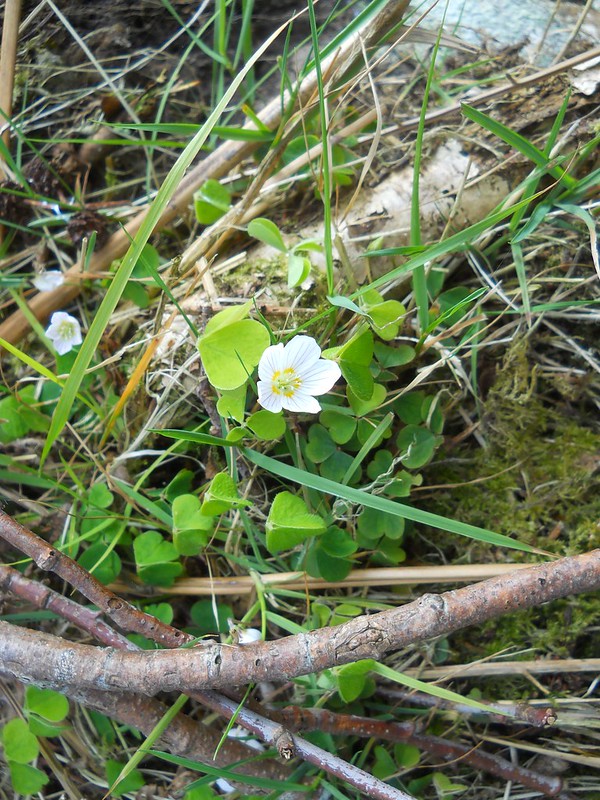
    Yes! finally a shamrock!

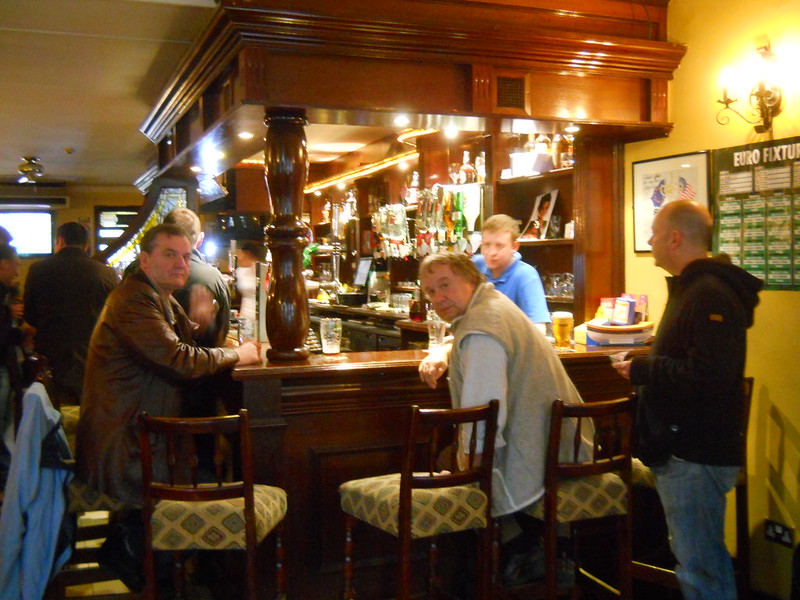
    We returned to Buncrana, where we had dinner at the Ubiquitous Cafe, then stopped in Grant’s Bar where we had a couple of pints and a long discussion about Irish and American politics with a regular. It was another wonderful day, and the last pub we would visit in Ireland. I already miss the people and conversations we had there.

    Next post: Monday, May 21, 2012: Greencastle

  • The Grianan of Aileach was what led me to choose this area for part of our visit. I knew that the O’Neills were one of the great Irish families; in fact, they are one of the few families that the banshee cries for at their deaths. From the Wikipedia article: “Legend has it that for five great Gaelic families — the O’Gradys, the O’Neills, the Ó Briains, the Ó Conchobhairs, and the Caomhánachs — the lament would be sung by a fairy woman; having foresight, she would sing the lament when a family member died, even if the person had died far away and news of their death had not yet come, so that the wailing of the banshee was the first warning the household had of the death.”
    I found out in my research that the Grianan of Aileach was important in the history of the O’Neill clan, so I figured why not make this one focus of our trip? The story of this place is far from simple, though. There is much controversy about its restoration and history and new evidence continues to come to light that it may have begun as a site much like the one at Newgrange.

    I copied this from the sign at the site.

    “This large stone-walled fort, located on a hilltop commanding views over Loughs Foyle and Swilly and counties Donegal, Derry, and Tyrone, was the royal citadel of the northern Uí Néill from the 5th to the 12th century. It was probably built some time around the birth of Christ. Its builders may have been attracted to this hilltop site by the presence here of a sacred monument – a prehistoric burial mound or tumulus, possibly from the Neolithic period (about 3000 BC).

    “A lintelled passage through the 4.5m thick wall leads to the interior where the wall rises in three terraces to a height of about 5m; there are also two long passages contained within the thickness of the wall. Substantial restoration work was carried out in 1870. We know little about the three earthen banks which circle the Grianan, but they could be part of an earlier Bronze Age or Iron Age hillfort. The trackway running through these banks and leading to the fort is believed to be an ancient roadway.”

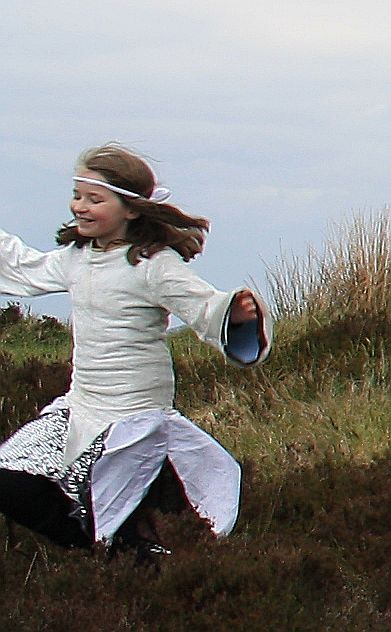
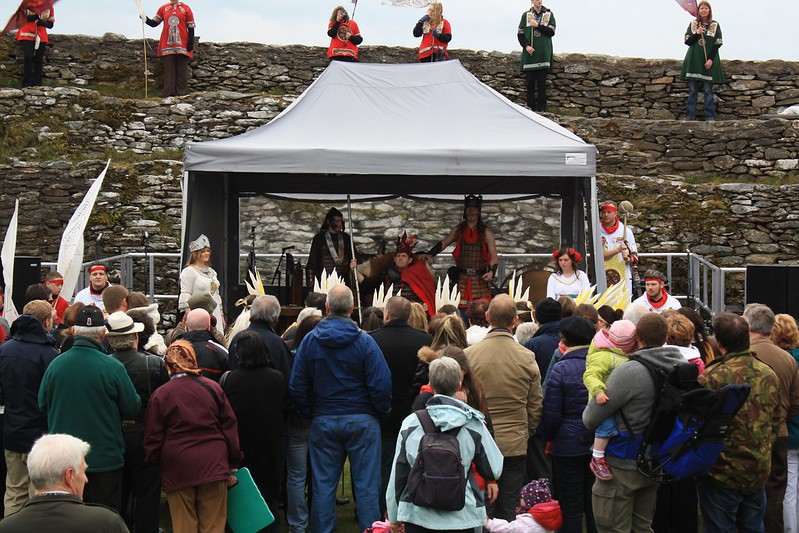
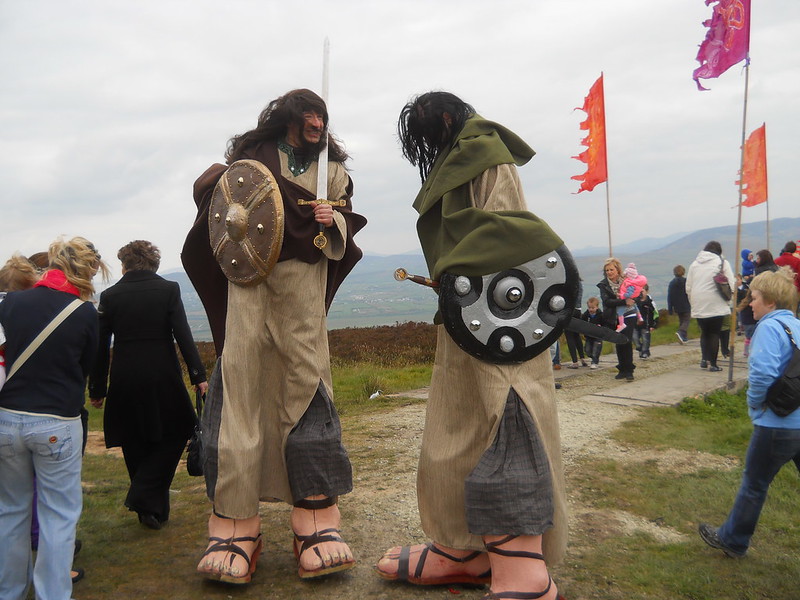
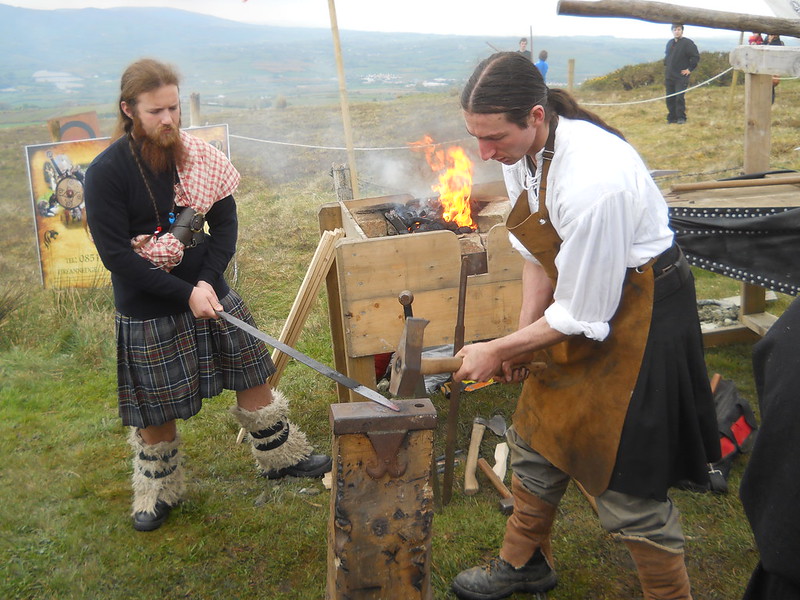
    I plan to keep up with the new archaeological theories and findings about Grianan of Aileach. But, we went there for the first party on the site in centuries, and the views were every bit as awesome as we were told. (I slipped up to the top tier for a few shots before I was asked to come down.)


    I just loved these two little girls.

    Sandy is painting this one.

    There was a pageant with kings and giants and dancers and flags and music!

    There were reenactors and craftsmen demonstrating ancient and medieval skills.

    And I ate a periwinkle fished out of its shell with a safety pin. I ain’t skeered of no food.

    Next post – Sunday, May 20, 2012: Exploring Inishowen

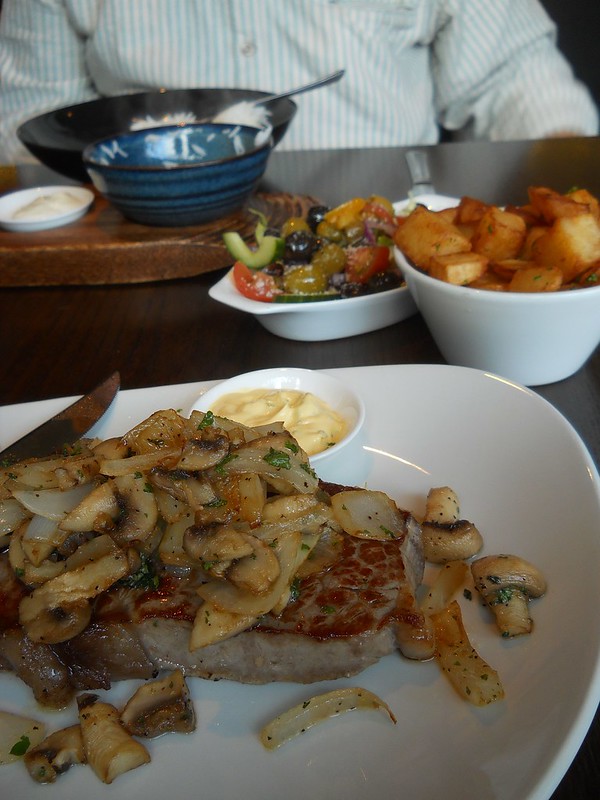
  • When we arrived at the Lake of Shadows Hotel in Buncrana, we stowed our stuff, took a walk downtown to look around, then headed back to the hotel to have dinner. It was one of the least expensive but most delicious dinners we had in Ireland! After eating the seafood salad below, I had a turkey and ham entree. I had to do a search on Google to identify the fruit on the dessert plate. First time I’ve ever tasted a gooseberry. So good!

    An old man that had been sitting in the pub reached out and fingered my new wool cape with a frown as I passed him on my way out. “Scottish!” he snapped.

    “I was told that it was woven in Ireland,” I said, miffed.

    “That’s what they all say,” he smirked.

    We rested in the room that night, and I went through all our shopping bags and tried to consolidate our things into the bags we would check and the bags we would carry on. We packed light for this trip and I packed an extra empty duffel bag in one of my bags anticipating that we would be buying some bulky woolen clothes. That turned out to be a good plan because we barely had enough room, but it all made it in there. Sandy was a shopping machine while we were in Ireland.

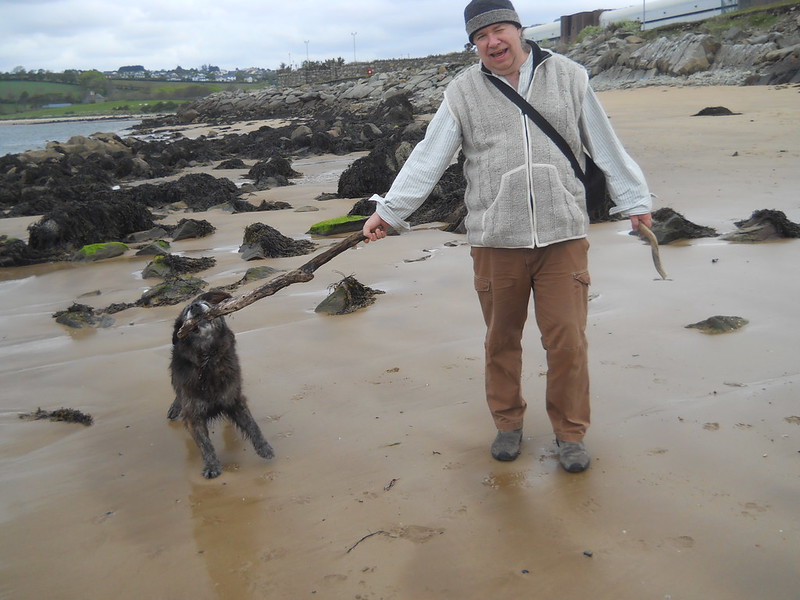
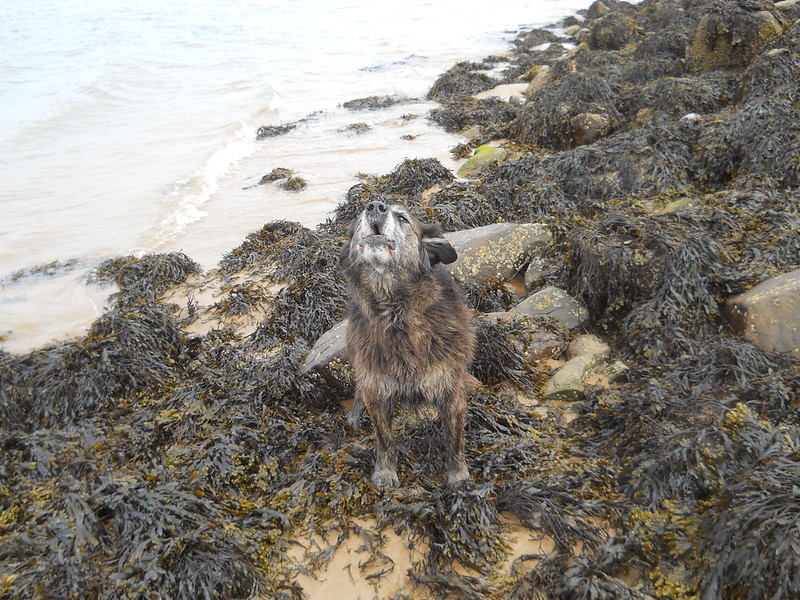
    In the morning we took a walk on the beach, where to my delight this dog joined us for some play.

    He liked to bark.

    And play with sticks.

    Next post – Sunday, May 20, 2012: Grianan of Aileach

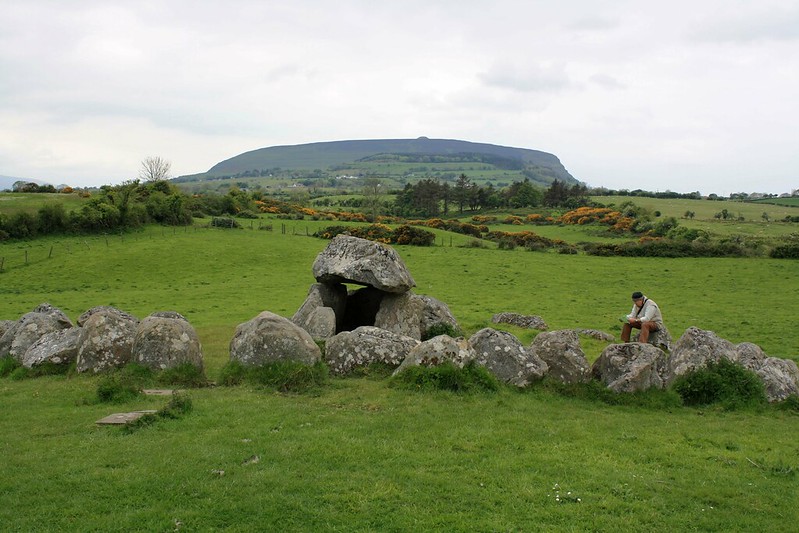
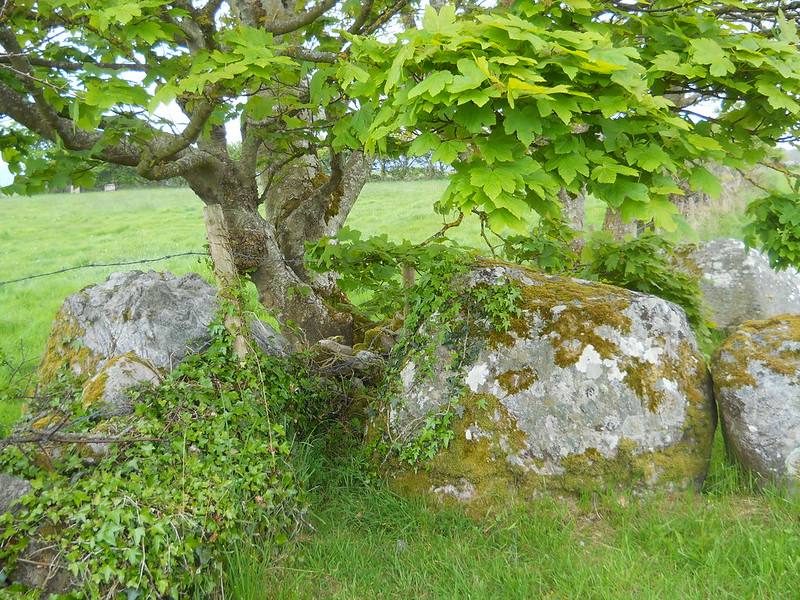
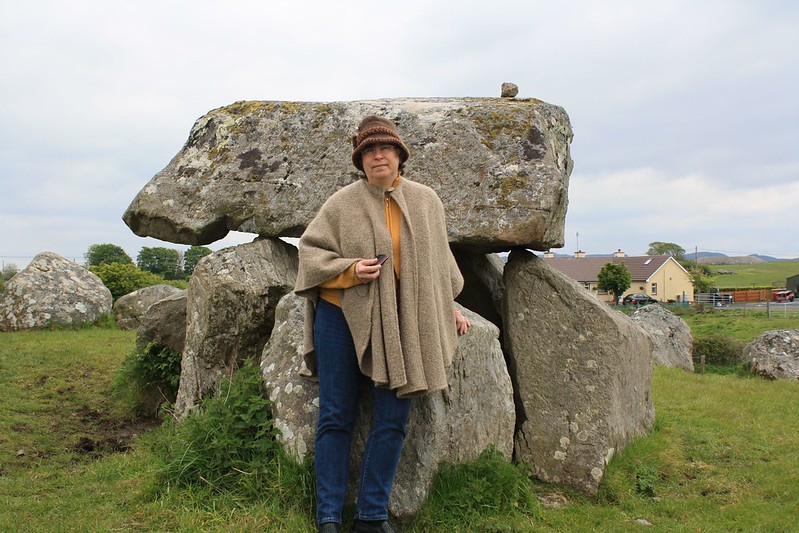
  • The highlight of our drive from Galway in the central west of Ireland to Buncrana on the Inishowen Peninsula in the north of Ireland and just to the west of Northern Ireland was definitely the Carrowmore Megalithic Cemetery near Sligo. To think that we nearly skipped this when our GPS steered us wrong! We saw road signs a little later and followed them to the correct destination. What we found was powerful. Acres of megalithic stone circles, passage tombs, and large cairns on mountaintops. Some of them were on public land and many others were in private pastures.

    You can find photos of the self tour guide here and here if you are interested in reading more.

    The next two photos are of a large stone circle bisected by a fence, so part of it is on private land.

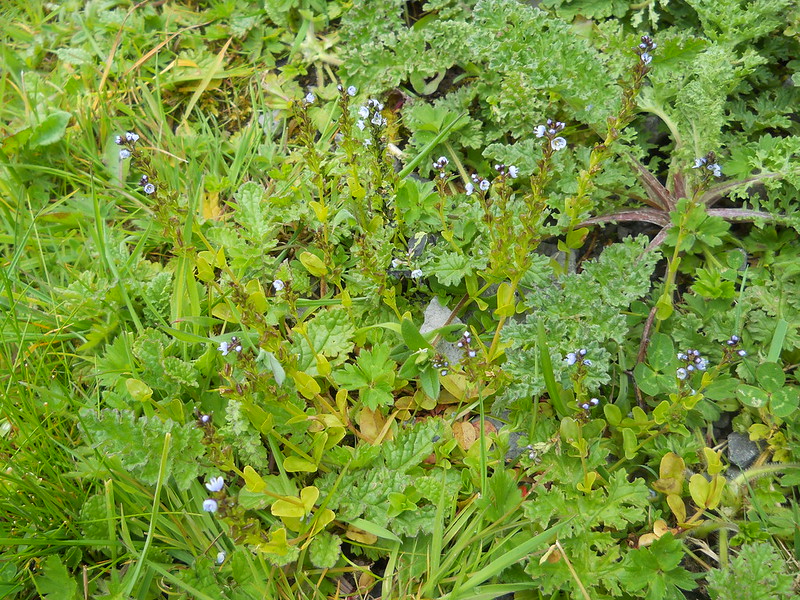
    Above: another wildflower photographer. The pony kept interfering because he wanted a snack. This is what he was trying to photograph:

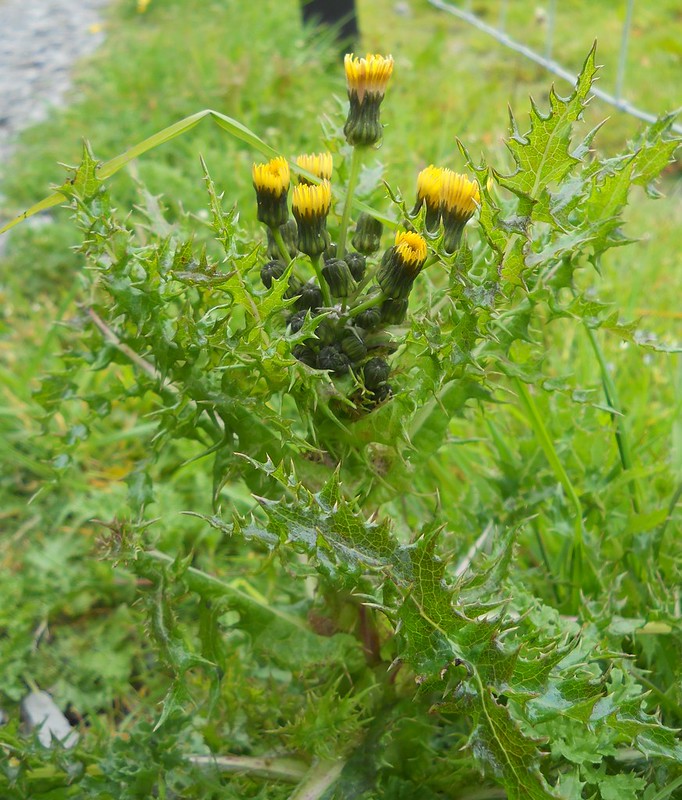
    And since we’re on the subject of wildflowers:

    Note the cairn on top of the mountain in the distance is lined up with the passage into this tomb. This is Tomb 7 in the literature – the most well preserved and beautiful of the circles and tombs we saw, and you had to step carefully to avoid the cow patties.

    We made stops in Knock (a religious shrine disturbing for the amount of plastic paraphernalia for sale along its main street) and Letterkenny (where we saw the work of a great Irish artist (name to be updated) and it would be worth making another trip to visit the Glebe House and Gallery) but Carrowmore left our minds full of wonder.

    Next post: Saturday and Sunday, May 19-20, 2012: Buncrana

  • The best place on the bus tour was the Burren. I didn’t expect that. What a wonderful weird wild landscape, with its sad, usually pointless stone “famine walls,” that the starving Irish people were forced to build as a means of getting a little to eat from the British landowners during the Great Hunger. I’ve stopped calling it the Potato Famine, because even though a potato blight ruined the potato crop for three years, Ireland was actually an exporter of wheat during this time. The Irish starved because the English aristocracy simply did not care what happened to them, not because of the potato blight. A good photo of a famine wall is on this webpage about the stone walls of Ireland.

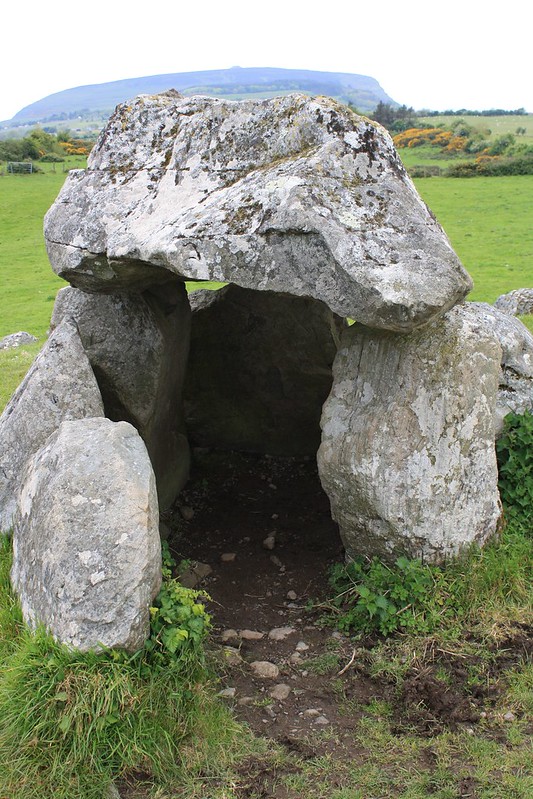
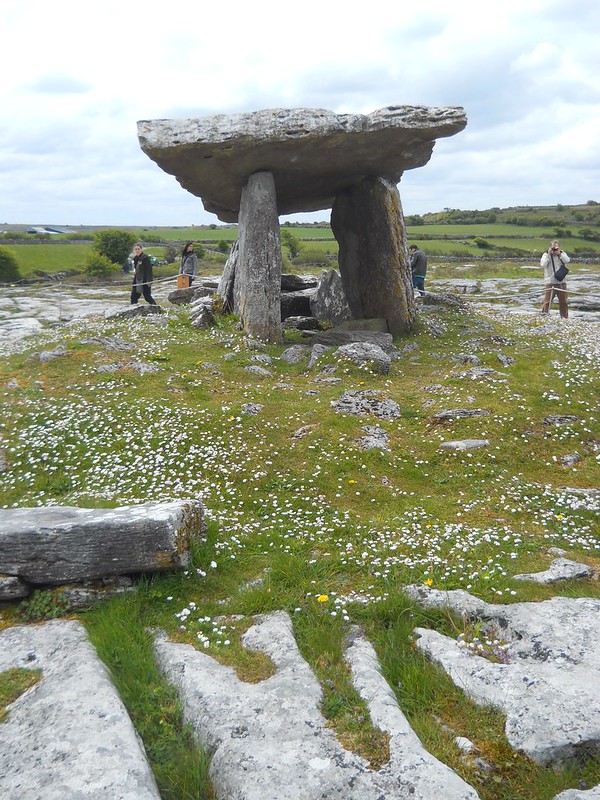
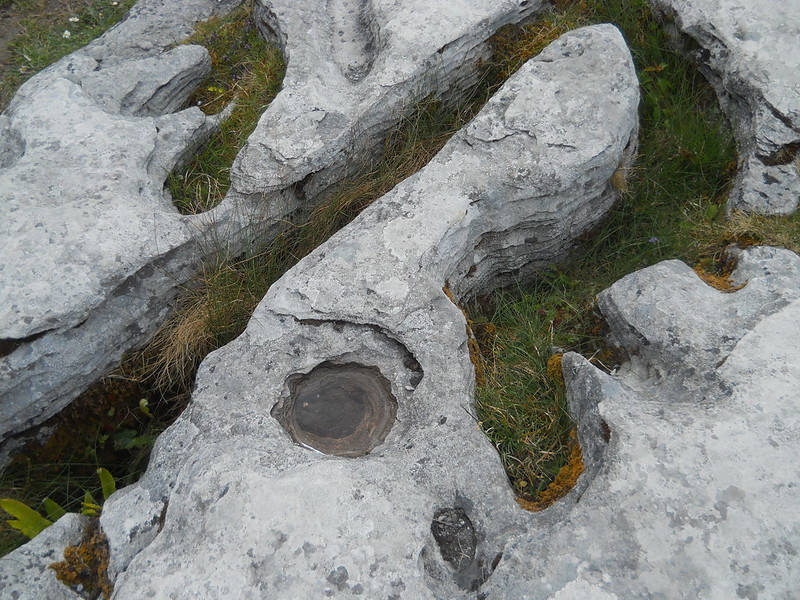
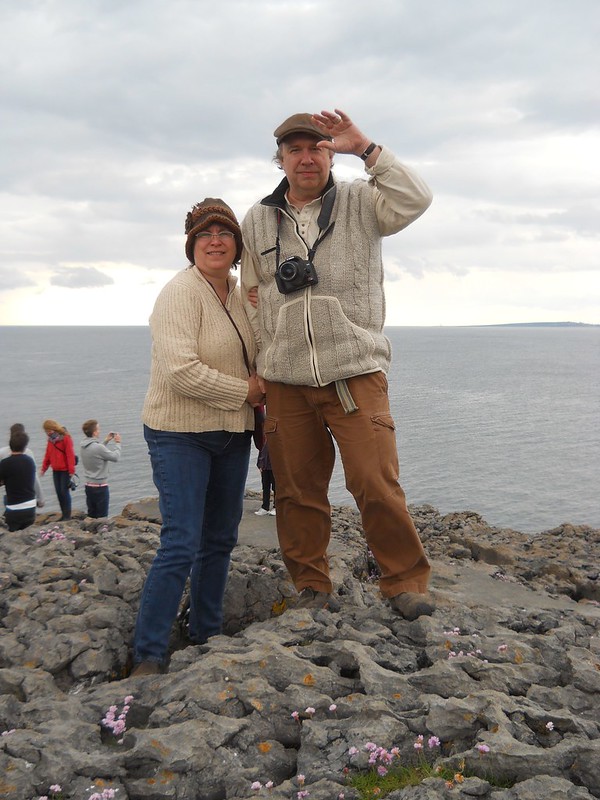
    One of the most famous dolmen tombs is Poulnabrone in the Burren, from the neolithic era. The limestone formations and wildflowers growing in the winding trenches (like mini-slot canyons) were fascinating too. I could have played here for hours.

    And of course, we visited the famous Cliffs of Moher. Although magnificent, I felt the experience suffered from the crowds of tourists and safeguards and large visitor’s center with its shops selling the usual tourist junk. It didn’t seem quite real to me after getting up close and personal with the cliffs in Ballydavid.

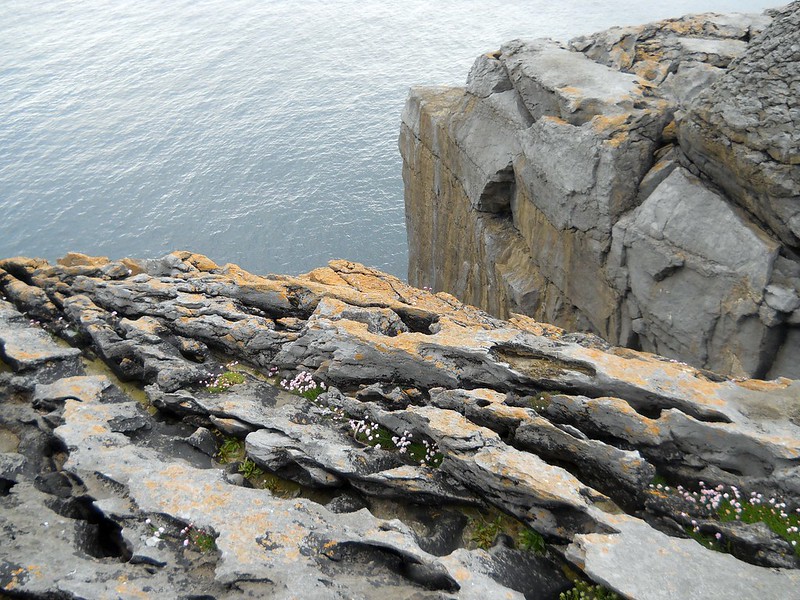
    We stopped for a mid-afternoon lunch at a pub and then on the way back, stopped at the “baby cliffs” of Clare, which I found much more to my liking, because it was cliffs in the Burren. That’s a grand combination.

    Next post – Friday, May 18, 2012: Galway

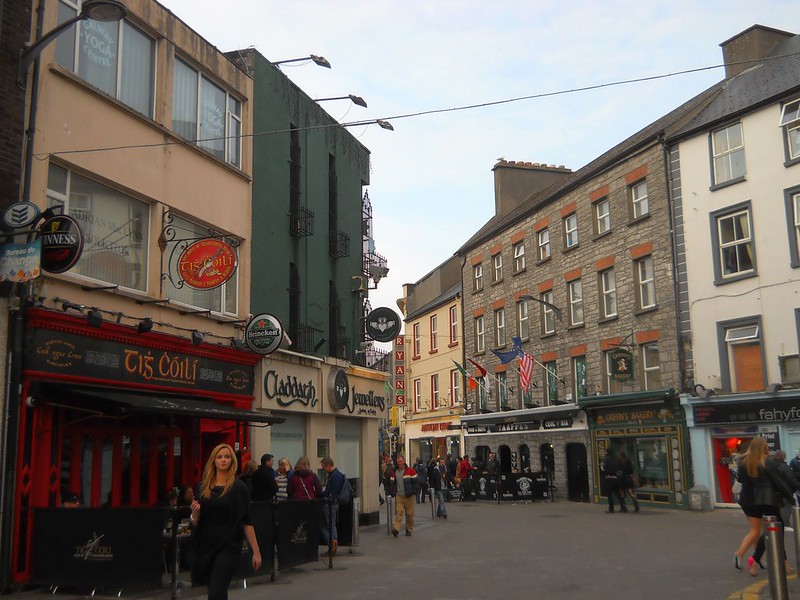
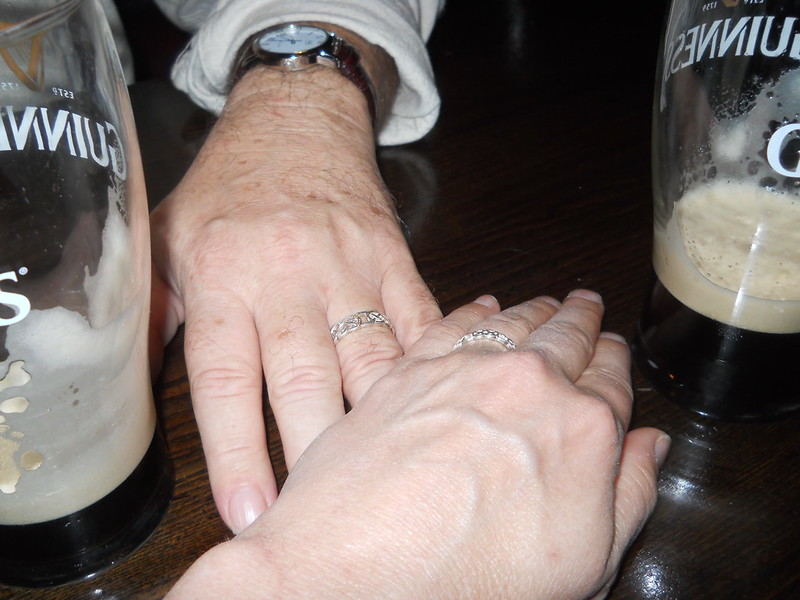
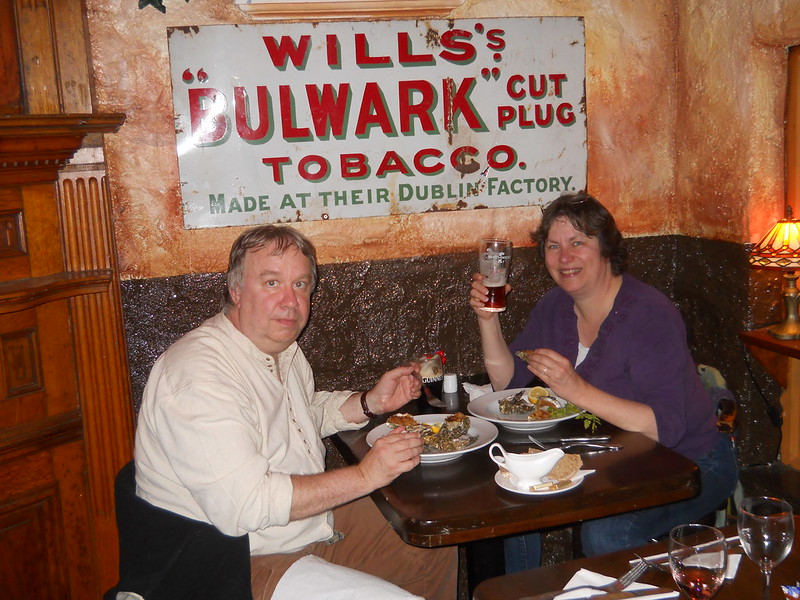
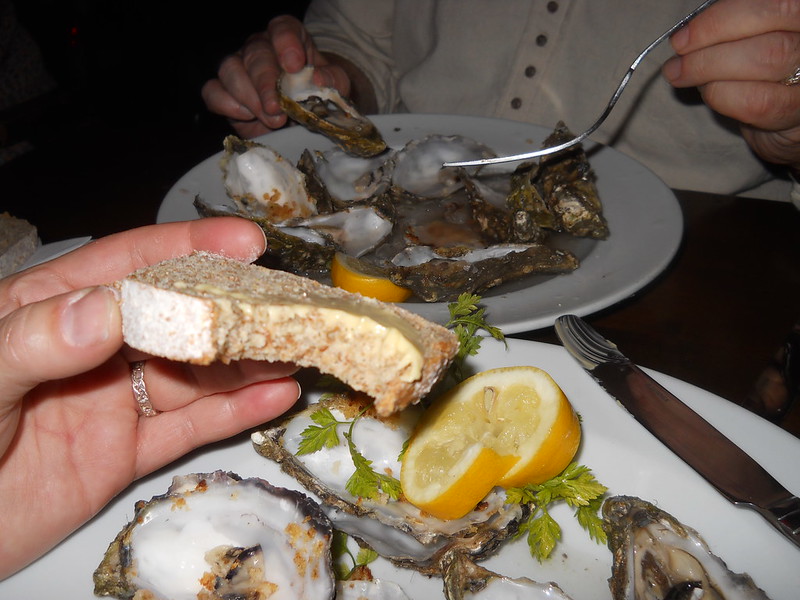
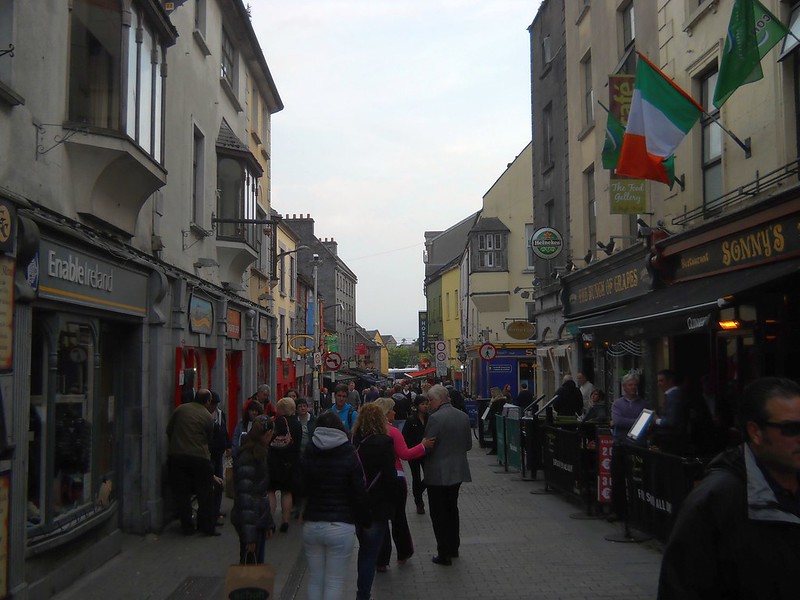
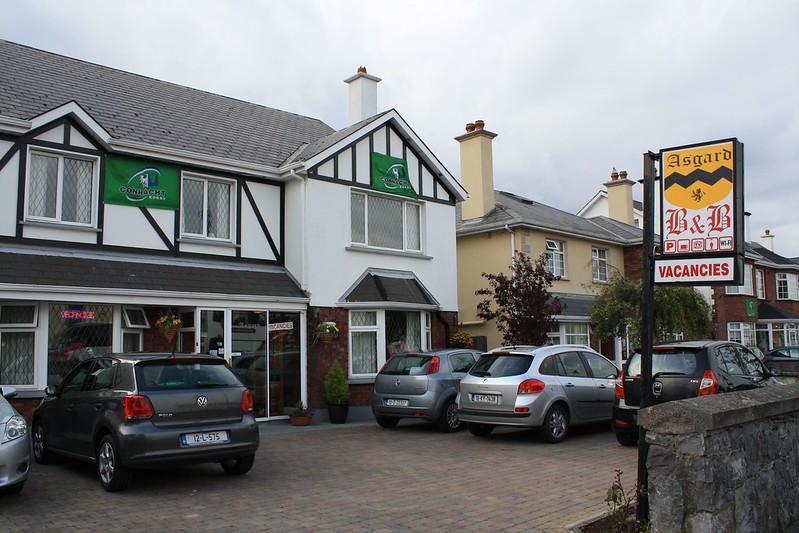
  • When we got back from the bus tour, we walked to the city center of Galway. There are two colleges in Galway and the students had just finished their final exams, so it was hopping by the time we walked back to Asgard House. After a disappointing visit to a pub where the live trad music had just ended and the loud dance music had just begun, and the inability to get into a pub where a fantastic trad session was going on but it was literally stuffed to the point that you could not walk more than three feet inside the door, we went to the pub at the Spanish Arch Hotel on Quay St., where we were seated at a back corner table next to a very friendly group of women on holiday from Liverpool. We ate delicious oysters, for which Galway is famous, and had a great time.

    I should say something here about the bread and butter in Ireland. Even though I baked Irish soda bread back in my bread baking days, it was so much more delicious eating it in Ireland, with that incredible Irish butter slathered on it. I ate it at every opportunity. One of the major things I loved about Ireland was their restaurants’ dedication to using fresh and local foods. Almost every place we ate had the local source of their eggs and meats and cheese and most everything else on their menu. They are way ahead of the United States in supporting their local economies and they take pride in it. I only saw a few local chain stores and fast food outlets when we were there, and we drove to a lot of different areas.

    On the way back we tried one more old pub in the hopes of hearing some live trad music, but just before we ordered drinks and the musician began to play, I realized that I did not have my little purse that I had been wearing around my neck. We hoofed it back to the Spanish Arch, and ran into our new English friends on the street, who assured me that they had found it and given it to the waitress. I retrieved it and as we again approached the pub where we hoped to hear some live trad music, we heard a male voice singing a cover of an Adele song. So we decided that was a sign that we should call it a night. We had another long day of driving the next day.

    Next post – Saturday, May 19, 2012: Carrowmore

  • Mary at Asgard House really took care of us. At this point I was overwhelmed and exhausted, and faced with way more choices of what to do with our one day in the area than I could handle. After serving us a terrific breakfast in her lovely sunroom, Mary called Galway Bus Tours and had them pick us up at the B&B for a tour of the famous Cliffs of Moher and the Burren. Sandy could sightsee without taking his attention from the road and I popped a Dramamine (recalling the Tuscan bus debacle of 2006) and we were sent off into a fabulous day with a witty and informed driver.

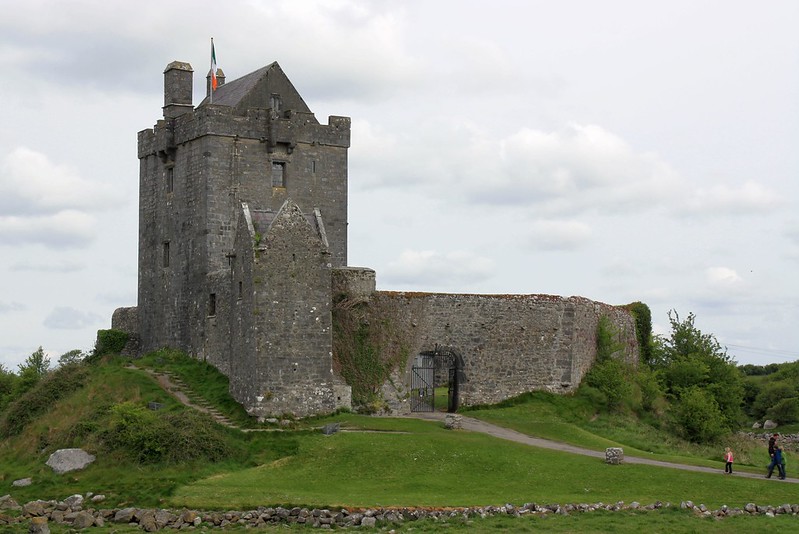
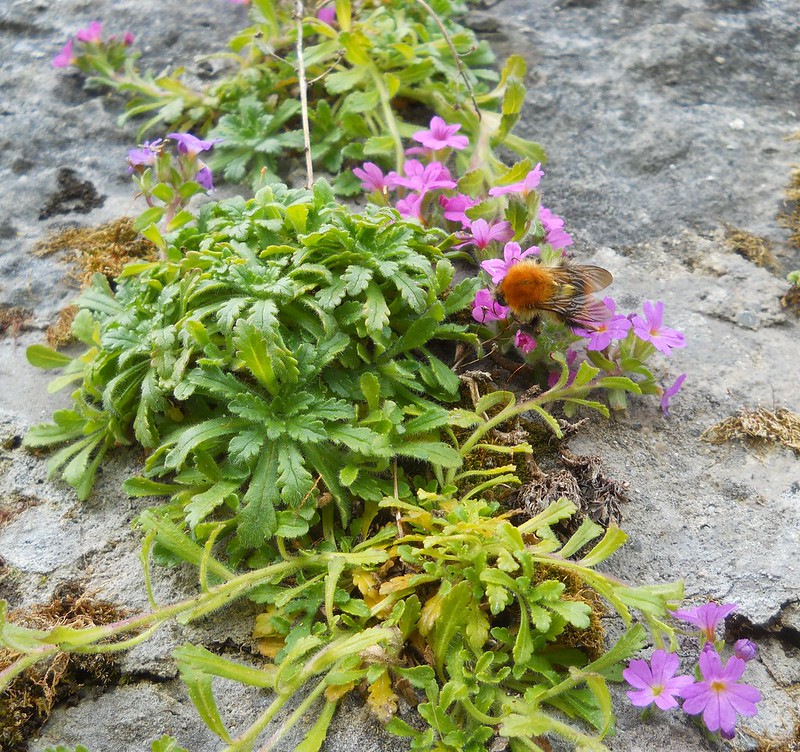
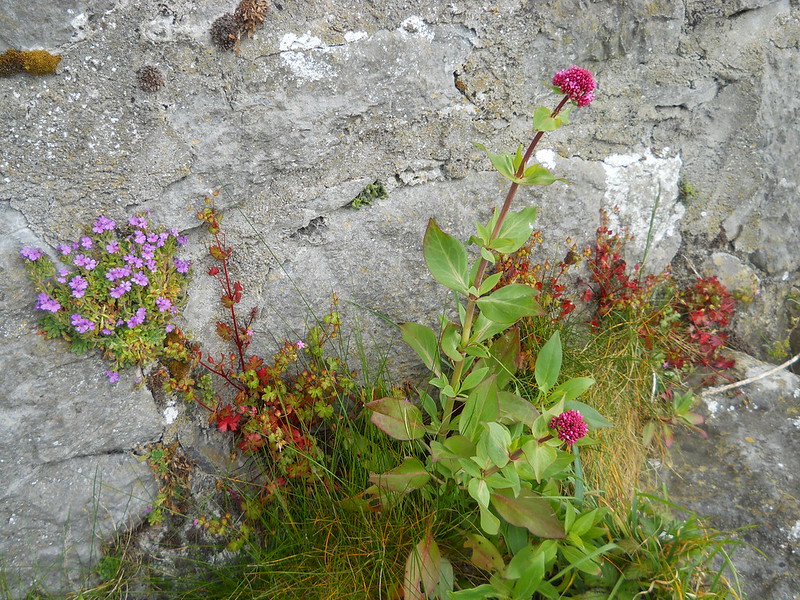
    The first stop was Dunguaire Castle, where I quickly became more fascinated with the wildflowers growing on its walls and outskirts than I was with the castle itself. My goal was to get a photo of as many different Irish wildflowers as I could during this trip. I found that most of their wildflowers are also found in North Carolina, which shouldn’t have surprised me granted the number of Scottish and Irish settlers in our state, and I knew from my reading that in May the Burren National Park attracts wildflower enthusiasts and botanists from all over the world.

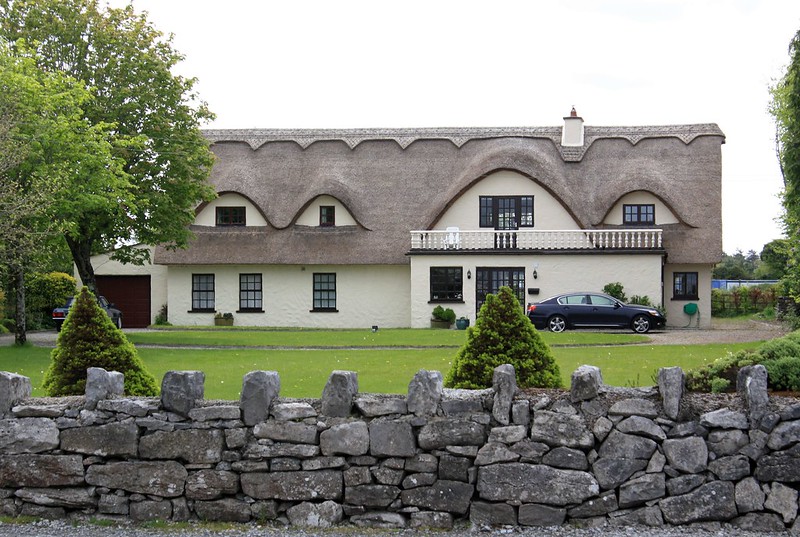
    There were a lot of houses with thatched roofs in this area. Here’s a really nice one.

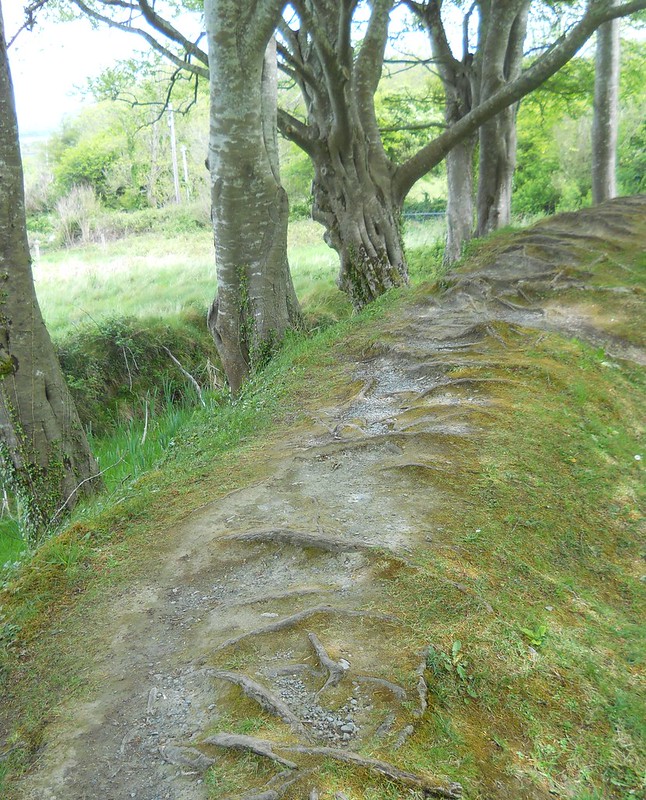
    Next, we visited an old ringfort complete with moat, covered now with green and trees. We walked around it clockwise for luck.

    Next post – Friday, May 18, 2012: The Burren and Cliffs

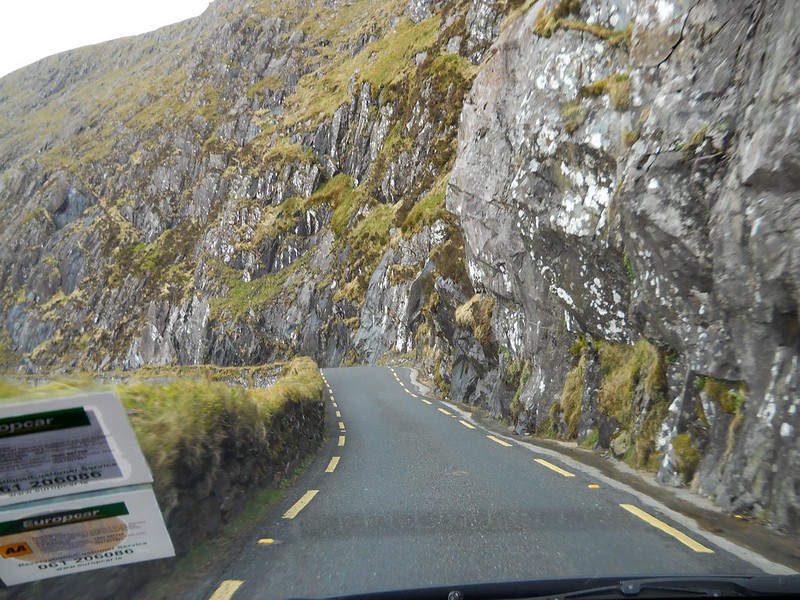
  • We headed for the Conor Pass, which is the highest mountain pass in Ireland, and we soon had to stop for me to take some Dramamine. Thank God no buses or large trucks were allowed on this road, since its curvy stone wall and cliff lined roads barely provided enough room for two small cars to pass each other. At one point we had to pass another car in a place where neither of us could back up safely. I had to fold in the side view mirror and we slowly moved past each other with about an inch to spare on either side of our car. I bet that body shops do a terrific business in Ireland.

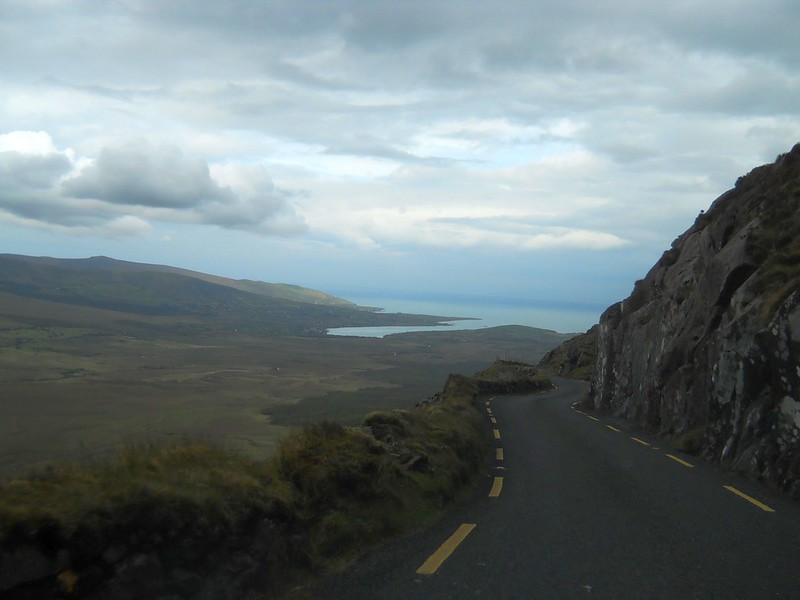
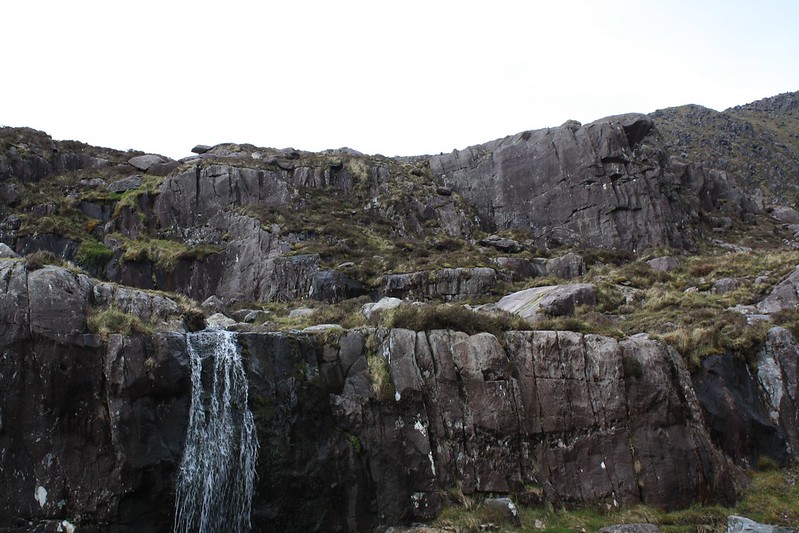
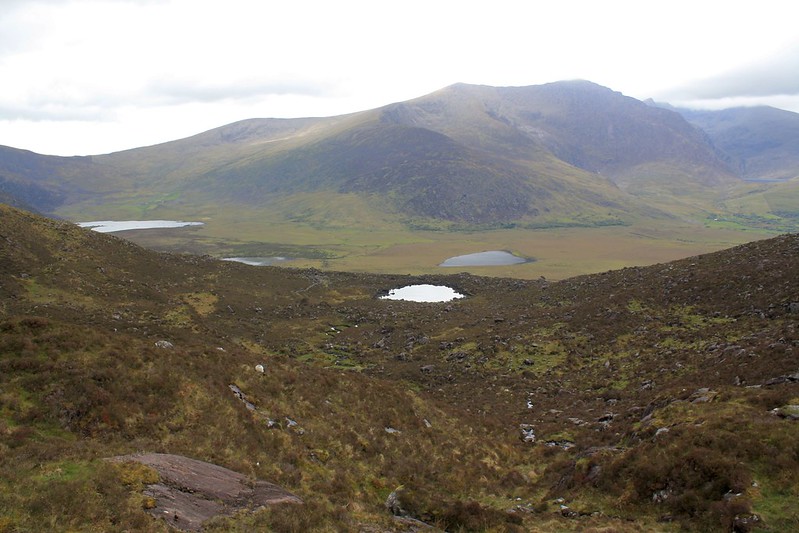
    The rocky wilderness of the Conor Pass made the scary drive worth it though.

    Once we reached the other side, it was getting late in the day and we were ready to rest. So after we crossed the River Shannon on a ferry, we changed our plans for the Cliffs of Moher and took the fastest road to Asgard House, our destination in Galway.

    Next post – Friday, May 18, 2012: Counties Clare and Galway